Clear Sky Science · en
Arar rosom arar elom: an exploration of arts-based method in fostering cultural identity and mental healing for Rohingya refugees
Why art matters in a place of deep loss
In the crowded refugee camps of Cox’s Bazar, Bangladesh, hundreds of thousands of Rohingya people live with memories of violence, loss of home, and an uncertain future. This article explores how simple creative acts—such as carving wooden windows, sewing quilts, and telling stories through images and song—can help Rohingya refugees hold on to their culture and begin to heal emotionally. Rather than focusing only on food, shelter, and medicine, the authors ask what happens when art itself becomes a form of shelter for the mind and for a threatened way of life.
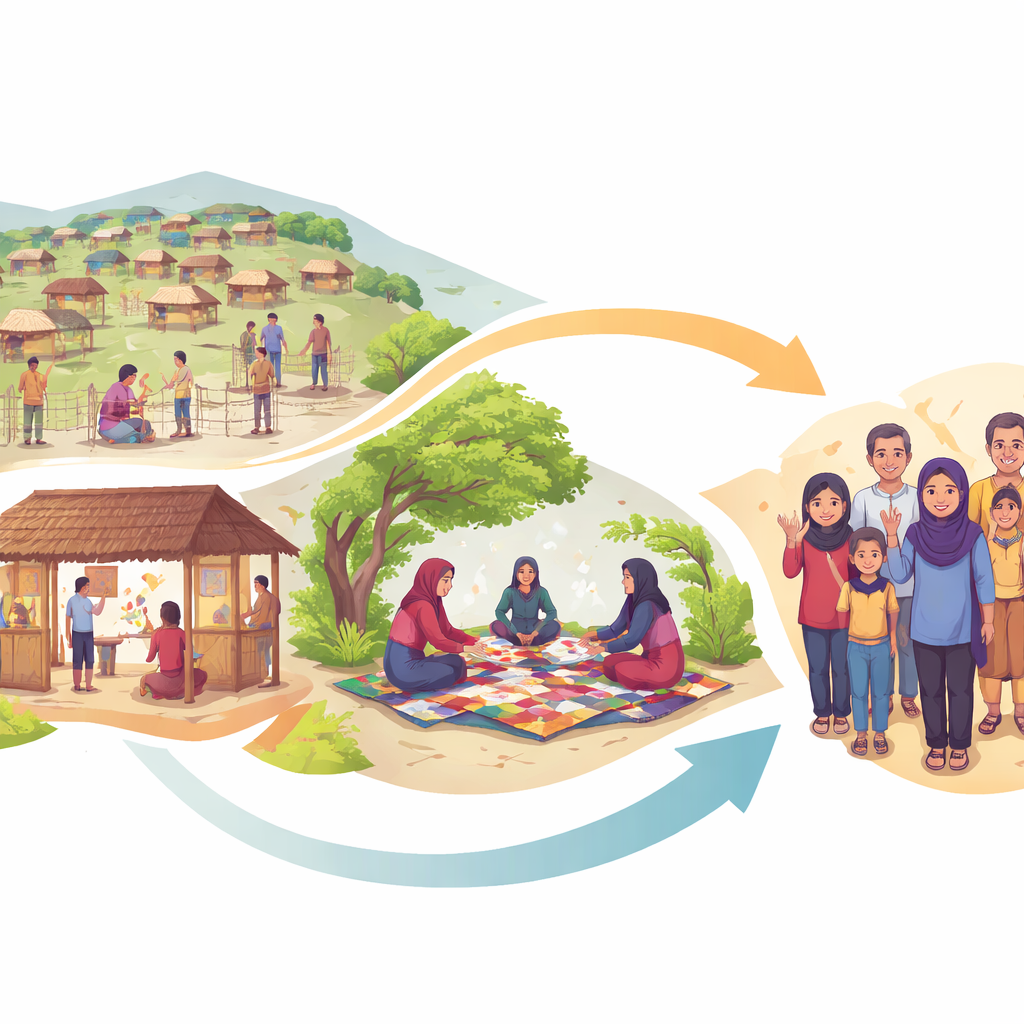
Life in limbo and the weight of memory
The Rohingya fled military attacks, persecution, and sexual violence in Myanmar and now live in camps described as “open-air prisons,” fenced in and watched over by guards. Many have lost family members, homes, and even the legal right to belong to any country. Studies in the camps report high levels of post-traumatic stress, depression, anxiety, and sleeplessness. Conventional mental health services are scarce and often feel foreign—rooted in unfamiliar languages and ideas about illness. In this setting, the fear of renewed violence, the daily stress of poverty, and the pain of remembering home all combine to make emotional recovery extremely hard.
Art as a different kind of healing space
Drawing on research in art therapy and trauma studies, the authors explain that creative activity can offer a safer way to deal with painful experiences than direct talk alone. Making or experiencing art can bring buried feelings to the surface, but it does so through images, movement, sound, and touch. This process is not always pleasant—art may stir grief, anger, and longing as well as comfort—but it can help people make sense of their experiences and feel less numb or powerless. For refugees who have lost both home and status, the act of creating can also rebuild a sense of worth and help preserve cultural identity, turning songs, stories, and designs into a kind of portable homeland.
A house of memories for a homeless people
One of the case studies is the Rohingya Cultural Memory Centre, created by the International Organization for Migration together with Rohingya artisans. The building itself is designed to feel like home: it is open to the community, uses materials such as bamboo, mud, and wood that echo village houses in Myanmar, and includes a playful yard for children. A key feature is the “Windows of Memory,” a wall built from wooden windows carved in the styles people remember from their lost houses. Visitors can look and reach through these openings, turning the wall into a physical link between present camp life and remembered villages. Workshops at the centre bring together carvers, weavers, potters, musicians, and storytellers, treating them not as passive victims but as bearers of knowledge who shape how their culture is recorded and shared with the next generation.
Stitching pain, pride, and hope into cloth
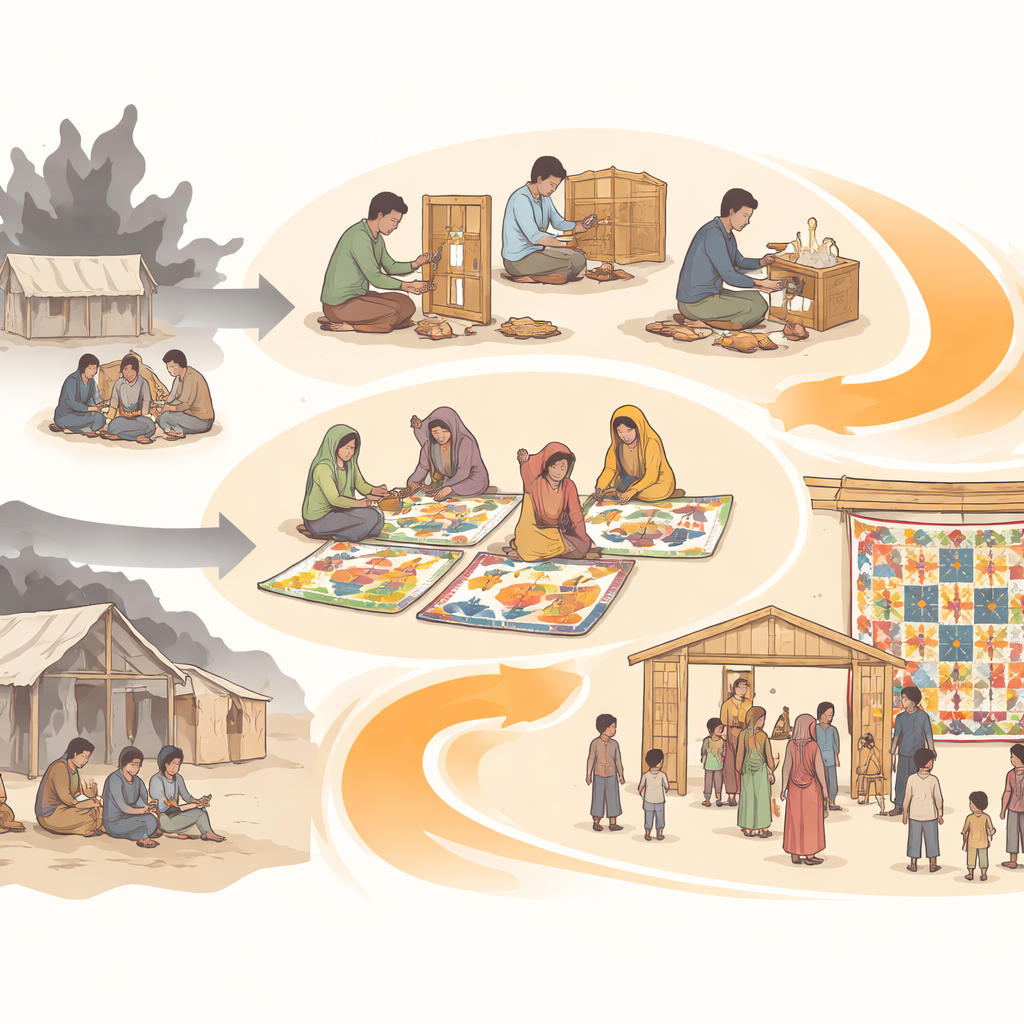
The second case study follows a quilt-making project led by Asia Justice and Rights and the Liberation War Museum. Around one hundred Rohingya women gathered to embroider small fabric panels that were later joined into large quilts. On these panels, they stitched scenes of burnt homes and schools, armed men, rivers and trees, as well as images of gardens, books, and children’s futures. Working with a familiar domestic skill made the project culturally and gender appropriate, while the group setting encouraged mutual support. Many women reported feeling lighter and more in control when they could “tell their story without crying” through needle and thread. Their quilts have been shown in galleries and online, allowing these private stories to reach global audiences and challenging the common image of Rohingya women as only silent victims.
Balancing comfort, risk, and responsibility
The authors also highlight ethical tensions. Artistic activities can reopen wounds: some visitors to the Memory Centre start to cry when confronted with vivid reminders of home, and women in the quilt project still live with ongoing danger, including gender-based violence and armed clashes in the camps. True healing, they argue, depends not only on creative spaces but also on physical safety, fair treatment, and respect for local customs and faith-based healing practices. Projects must secure informed consent, protect privacy, and avoid reinforcing power imbalances between aid workers, researchers, and refugees. At the same time, they need to honour the wish of many participants to be visible and heard, not hidden behind anonymity.
What this work means for the future
In plain terms, the article shows that drawing, sewing, music, and other creative practices do more than decorate camp life. They help Rohingya refugees remember who they are, pass stories and skills to their children, and find moments of strength in a harsh setting. When refugees themselves lead the design of cultural projects, they become recognized as experts in their own history rather than just aid recipients. The authors conclude that well-designed arts programs, grounded in cultural sensitivity and ethical care, can sit alongside food and medicine as an essential part of humane support for displaced people.
Citation: Uddin, K.A., Kumari, N. Arar rosom arar elom: an exploration of arts-based method in fostering cultural identity and mental healing for Rohingya refugees. Humanit Soc Sci Commun 13, 483 (2026). https://doi.org/10.1057/s41599-026-07031-3
Keywords: Rohingya refugees, arts-based healing, cultural identity, refugee mental health, participatory art projects