Clear Sky Science · en
The “bread and butter” of science: understanding how scientists communicate uncertainties
Why uncertainty in science matters to you
Every day, we see headlines about new studies on health, climate, or technology. Behind each of these findings sits a simple fact: scientists are never completely certain. This uncertainty is not a flaw but a basic ingredient of how science moves forward. Yet, in an age of social media storms, political battles, and shrinking attention spans, many scientists feel that talking openly about what they do not know can be misunderstood, sensationalised, or even used against them. This study asks how scientists themselves think about uncertainty and how that shapes the way they talk to other researchers, journalists, and the public.
How the study was carried out
To look inside this world, the authors interviewed 28 researchers in Austria from a wide mix of fields, including physics, biology, psychology, computer science, social sciences, and the humanities. All had recent experience talking about their work outside the ivory tower, whether in news reports, public talks, or online. Using in-depth, semi-structured interviews, the researchers asked how these scientists define uncertainty, how they try to explain it to different audiences, and whether these views vary between disciplines. Austria offered an informative setting: trust in science is relatively high, but skepticism and populist politics create a tense backdrop for public debate.
Turning technical doubts into everyday language
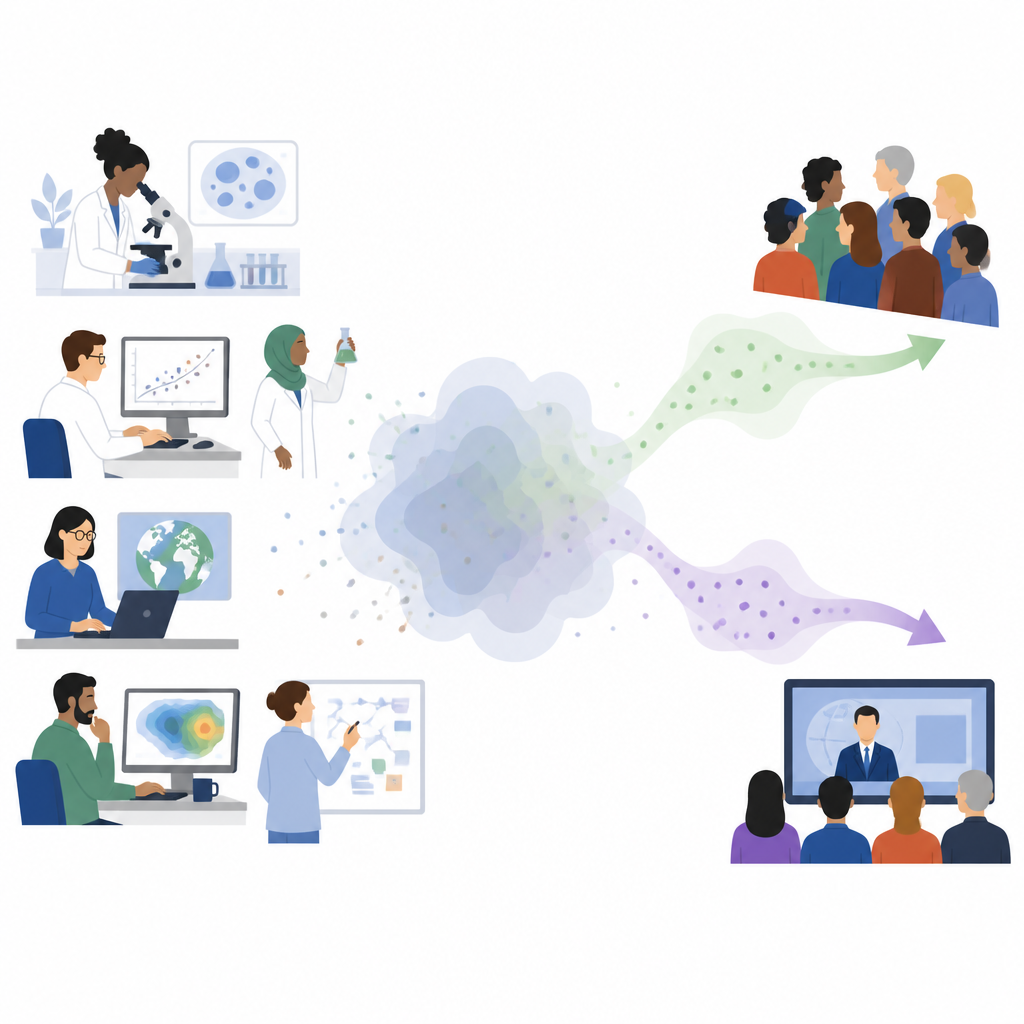
Scientists in the study described talking about uncertainty as a kind of translation job. Among themselves, they rely on technical language, statistical measures, and shared habits of thinking. When facing journalists or lay audiences, they must turn this dense material into simple stories that still remain honest about what is not yet known. Many interviewees said this balancing act is hard. Some aspects of their work seemed too complex to reduce without distorting them. They worried that shortening explanations for news soundbites or social media posts could either hide important caveats or confuse people with too much detail. Still, several saw uncertainty as a chance to spark curiosity, showing that open questions are what make research exciting.
Why uncertainty can feel unwanted or risky
Many of the scientists felt that the wider communication system does not really welcome uncertainty. Universities and funding bodies prefer bold claims about impact. High-profile journals emphasise eye-catching results over methods. Journalists often ask for clear answers and predictions, not careful hedging. The COVID-19 pandemic made this especially vivid, when researchers were pushed to offer firm guidance even as the evidence shifted day by day. Scientists feared that admitting limits in knowledge could feed misinformation, fuel doubt about science more broadly, or be twisted in political fights. Several described harassment, online attacks, and a sense of having little institutional support if their words were misused, which in turn made them more cautious about how much uncertainty to share.
Many types of uncertainty, one blended message
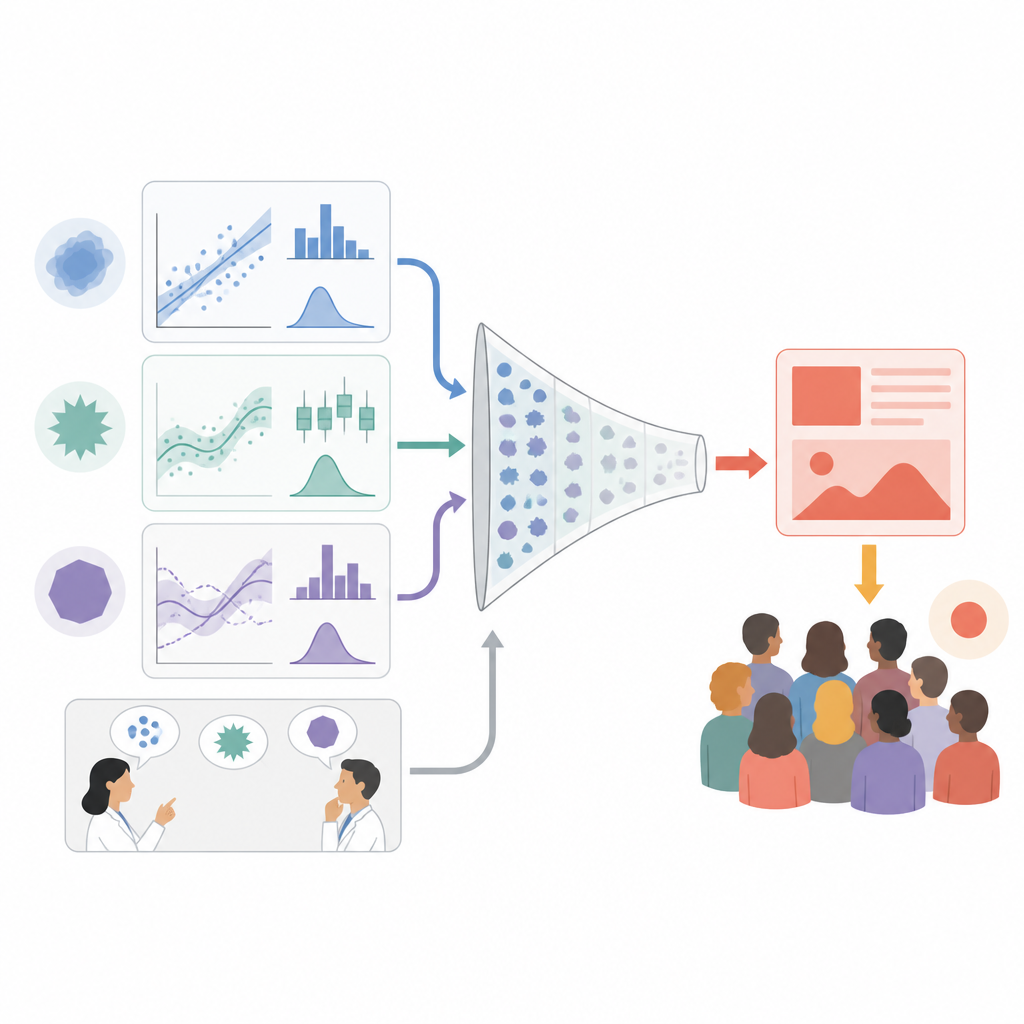
When asked how they understand uncertainty, most scientists echoed ideas already discussed in communication research. They distinguished between gaps in data, limits of measurement, disagreements among experts, and the broader sense that science always leaves room for revision. In practice, though, these neat categories blur once they speak to non-specialists. Instead of listing every technical detail, they tend to bundle different kinds of unknowns into short phrases such as “we are not sure” or “the evidence is limited.” Natural and computational scientists often focused on numerical limits, such as error bars and sample sizes, and sometimes saw these as too narrow or mathematical to interest the public. Social scientists and humanities scholars were more used to dealing with disagreement, context, and interpretation as forms of uncertainty, and felt these were central to honest public discussion.
How different fields face shared and unique hurdles
Across disciplines, scientists agreed that communicating uncertainty is both necessary and challenging. All stressed that they should not be forced into public roles without training or protection, and many called for stronger support from professional science communicators and dedicated science journalists. Yet important differences emerged. Researchers in physics, chemistry, and computer science tended to treat uncertainty mostly as something to quantify and reduce. Social science and humanities researchers worked more with shifting human behaviour, language, and values, and felt that colleagues in the “hard” sciences sometimes undervalued these messier forms of knowledge. These tensions can complicate interdisciplinary work, where differing ideas about what counts as a solid result or an acceptable level of uncertainty must be reconciled.
What this means for public talk about science
For non-scientists, the key lesson is that uncertainty is not a sign that science is failing, but that it is working as intended. The study shows that many researchers want to be open about that, yet are constrained by media formats, political pressures, and fears of backlash. When uncertainties are trimmed away, the public may be left with overly simple stories that later need to be reversed, harming trust. When uncertainties are piled on without context, people can feel lost or suspicious. Helping scientists learn how to talk about different kinds of unknowns clearly, and giving them safer spaces and better partners in the media, can make conversations about science more honest, robust, and ultimately more useful for society.
Citation: Roney, C., Egelhofer, J.L. & Lecheler, S. The “bread and butter” of science: understanding how scientists communicate uncertainties. Humanit Soc Sci Commun 13, 666 (2026). https://doi.org/10.1057/s41599-026-07026-0
Keywords: science communication, uncertainty, media, public trust, politicisation