Clear Sky Science · en
“They are battling a different war”: A corpus-based comparative study on war metaphor in COVID-19 discourse in China and U.S.
A Battle of Words About a Global Crisis
The COVID-19 pandemic has often been described as a "war" against an invisible enemy. But what if the way news outlets talk about that war quietly shapes how people feel, whom they trust, and what actions they accept? This article compares how two major newspapers—China Daily in China and The New York Times in the United States—used war imagery in their pandemic coverage, and shows that the same battlefield language can tell very different stories about danger, heroes, and responsibility.
How Fighting Disease Became Fighting a War
When COVID-19 spread around the globe, journalists reached for familiar images to make sense of a confusing new illness. Among the many metaphors that appeared—journeys, storms, fires—the war metaphor dominated in both China and the United States. In this framing, the virus becomes an enemy, doctors and other workers become soldiers, vaccines and treatments turn into weapons, and hospitals stand in for front lines. The authors collected hundreds of pandemic articles from China Daily and The New York Times and used linguistic tools plus careful reading to identify every instance where war-related words like "fight," "battle," or "weapon" were used in a figurative way, rather than referring to actual armed conflict.
Two Newspapers, One Metaphor, Different Stories
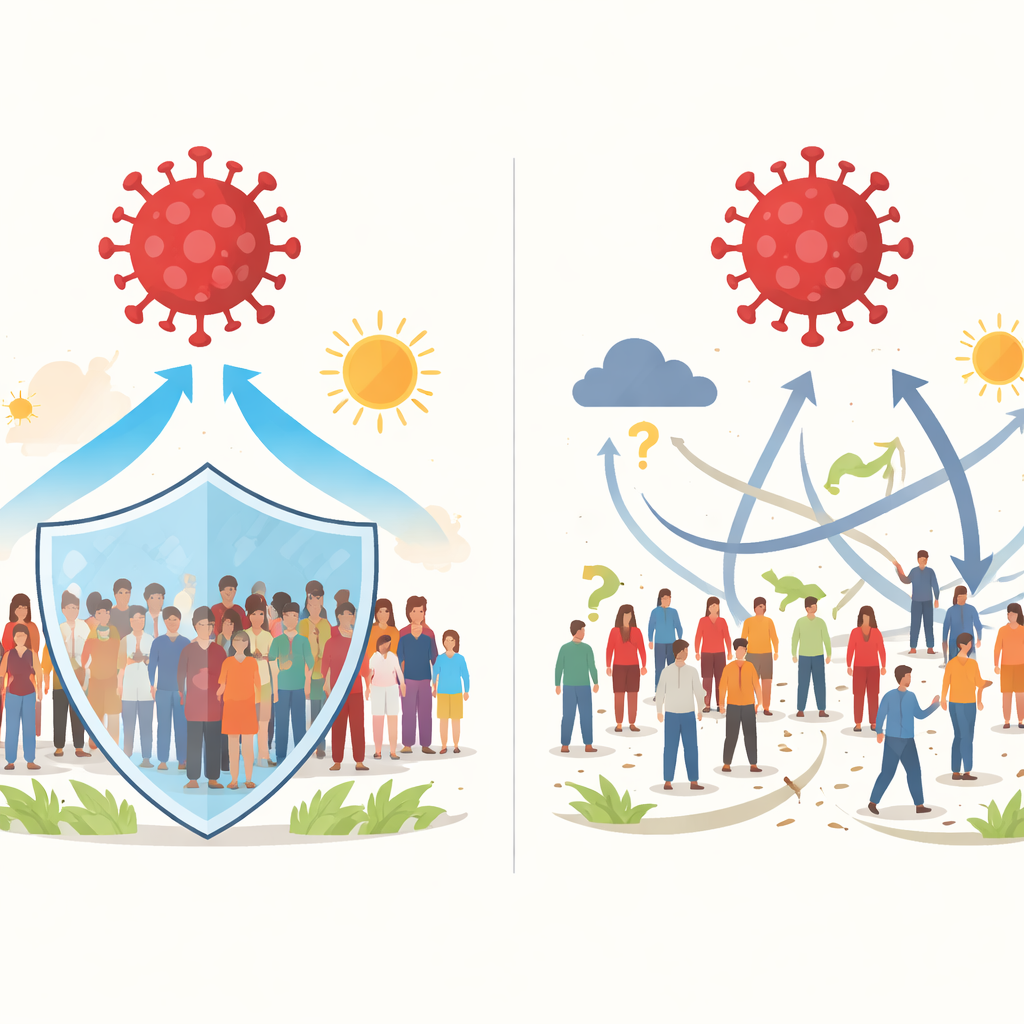
The analysis found that China Daily used war language much more frequently and more repetitively than The New York Times. Phrases such as "fight against the pandemic" and "win the battle" appeared again and again, building a single, clear storyline: dealing with COVID-19 is a united campaign that demands total effort from the whole nation and even the whole world. The tone is strongly upbeat and decisive, emphasizing unity, victory, and courage. By contrast, The New York Times used fewer war metaphors but drew on a wider variety of related words, such as "struggle" and "resistance." This created a more open-ended picture in which the "war" is less about a tidy win and more about a long, difficult effort filled with setbacks, uncertainty, and competing viewpoints.
Who Holds the Weapons and Stands on the Front Line
Looking more closely at specific images inside the broader war story reveals further contrasts. Both newspapers described vaccines and medical treatments as powerful weapons against the virus. But China Daily also treated solidarity and cooperation—both within China and with other countries—as weapons in their own right, and criticized attempts to "weaponize" the virus politically. In its coverage, medical staff are the main "frontline" fighters and are portrayed as noble heroes whose bravery and sacrifice symbolize national strength. The New York Times, meanwhile, extended the idea of the front line to many kinds of essential workers, such as grocery clerks, delivery drivers, and police officers. These workers often appeared as vulnerable and overburdened, highlighting inequalities in who faced the greatest risks.

Heroes With Different Faces
Both outlets spoke of "heroes," but the emotional coloring of that label differed. In China Daily, heroes are celebrated in almost entirely positive terms: they are steadfast, selfless, and aligned with a larger narrative of collective triumph over hardship, echoing historical memories of real wars against invasions. In The New York Times, the hero label is more complicated. Doctors and nurses sometimes push back against being put on a pedestal, voicing worry for their own families and exhaustion from relentless work. Parents of frontline workers describe pride mixed with fear. This results in a "reluctant hero" story in which admiration coexists with anxiety and criticism of the systems that left these workers exposed.
Why These Differences Matter
By tracing these patterns, the authors show that war language is not a simple, one-size-fits-all way of talking about disease. Instead, it is a flexible tool that reflects and reinforces deeper cultural memories and political goals. In China Daily, the war metaphor supports a message of strong central coordination and shared duty, encouraging people to see strict health measures as part of a just and necessary campaign. In The New York Times, war imagery often underlines the strain on individuals and the unevenness of the response, inviting readers to question planning, resources, and leadership. The study concludes that understanding how such metaphors work—and how they differ across societies—is crucial for anyone interested in how media coverage can influence public trust, fear, and cooperation during a global health crisis.
Citation: Su, G., Ding, J. & Zhu, L. “They are battling a different war”: A corpus-based comparative study on war metaphor in COVID-19 discourse in China and U.S.. Humanit Soc Sci Commun 13, 616 (2026). https://doi.org/10.1057/s41599-026-06974-x
Keywords: war metaphor, COVID-19 discourse, media framing, cross-cultural communication, health communication