Clear Sky Science · en
The development and the factor analysis of the Sussex-Oxford Compassion from others scale in the Slovak population
Why kindness coming our way matters
Most of us think of compassion as something we give: comforting a friend, caring for patients, or learning to be kinder to ourselves. But there is a third, often overlooked side to compassion—our ability to let support in from other people. This study introduces a new questionnaire, the Sussex-Oxford Compassion from Others Scale (SOCS-FO), designed to measure how much compassion people feel they receive from others, and tests it in a large group of Slovak helping professionals such as doctors, nurses, psychologists, teachers, and social workers.
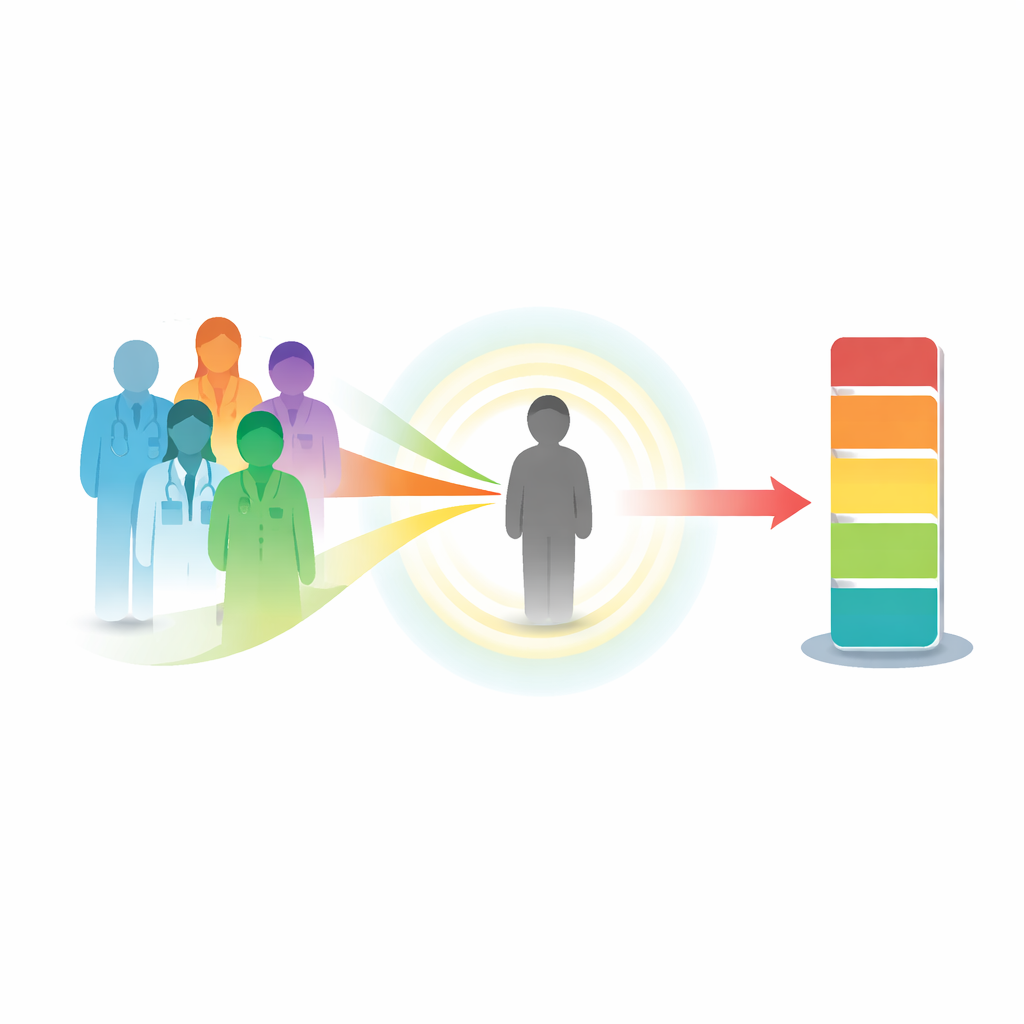
Three directions of care
Modern psychology describes compassion as a “three-way flow”: compassion we feel for others, compassion we receive from others, and compassion we extend to ourselves. Research and popular discussion have focused heavily on the first and third, leaving the second—receiving compassion—less understood and poorly measured. Yet earlier studies show that people who struggle to accept help and warmth from others are more vulnerable to depression, stress, and shame, and that a willingness to receive care can protect against mental health problems, especially in people who are highly self-critical.
Filling a gap in the toolbox
Existing questionnaires typically measure only one or two of these flows, and the few that aim to cover all three have shown unstable results across languages and cultures. Building on an established family of compassion scales developed at the University of Sussex and Oxford, the authors created a “missing third” version—the SOCS-FO—to capture compassion flowing from others to oneself. They adapted 20 statements from the original scales, such as noticing suffering, recognizing that suffering is universal, feeling emotional concern, staying present with uncomfortable feelings, and being moved to help. Each item was reworded so that respondents rated how often they experienced other people doing these things for them.
How the new scale was tested
The researchers recruited 3,304 Slovak helping professionals aged 18 to 76 through social media, professional networks, and organizations. Participants completed the Slovak version of the SOCS-FO online, rating each of the 20 items on a five-point scale from “not at all true” to “always true.” The team then used advanced statistical techniques to see how the items grouped together. They compared two models: one in which the five elements of compassion (such as recognizing suffering or tolerating discomfort) behaved like separate but related dimensions, and another “bifactor” model in which a strong general sense of “compassion from others” sat on top of these five more specific components.
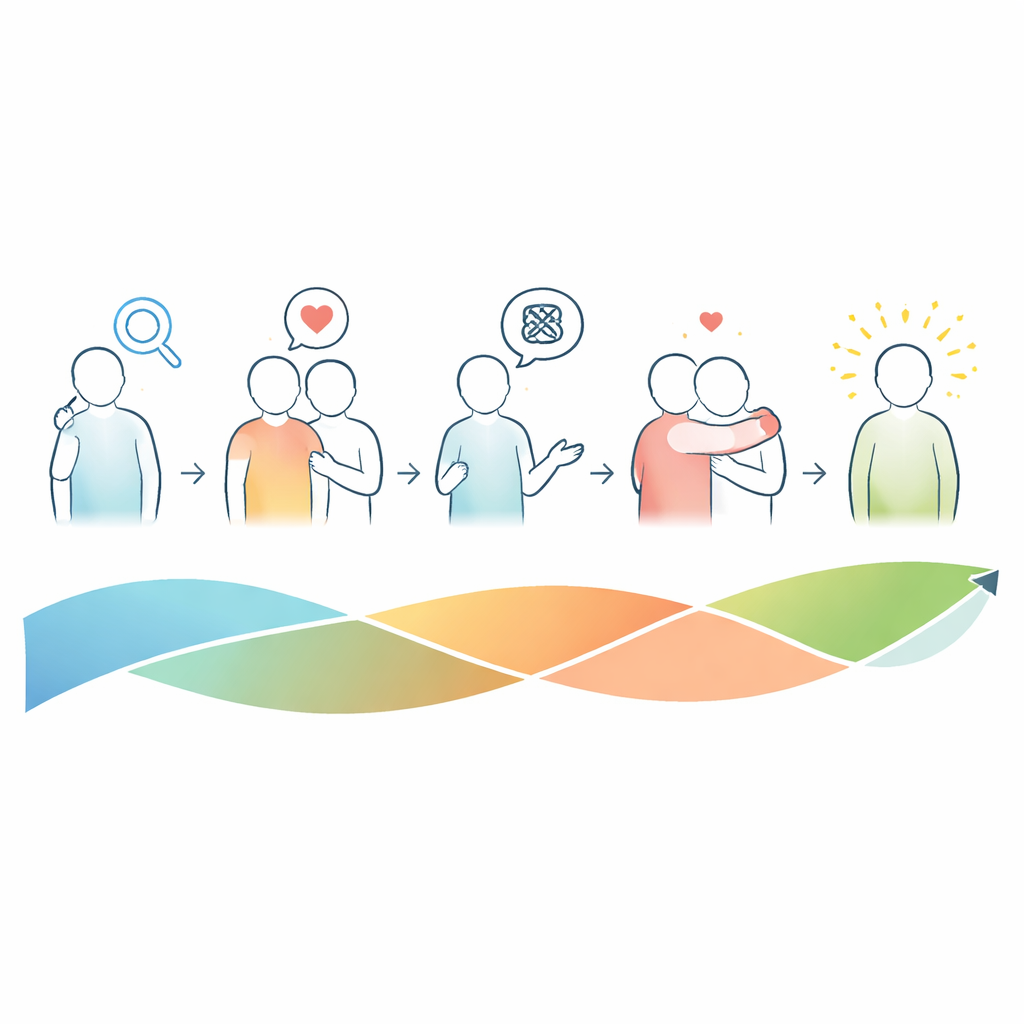
What the numbers revealed
The analyses showed that the bifactor model fit the data clearly better than the simpler five-part model. In practical terms, this means that while people can distinguish different aspects of how they receive compassion, their answers are dominated by a single overall feeling of being cared for and supported by others. Reliability statistics—indicators of how consistently the scale measures this experience—were excellent, suggesting that the SOCS-FO is a stable and precise tool. The team also developed percentile norms for helping professionals, making it possible to see whether an individual’s score is low, average, or high compared with their peers. Interestingly, scores were skewed toward the higher end, indicating that most helping professionals in this sample felt they received a lot of compassion from others.
Why this matters for everyday well-being
By providing a solid way to measure how much compassion people feel they receive, the SOCS-FO completes the set of tools needed to study all three flows of compassion. For clinicians, researchers, and supervisors working with helping professionals, it offers a way to spot individuals who may struggle to accept care and might be at greater risk for burnout or compassion fatigue. For the public, the message is simple: your capacity to let kindness in is just as important as your capacity to offer it or to be kind to yourself. This new scale helps turn that often invisible experience into something that can be tracked, understood, and ultimately strengthened through targeted interventions.
Citation: Halamová, J., Kanovský, M., Greškovičová, K. et al. The development and the factor analysis of the Sussex-Oxford Compassion from others scale in the Slovak population. Humanit Soc Sci Commun 13, 491 (2026). https://doi.org/10.1057/s41599-026-06846-4
Keywords: compassion, mental health, helping professionals, psychological assessment, well-being