Clear Sky Science · en
Value landscapes in interdisciplinary and transdisciplinary research and assessment: exploring indeterminacies and disconnects
Why This Matters Beyond the Ivory Tower
Public debates increasingly call on science to help solve problems like climate change, public health crises, or social inequality. To respond, researchers are encouraged to work across disciplines and with communities, policymakers, and industry. This article asks a deceptively simple question with far-reaching consequences: how do we decide whether such interdisciplinary and transdisciplinary projects are "good"? By examining the often hidden values that shape both research practices and their assessment, the authors show why some promising projects struggle to gain recognition and funding—and what might need to change.
Looking at Research Through the Lens of Values
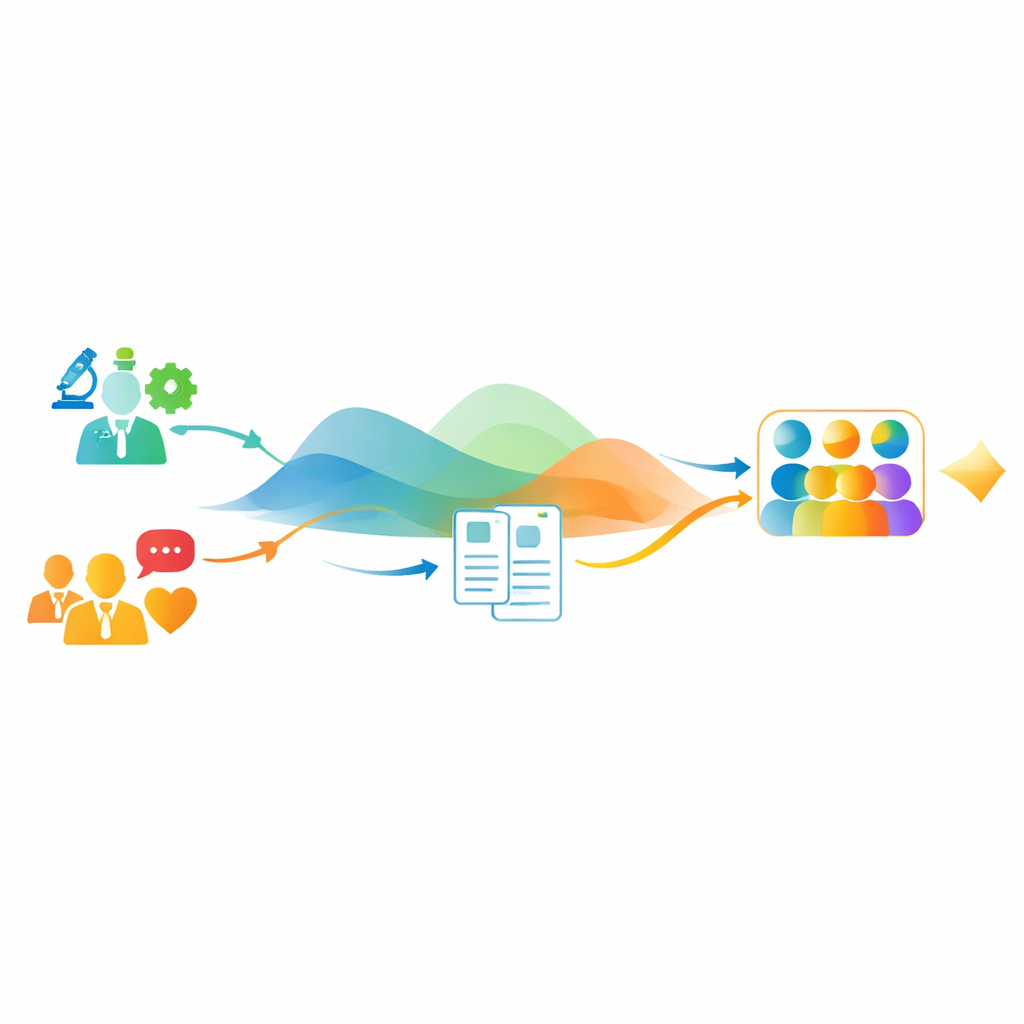
The authors start from the idea that research is never purely technical. It is guided by values: shared ideas about what counts as important, desirable, or worthwhile. They draw on philosophy, sociology, and anthropology to treat values not as fixed rules but as patterns that emerge through practice. To capture this, they use the metaphor of "value landscapes"—uneven terrains made of many hills and valleys, where certain aims attract attention and resources while others are pushed aside. In interdisciplinary and transdisciplinary work, these landscapes are especially varied because different academic fields and non-academic stakeholders bring their own priorities, standards, and hopes to the table.
How the Study Was Carried Out
Rather than interviewing a few teams, the authors conducted a systematic review of the sprawling literature on cross-disciplinary research. They screened thousands of publications from 2000 to 2023, then closely analysed a carefully selected subset using grounded theory methods. During coding, two themes kept reappearing: the values linked to making research socially relevant, and those tied to traditional ideas of academic merit. Treating "values" as a sensitizing concept, they traced where authors spoke of what is valuable, important, high quality, or legitimate. From this they reconstructed two interconnected value landscapes that shape how interdisciplinary and transdisciplinary research is done and judged.
When Relevance to Society Becomes a Guiding North Star
The first value landscape centers on societal relevance: the expectation that cross-disciplinary research should help address real-world problems. Here, values such as contextual grounding, social robustness, legitimacy, and usability loom large. Projects are praised when they involve affected communities, take local conditions seriously, and produce knowledge that is not only true but also practical, acceptable, and feasible. Bringing in stakeholders introduces their own visions of what matters, making research more responsive but also more complex. Negotiating differing interests and priorities demands reflexivity, openness, and inclusive collaboration—all themselves treated as important values. Assessment frameworks increasingly try to capture these aspects, for instance by asking whether results are meaningful and fair in the eyes of those who will use them.
Old Academic Rules Meet New Expectations
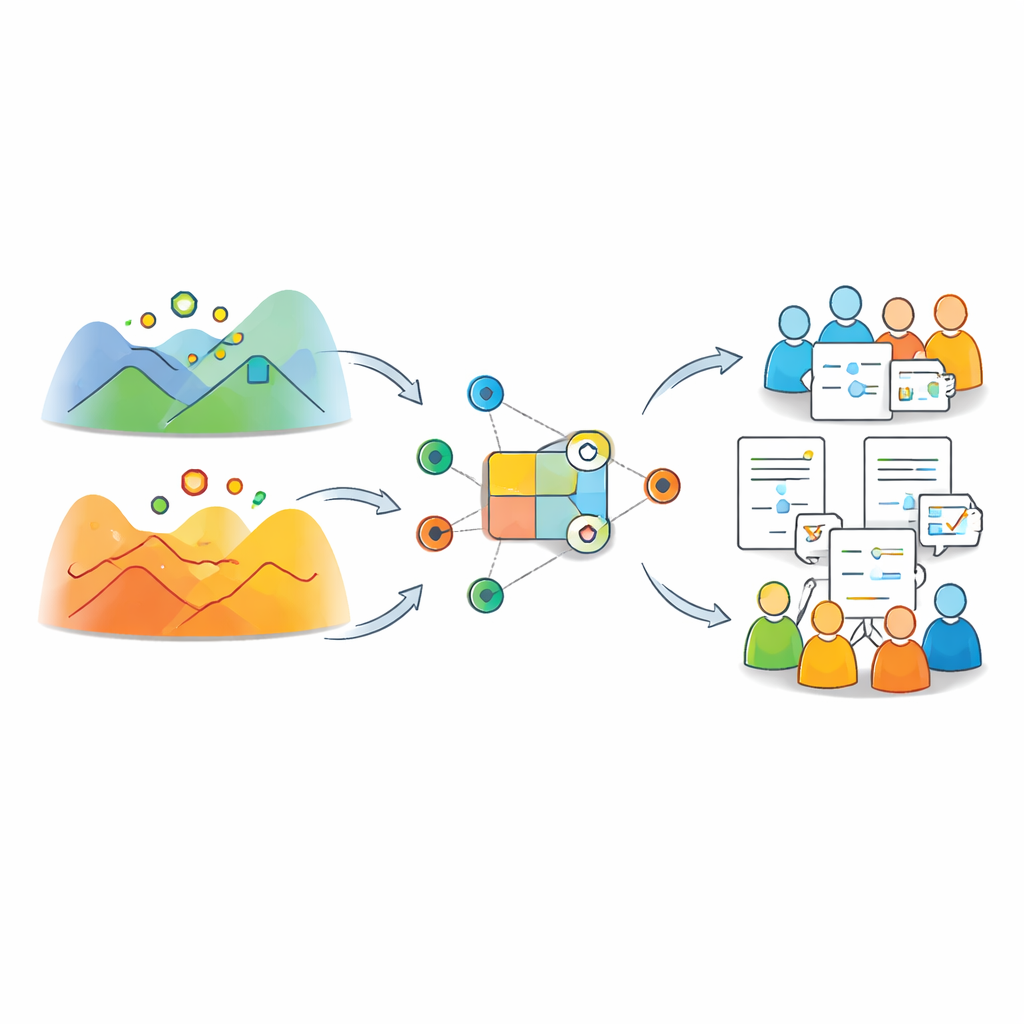
The second value landscape revolves around research merit in the conventional academic sense. Here the dominant values are rigour, validity, quality, and credibility, as defined within disciplines. Many scholars and reviewers worry that highly contextual, problem-oriented, and stakeholder-driven projects may fall short on these fronts, especially when research questions are messy and methods for integrating different kinds of knowledge are not fully standardised. At the same time, interdisciplinary and transdisciplinary work is credited with distinctive strengths: integrating diverse perspectives, drawing on both breadth and depth of expertise, and fostering creative collaboration that can lead to novel insights. These contributions are hard to compare across fields, and different disciplines use different yardsticks for what counts as "good" or "excellent" research, making evaluation a contested terrain.
Power, Conflicting Demands, and the Role of Assessment
Putting the two value landscapes side by side, the authors highlight two major issues. First, many key values—such as relevance, legitimacy, or quality—are indeterminate: their meaning shifts with context, discipline, and stakeholder group. Yet assessment systems often treat them as if they were clear and universal. This opens space for power imbalances, because funders and reviewers effectively decide which interpretation of these values prevails. Second, there is a disconnect between the push for societal impact and the continued reliance on narrow metrics like publication counts or journal rankings. Interdisciplinary and transdisciplinary projects are expected to deliver both cutting-edge scholarship and tangible social benefits, but the mechanisms used to judge them rarely acknowledge the trade-offs or provide tools for balancing these expectations.
Rethinking What We Reward in Collaborative Science
In conclusion, the article argues that overcoming barriers to cross-disciplinary research requires more than better methods or new indicators. It calls for a more explicit, shared reflection on the value landscapes that shape both research and its assessment. Instead of trying to impose a single standard, institutions and teams should recognise the plurality of values at stake, clarify how these are prioritised in specific contexts, and make the associated choices transparent. By bringing researchers, evaluators, and stakeholders into open discussion about what counts as quality and relevance, assessment practices can become more accountable and better aligned with the promise of interdisciplinary and transdisciplinary work: producing knowledge that is both intellectually robust and socially meaningful.
Citation: Schaltegger, AS., Vienni-Baptista, B. Value landscapes in interdisciplinary and transdisciplinary research and assessment: exploring indeterminacies and disconnects. Humanit Soc Sci Commun 13, 407 (2026). https://doi.org/10.1057/s41599-026-06785-0
Keywords: interdisciplinary research, transdisciplinary collaboration, research assessment, societal impact, scientific values