Clear Sky Science · en
Beyond borders, beyond care, beyond barriers: navigating barriers to healthcare access for undocumented Afghan immigrants in host societies
Why this story matters
Across the world, people forced to flee war often find that crossing a border does not end their struggle to stay healthy. This study looks closely at undocumented Afghan migrants living in Peshawar, Pakistan, and asks a simple but vital question: when you are afraid of being deported, poor, and treated as an outsider, what happens when you get sick? By listening to hundreds of migrants and combining surveys with in‑depth conversations, the authors reveal how laws, money, culture, and stigma combine to keep many Afghans away from the very clinics and hospitals they need most.
Life on the edge of the health system
Peshawar has long been a refuge for Afghans escaping conflict and political turmoil, but many live there without legal papers. The study surveyed 284 undocumented Afghan adults, interviewed 19 people in depth, and held four group discussions. Most respondents were working-age, had little formal education, and survived on informal jobs such as construction, domestic work, or street vending. Only about a third had seen a health provider in the past year. The researchers found that fear of arrest or deportation, lack of identity documents, and the high cost of care were the main reasons people stayed away from public clinics and hospitals, even when seriously ill.
Walls made of laws, money, and prejudice
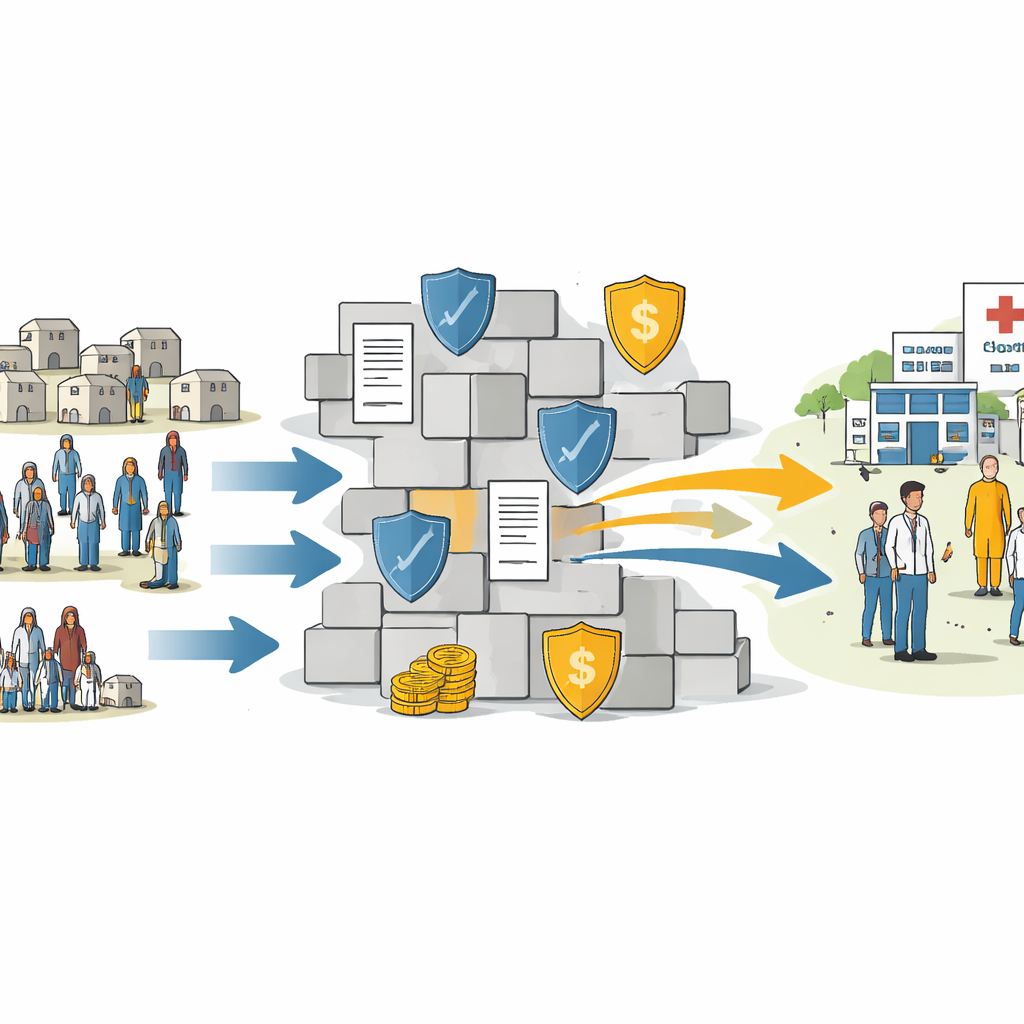
Pakistan has no national asylum law and is not part of the main international refugee agreements, so many Afghans are treated simply as “foreigners” under older security laws. In practice this means they can be detained or sent back, and health facilities often ask for identity papers. Survey data showed that 85 percent of participants lacked proper documents, 75 percent could not afford care, and 60 percent feared deportation if they sought help. Interviews brought these numbers to life: people told of being turned away from hospitals during emergencies, asked for large advance payments, or avoiding care altogether because a hospital visit felt as risky as crossing a checkpoint. Women faced an extra layer of difficulty, reporting far more restrictions on movement and stronger fear of deportation than men, as well as pressure to be accompanied by a male relative whenever they sought care.
Everyday struggles of body and mind
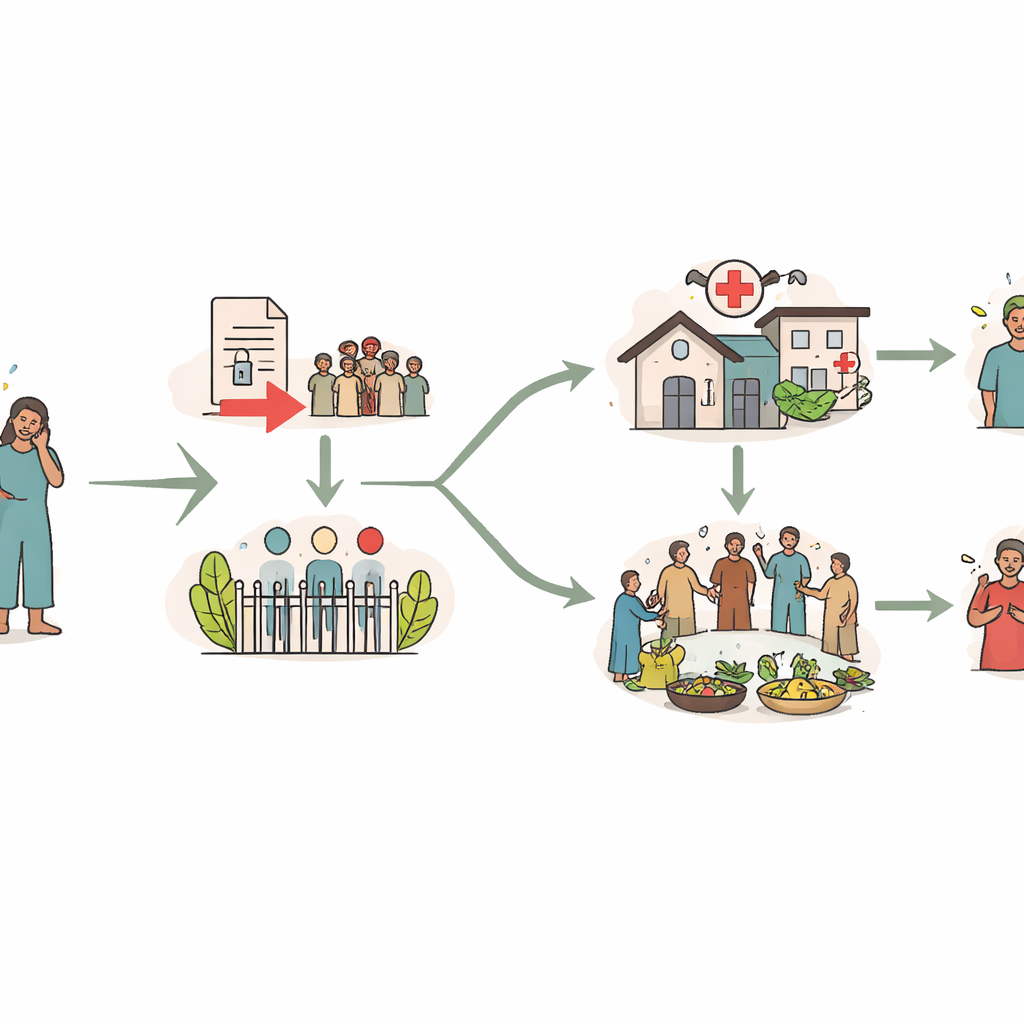
The consequences of these barriers reach far beyond skipped checkups. Many participants described ongoing infections, breathing problems, stomach issues, and chronic pain that they simply endured. Half reported signs of serious emotional distress, including anxiety, depression, and symptoms resembling post‑traumatic stress, rooted in memories of war and in the stress of surviving without rights or security. Yet formal mental health services were almost completely out of reach: clinics were distant or costly, staff rarely spoke Afghan languages, and talking about psychological problems carried heavy stigma. As a result, people often turned to prayer, silence, or self‑medication instead of counseling or therapy.
Finding help outside official doors
Despite these obstacles, the study also reveals striking resilience and creativity. Afghan migrants lean heavily on informal support systems to survive health crises. Community members pool money to pay for someone’s surgery or hospital visit; neighborhood clinics sometimes provide medicine on credit; and non‑governmental organizations (NGOs) run small clinics that treat people regardless of documents, though with limited staff and supplies. Many families rely on traditional remedies and home treatments for common ailments because they are familiar and affordable, even if they do not always solve underlying problems. These coping strategies ease some suffering, but they cannot replace a stable, inclusive health system.
What needs to change
The authors argue that what keeps Afghan migrants from care is not individual failure, but a web of rules and attitudes that systematically pushes them to the margins. Using ideas from social medicine and human rights, they call for separating healthcare from immigration control so that hospitals and clinics are safe spaces, not gateways to detention. They recommend free or low‑cost essential services, especially for mental health; stronger protection and funding for NGO and community clinics; practical documentation schemes that reduce fear; and training for health workers in language support, cultural sensitivity, and gender‑aware care. In plain terms, the study concludes that no one’s right to see a doctor should depend on the papers they carry, and that protecting the health of undocumented Afghans is both a matter of public health and of basic human dignity.
Citation: Iqbal, K., Liang, H. Beyond borders, beyond care, beyond barriers: navigating barriers to healthcare access for undocumented Afghan immigrants in host societies. Humanit Soc Sci Commun 13, 430 (2026). https://doi.org/10.1057/s41599-026-06734-x
Keywords: Afghan migrants, undocumented immigration, healthcare access, Peshawar Pakistan, migration and mental health