Clear Sky Science · en
Associations between parental and child physical activity and screen time during the first wave of the COVID-19 pandemic
Why this study matters for families
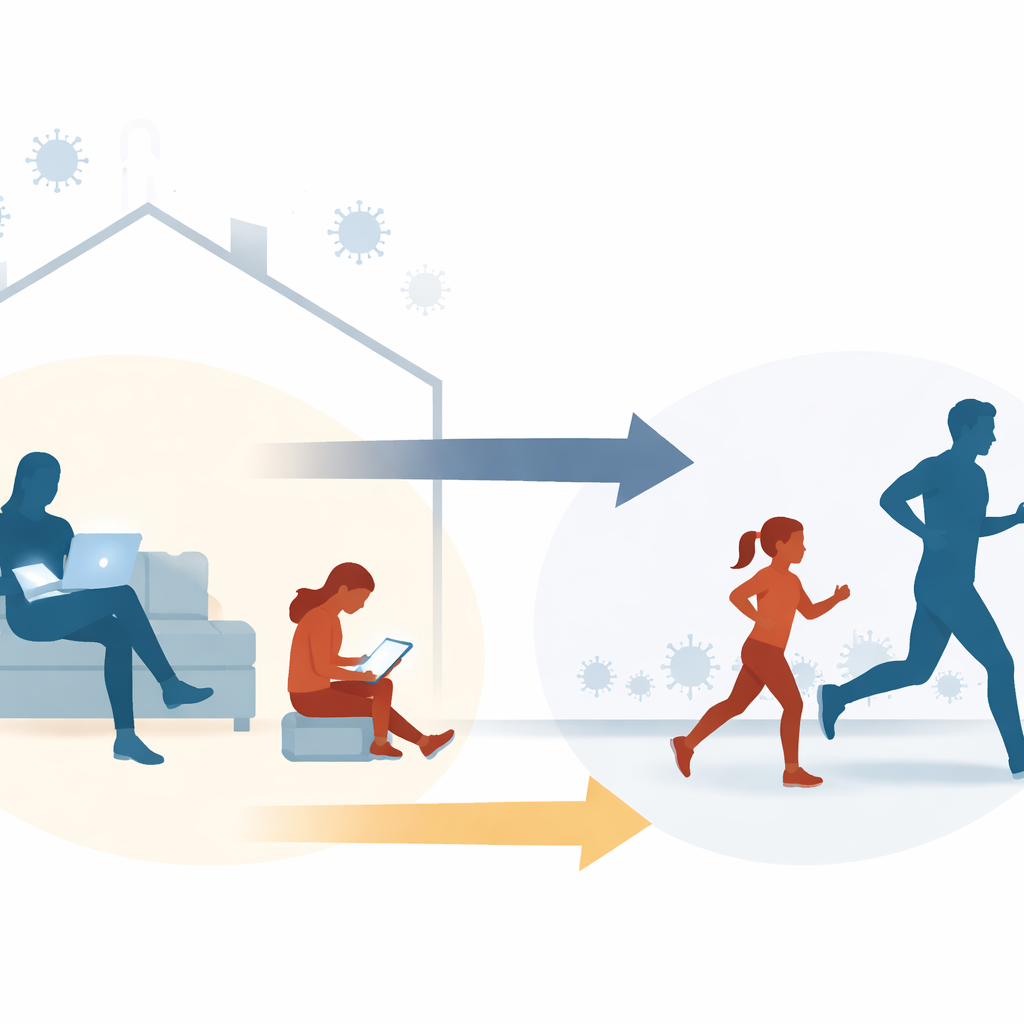
The first months of the COVID‑19 pandemic upended family routines, closing schools, gyms, and playgrounds while pushing work and school into the home. This study asks a question many parents quietly wondered about during that time: did their own habits—how much they moved and how much time they spent in front of screens—influence how active their children were and how much screen time those children logged?
Life at home during lockdown
Researchers in Calgary, Canada, surveyed more than 300 parent–child pairs between April and June 2020, during the first wave of COVID‑19 restrictions. One parent from each household reported on their own weekly exercise and recreational screen time, as well as their child’s daily activity and screen use. Children in the study were 5 to 17 years old. The team focused on two key behaviours: moderate‑to‑vigorous physical activity—things like brisk walking, biking, or sports that get the heart pumping—and screen time for fun, such as watching shows, gaming, or browsing online.
How active and how plugged in were kids?
The picture that emerged was sobering. Only about one in six children were getting at least an hour of heart‑pumping activity every single day, the level recommended for good health. At the same time, nearly nine out of ten children spent at least two hours a day on one or more types of recreational screen use. Most watched two or more hours of TV or online video, and many also spent long stretches on computers, video games, or other devices. Boys and girls looked broadly similar, though boys were more likely than girls to spend extended time gaming or using computers.
Parents as mirrors for their children
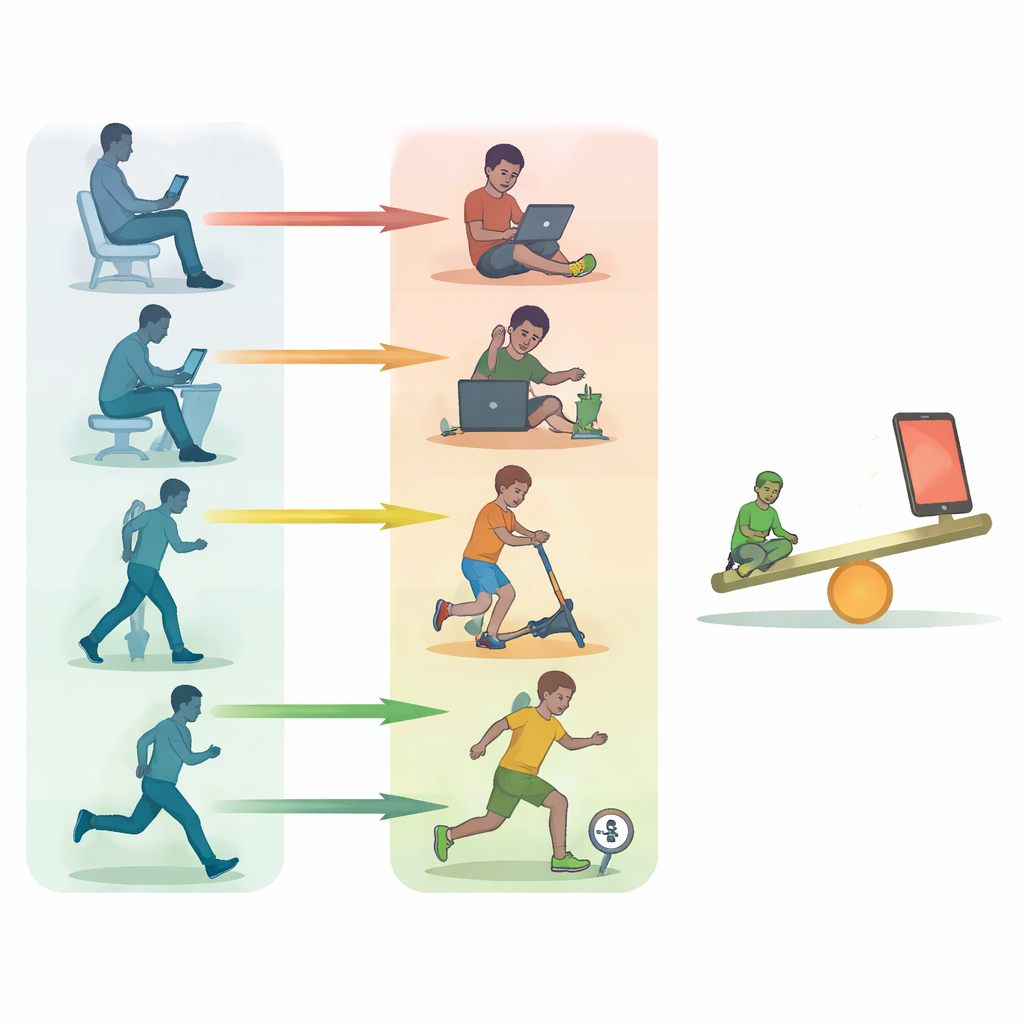
When the researchers linked parents’ habits to those of their children, a clear pattern appeared. Parents who logged more weekly hours of physical activity were more likely to have children who achieved the daily hour of exercise. For every additional hour the parent spent being active each week, the odds that their child met the daily activity target rose modestly. In contrast, parents who devoted more time to recreational screen use tended to have less active children. Their kids were less likely to reach the hour‑a‑day activity mark and more likely to spend long periods in front of screens themselves.
Screen habits that spread through the household
Parents’ screen time did not just line up with one specific type of screen use in their children—it was tied to all of them. More hours of parent recreational screen time went hand in hand with a higher chance that a child watched a lot of TV or online video, played video games or used a computer for long stretches, and spent extended time on other devices. These links held even after accounting for family income, parent education, parent anxiety about COVID‑19, and other background factors. The patterns were similar for sons and daughters, suggesting that the influence of parent behaviour worked much the same regardless of the child’s gender.
Limitations behind the numbers
The study relied on parents’ reports of both their own and their child’s behaviour, which may not be perfectly accurate, and it captured only one moment in time during an unusual global crisis. It also could not fully separate recreational from school‑related or work‑related screen use for children, and it included just one parent–child pair per household. These limits mean the study cannot prove that parents’ habits caused changes in their children’s behaviour. Still, the findings provide a valuable snapshot of family life when the usual options for play, sport, and socializing were suddenly restricted.
What this means for everyday families
In plain terms, the study suggests that during the early COVID‑19 lockdowns, children’s movement and screen habits tended to echo those of their parents. Families in which adults stayed active were more likely to have active children, while high parent screen use went along with heavier child screen use. Even in stressful times, this points to a simple, practical idea: when parents carve out time to move and set boundaries around their own recreational screen use, they may be helping their children do the same. Family‑focused efforts that encourage shared walks, games, or bike rides—and that set fair, consistent limits on screens for everyone in the household—could be a powerful way to support children’s health during future disruptions as well as in everyday life.
Citation: Ng, L.A., Doyle-Baker, P.K. & McCormack, G.R. Associations between parental and child physical activity and screen time during the first wave of the COVID-19 pandemic. Humanit Soc Sci Commun 13, 368 (2026). https://doi.org/10.1057/s41599-026-06731-0
Keywords: parental influence, child physical activity, screen time, COVID-19 pandemic, family health