Clear Sky Science · en
Intercultural sensitivity of preservice primary school teachers: insights from a modified intercultural sensitivity scale and interethnic friendship, plurilingualism, and socioeconomic status as key antecedents
Why this topic matters for today’s classrooms
Across Europe, more and more children come to school with different home languages, family histories, and cultural backgrounds. This diversity can enrich learning, but it can also lead to misunderstanding and exclusion if teachers are not ready for it. This article explores how future primary school teachers in Slovenia feel and act when they meet people from other cultures, and what kinds of life experiences help them become more open, comfortable, and fair in these encounters.
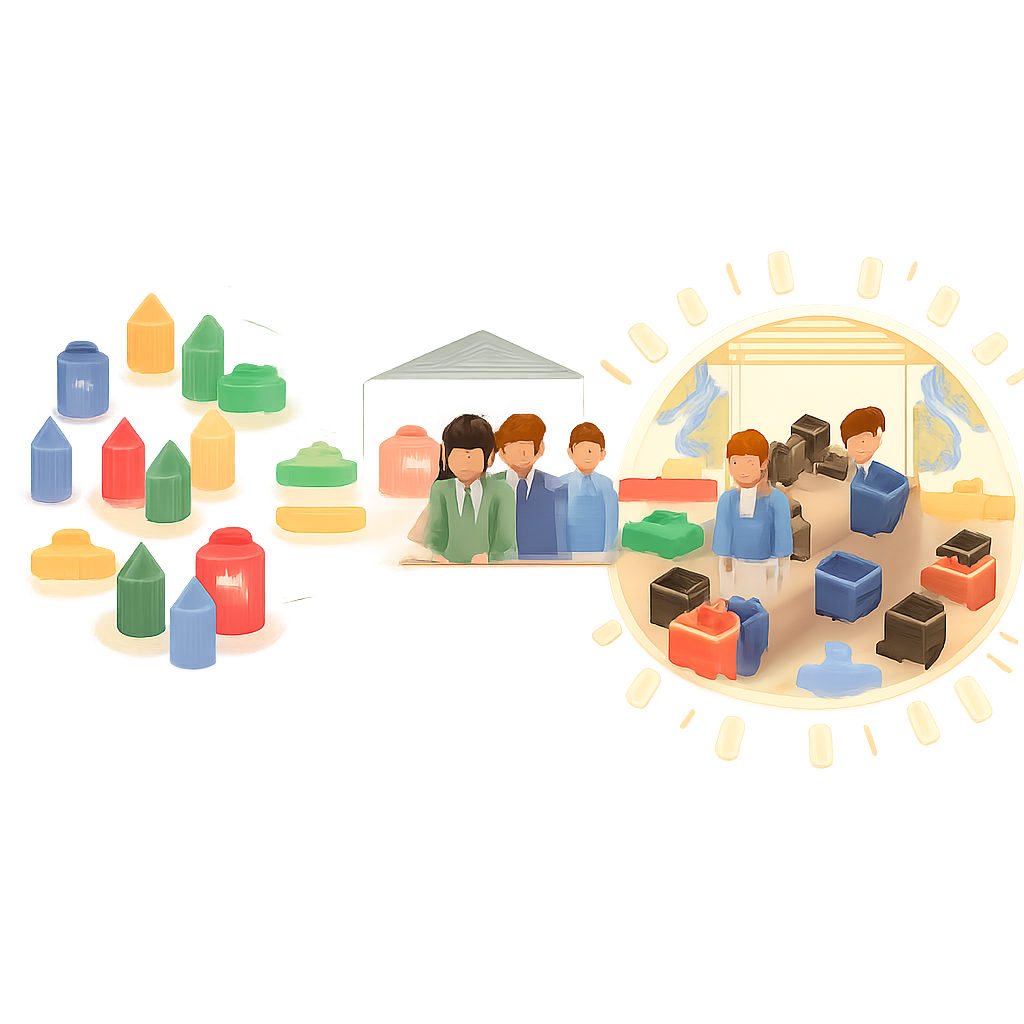
Understanding comfort with cultural differences
The researchers focus on “intercultural sensitivity,” which describes how positively people react to cultural differences in everyday contact. Rather than testing what teachers know about other cultures, the study looks at their feelings and willingness to engage. It breaks this into four aspects: getting involved in cross-cultural conversations, respecting different ways of life, feeling confident when talking to someone from another background, and actually enjoying such interactions. These emotional foundations are seen as the starting point for later skills, such as adjusting teaching methods and building trusting relationships with students and parents.
Adapting a tool to the Slovenian context
To measure these attitudes, the authors translated and tested a widely used questionnaire called the Intercultural Sensitivity Scale with 215 future primary school teachers from all three education faculties in Slovenia. Through careful statistical analysis, they found that the original five-part structure of the scale did not fit Slovenian responses well. Some questions were hard to translate, carried different shades of meaning, or reflected everyday social rules rather than distinct abilities. After removing eight items and one whole dimension, they created a shorter, four-part Slovenian version (ISS-S) that worked reliably in this specific cultural setting. This shows that tools developed in one country cannot simply be copied into another without adjustment.
What future teachers already do well—and where they struggle
The results paint a mixed picture of strengths and gaps. On average, the future teachers reported high levels of enjoyment when interacting with people from other cultures, strong respect for cultural differences, and a good willingness to take part in cross-cultural conversations. In other words, many like diversity and value it in principle. However, they felt noticeably less sure of themselves when actually engaging in such encounters. Lower confidence is especially worrying in a system where teachers must communicate not only with pupils but also with parents, extended families, and community members who may speak different languages or have experienced discrimination in school.
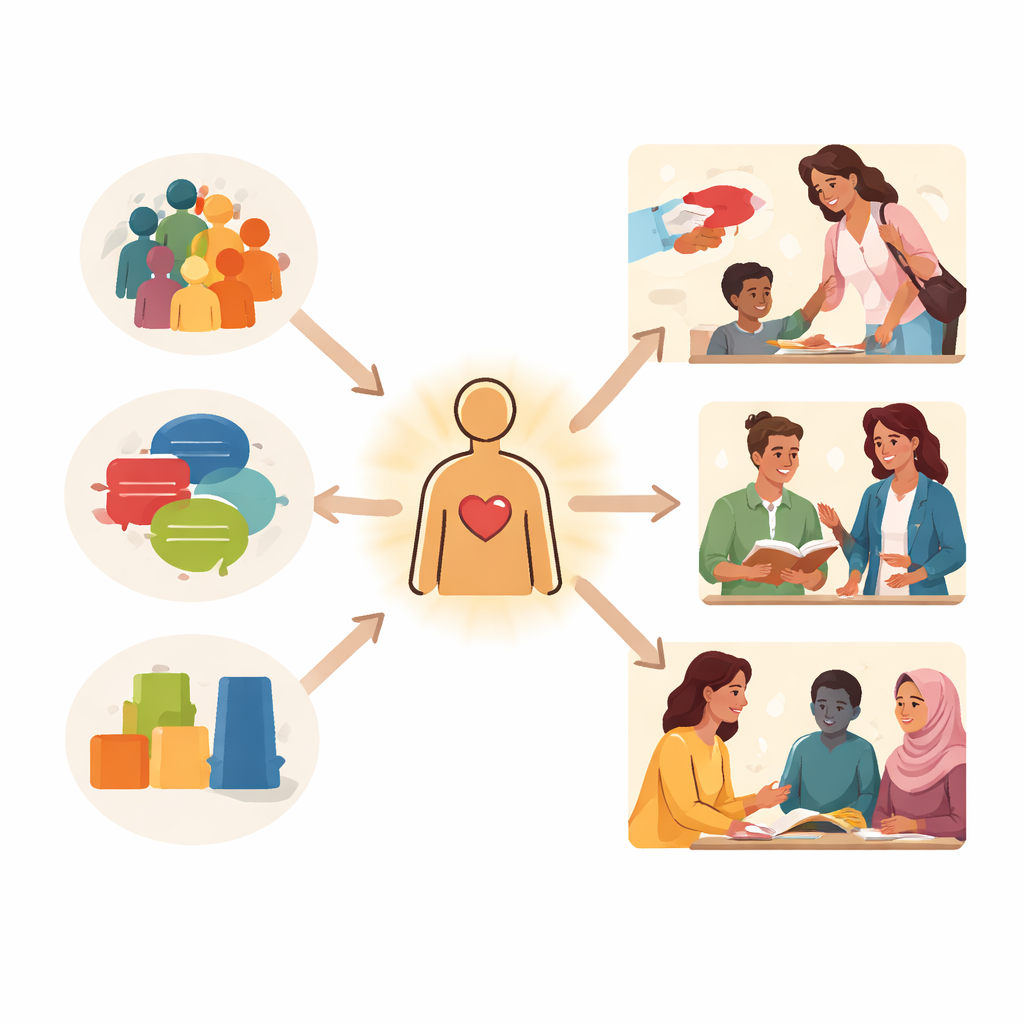
Friendships, languages, and background as key influences
The study then asked which life experiences are linked to stronger intercultural sensitivity. Three stood out. First, having close friends from other ethnic groups was consistently connected with all four dimensions: those who had such friendships were more engaged, more respectful, more confident, and enjoyed cross-cultural contact more. Second, speaking several languages was tied to higher confidence, and to active engagement as long as the effect of interethnic friendships was not already accounted for. Third, growing up in families with higher socioeconomic status was modestly linked to greater enjoyment in cross-cultural situations, possibly because of more chances to travel or meet diverse people. University study level and gender played little role.
What this means for teacher education and beyond
For a general reader, the key takeaway is that good intentions alone are not enough to prepare teachers for diverse classrooms. The study shows that future teachers in Slovenia largely value cultural diversity but often feel unsure when acting on these values. Face-to-face friendships across group lines, experience with multiple languages, and wider life opportunities appear to nurture the emotional ease that underpins fair and inclusive practice. The authors recommend that teacher education programs deliberately create more chances for such contact—through diverse study groups, community projects, language learning, and cooperation with families from minority backgrounds—and use the adapted ISS-S scale to track progress over time. In doing so, schools can move closer to becoming places where every child’s identity is recognised and respected, and where diversity becomes an everyday source of strength rather than tension.
Citation: Mlinar, K., Mlinarič, T. & Krammer, G. Intercultural sensitivity of preservice primary school teachers: insights from a modified intercultural sensitivity scale and interethnic friendship, plurilingualism, and socioeconomic status as key antecedents. Humanit Soc Sci Commun 13, 375 (2026). https://doi.org/10.1057/s41599-026-06707-0
Keywords: intercultural sensitivity, teacher education, multicultural classrooms, interethnic friendships, plurilingualism