Clear Sky Science · en
Incivility, domination, and resistance: rhetorical practices on Persian Twitter during the #MahsaAmini movement
Harsh Words in a Time of Protest
The death of Mahsa Amini in 2022 ignited massive protests in Iran under the slogan “Woman, Life, Freedom.” Much of this struggle unfolded not only in the streets but also online, especially on Persian-language Twitter. This article explores how Iranians used sharp, often hostile language on Twitter during those first intense months, and what that reveals about power, anger, and resistance under an authoritarian regime.
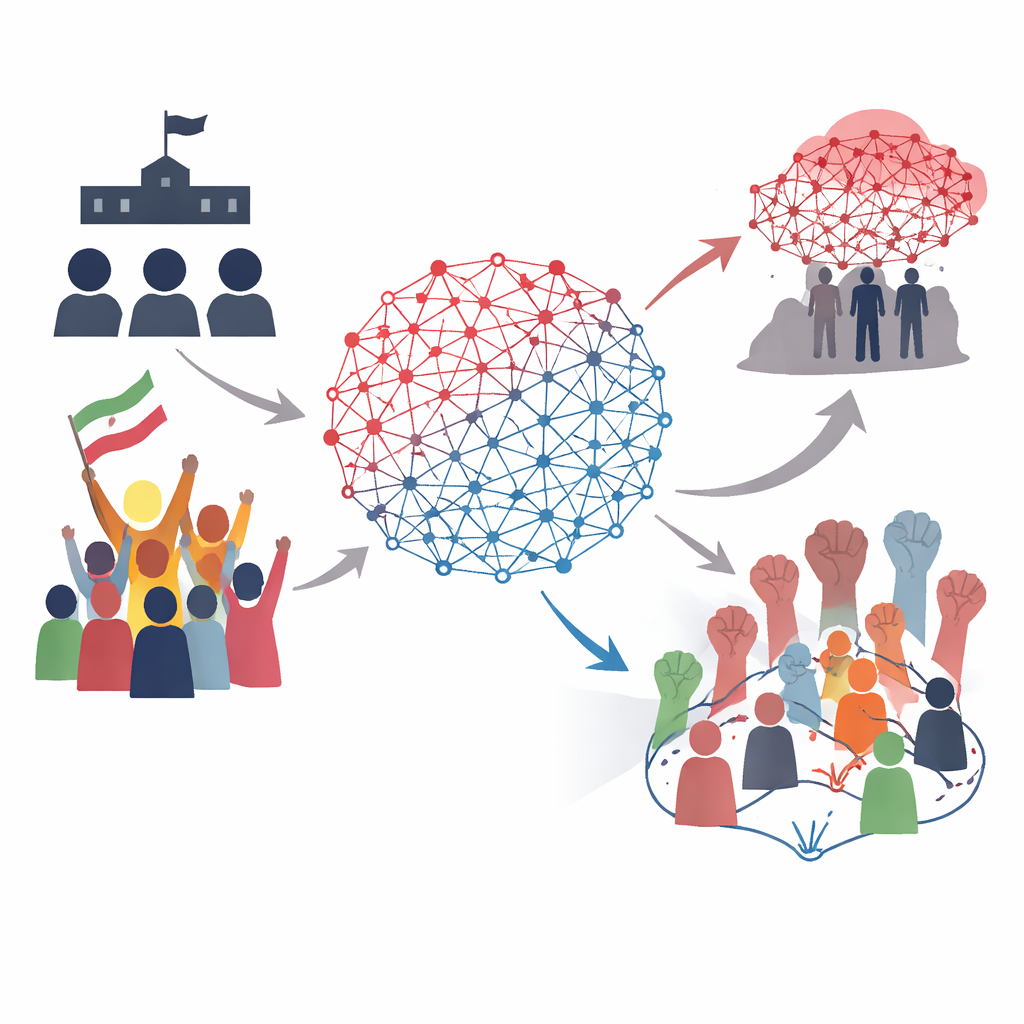
Many Voices in a Crowded Online Square
The researchers examined more than 36,000 popular Persian tweets posted by nearly 5,000 users in the two months after Mahsa Amini’s death. Instead of looking only at hashtags, which pro-government users often avoided, they collected all tweets that received over 1,000 likes per day. A trained team of native Persian speakers then carefully read and coded both user profiles and tweets, sorting people into political communities and labeling different forms of harsh language, from mild put‑downs to outright threats. This approach allowed them to see not just what was said, but who was saying it and in what political context.
Who Was Speaking, and From Where?
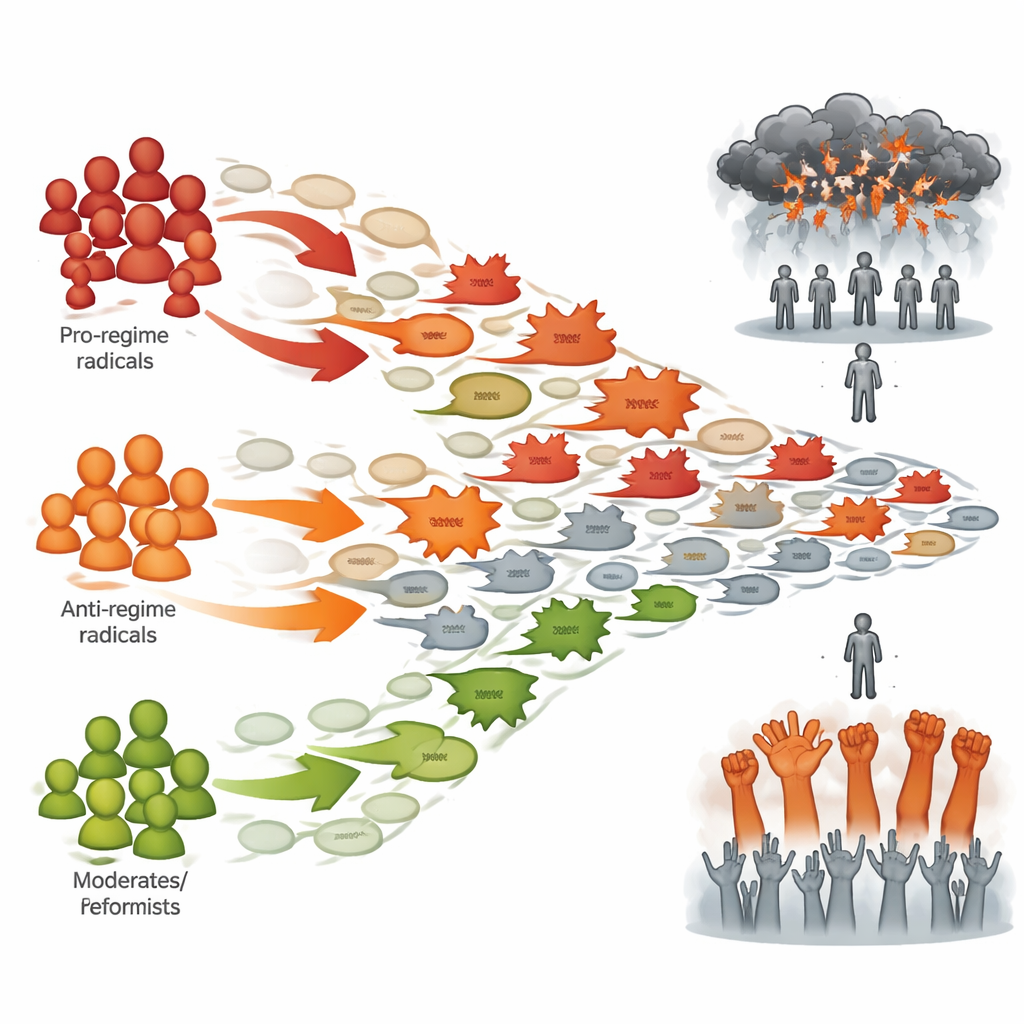
The study identified six main communities: radical and monarchist opponents of the Islamic Republic, radical and moderate supporters of the regime, reformists, and a small set of suspicious accounts likely linked to state propaganda efforts. The biggest share of activity came from radical anti‑regime users, but radical regime supporters and monarchists were also highly active. Interestingly, earlier research had found reformists to be central on Persian Twitter; during the Mahsa Amini protests, however, their presence shrank sharply, suggesting that many former reformist users shifted toward openly anti‑regime positions as anger and disappointment grew.
Insults as Weapons and as Shields
The authors focused on “incivility” as an umbrella term, including pejorative jokes, direct insults, and threats. About one in three tweets in the dataset contained some form of uncivil language. Radical regime supporters were the most uncivil group: nearly half of their messages were hostile. They frequently used sarcasm and metaphors to belittle protesters, depict the uprising as mere “chaos,” and compare demonstrators to violent extremists or sex workers. These rhetorical moves framed the protests as illegitimate and dangerous, making harsh crackdowns appear reasonable. Anti‑regime users also used strong language—often more direct insults and vivid metaphors drawn from mythology, animals, or sexuality—but typically to express rage at state violence, mourn victims, and expose contradictions in the regime’s claims.
Between Domination and Resistance
Not all harsh language served the same purpose. For regime supporters, incivility was largely a tool of domination: a way to discredit activists, deny the scale of protests, and normalize repression. For many dissidents, incivility functioned as a form of resistance in a context where polite criticism is easily ignored or punished. Their tweets called for boycotts of pro‑regime businesses, highlighted brutality in places like Zahedan, and challenged attempts to downplay killings and arrests. A smaller group of moderates and reformists used milder put‑downs to pressure authorities to listen to citizens and avoid further bloodshed, hinting at a more “constructive conflict.” Yet these voices were drowned out by the louder, more radical sides and were sometimes attacked as “normalizers” trying to whitewash state violence.
When Identity Matters Less Than Belief
A key finding of the study is that, unlike many Western cases of online hate, most attacks in this Iranian protest context did not target people for their gender, religion, or ethnicity. Instead, they targeted political stance. Both camps sometimes used sexual and degrading language, especially about women, but this was usually tied to smearing someone’s political role rather than their identity alone. This challenges common models of hate speech that center on “protected characteristics” like race or religion and raises difficult questions for global content‑moderation systems trained mainly to spot racism or sexism.
What This Means for the Online World
The authors conclude that in authoritarian settings, harsh online speech is deeply shaped by unequal power. For regime supporters, incivility helps uphold a repressive order; for many dissidents, it is one of the few ways to shout back. The study suggests that platforms and policymakers cannot simply import Western definitions of hate speech and expect them to work. Instead, they must pay attention to local politics, languages, and risks, so that efforts to curb harm do not end up silencing those who are already under threat.
Citation: Kermani, H., Makki, M., Oudlajani, F. et al. Incivility, domination, and resistance: rhetorical practices on Persian Twitter during the #MahsaAmini movement. Humanit Soc Sci Commun 13, 392 (2026). https://doi.org/10.1057/s41599-026-06663-9
Keywords: online incivility, Mahsa Amini protests, Persian Twitter, hate speech, authoritarian politics