Clear Sky Science · en
Forest loss persists despite certification and protection
Why this study matters for our planet
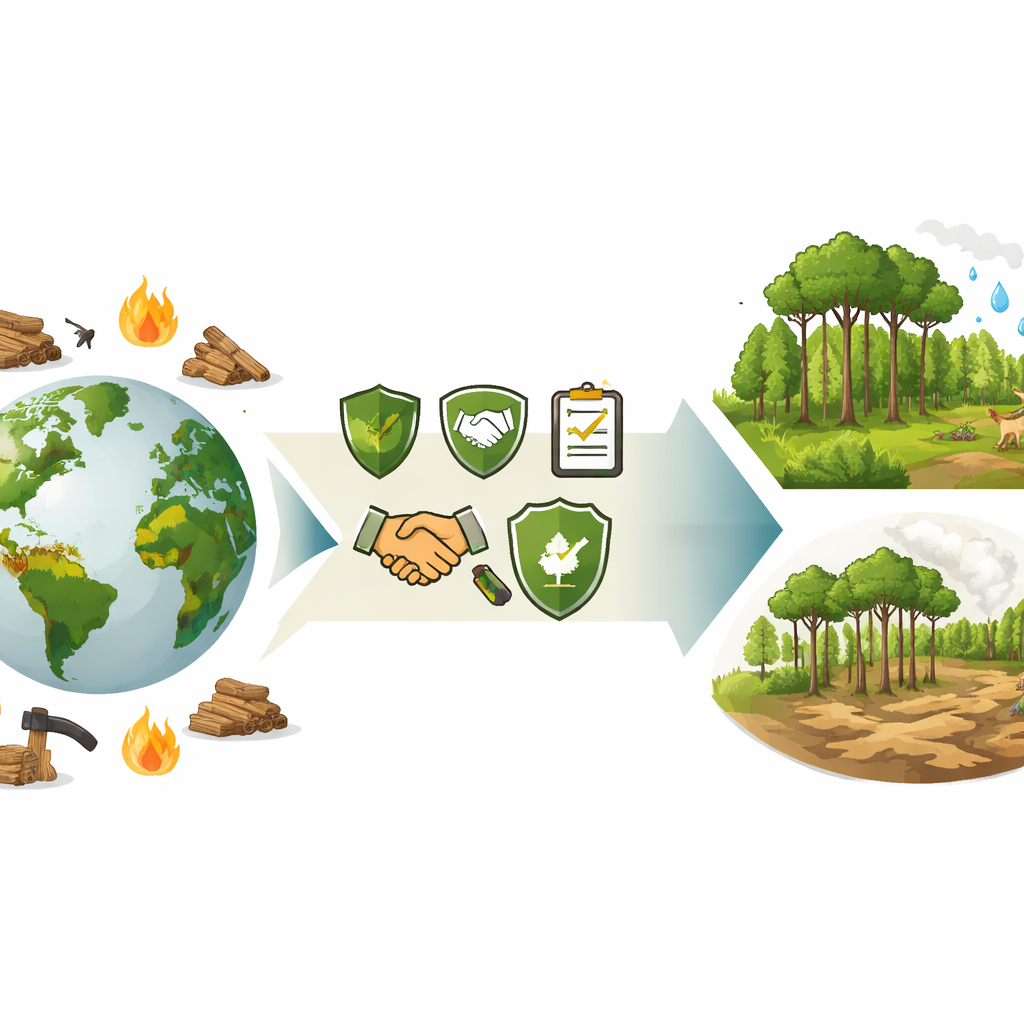
Forests are often called the lungs of the Earth, but they are also pantries, shelters, and water towers for people and wildlife. Around the world, governments and companies use eco-labels and national parks to reassure the public that forests are being looked after. This study asks a simple but uncomfortable question: with all these promises and protections in place, is the world actually losing less forest? Using more than a decade of detailed satellite data, the authors show that global forest loss has not declined—and that popular tools such as certification and protected areas are not yet delivering the broad slowdown many people expect.
Taking a global look at disappearing trees
The researchers examined high‑resolution satellite records of tree canopy removal from 2013 to 2023, tracking where forests were completely cleared by logging, fire, farming, or other disturbances. They compared these losses with information on two major forest certification schemes—the Forest Stewardship Council (FSC) and the Programme for the Endorsement of Forest Certification (PEFC)—and with data on national parks and other formally protected areas. They also factored in economic and social conditions, such as a country’s income level, population density, and how much wood it produces for fuel and industry. By combining these sources, they could see not just how much forest was lost, but whether places with more certification or protection did any better.
Where forest loss is concentrated
The study reveals that forest loss is heavily concentrated in a handful of countries and regions. The Russian Federation, Brazil, Canada, and the United States together accounted for nearly half of all canopy loss during the decade. In boreal regions like Russia and Canada, fire was the main driver, while in tropical countries such as Brazil, the Democratic Republic of the Congo, and Indonesia, non‑fire causes—like logging and conversion to farms or pasture—dominated. At the same time, the world expanded its protected forests from about 868 million hectares to roughly 990 million hectares, and PEFC‑certified forest area grew. Yet this expansion did not translate into a clear reduction in forest loss at the national scale.
Wood demand, wealth, and stubborn loss
When the authors dug deeper into what explains forest loss, some clear patterns emerged. Countries that produced more industrial roundwood and fuelwood tended to lose more forest from non‑fire causes, reflecting the direct impact of logging and wood harvesting. In contrast, higher national income (measured as gross domestic product per person) was linked with lower forest loss, especially from fire. This suggests that poorer countries may face stronger pressures to clear forests and have fewer resources to prevent or control damaging fires. Importantly, even after accounting for these factors, countries with more FSC or PEFC certification, or more land in protected areas, did not show systematically lower rates of forest loss.
Limits of labels and lines on maps
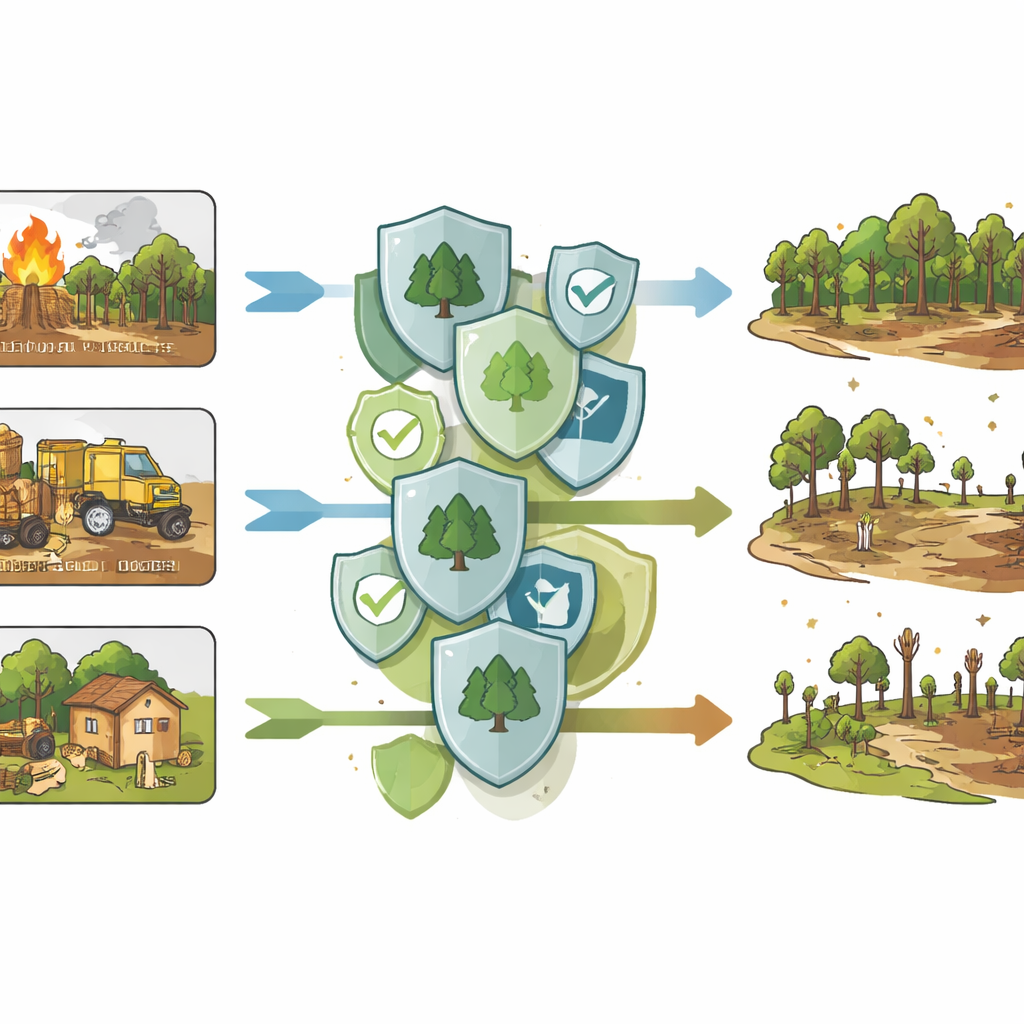
The findings do not mean that certification labels or parks are useless. Certified forests may still be better managed than non‑certified forests, and protected areas can safeguard wildlife and ecosystems within their boundaries. However, at the scale of entire countries, these tools appear too weak, too limited in coverage, or too poorly integrated with surrounding landscapes to noticeably slow overall forest loss. In some cases, protection seemed less effective where pressure to harvest wood was high, and certification schemes cover only about a tenth of the world’s forests. The authors argue that these strategies have often been treated as separate tracks—market labels on one side, government‑run reserves on the other—rather than as pieces of a coordinated plan that also includes Indigenous land stewardship and broader land‑use policies.
What this means for the future of forests
In plain terms, the study concludes that the world is still losing forests at a worrying rate, and that current certification schemes and protected‑area expansion have not yet bent the global curve downward. Forest loss remains closely tied to rising demand for wood and to economic inequality between nations. To truly halt or reverse forest loss, the authors suggest that countries must strengthen and better connect existing tools: expand and improve certification, enforce protection more effectively, support Indigenous‑led management, and align forest policies with international pledges such as the Glasgow Leaders’ Declaration on Forests and Land Use. Without such integrated efforts, reassuring labels and park boundaries will remain more promise than proof.
Citation: Taylor, C., Evans, M.J. & Lindenmayer, D.B. Forest loss persists despite certification and protection. Commun. Sustain. 1, 58 (2026). https://doi.org/10.1038/s44458-026-00055-5
Keywords: forest loss, deforestation, forest certification, protected areas, global sustainability