Clear Sky Science · en
Small intestinal bacterial overgrowth is common in celiac disease but is not associated with Marsh score
Why the Gut’s Tiny Tenants Matter
Celiac disease is often explained as the body’s bad reaction to gluten, but there is more to the story. Many people with celiac disease continue to have bloating, pain, or bowel troubles even after giving up gluten completely. This study asks a simple but important question: could extra growth of microbes in the small intestine be one reason why some people with celiac disease still feel unwell, and does this extra growth track with how damaged the gut lining looks under the microscope?
What Happens in Celiac Disease
In celiac disease, the immune system attacks the lining of the small intestine when a person eats gluten, a protein found in wheat, barley, and rye. Over time, this attack can blunt the tiny fingerlike projections that absorb nutrients, leading to problems such as weight loss, anemia, and diarrhea. Doctors can grade this damage using a system called the Marsh score. At the same time, scientists have learned that the mix of bacteria and other microbes in the gut is also altered in celiac disease, with some types becoming more common and others disappearing. These changes may influence how leaky or inflamed the gut becomes and might shape how severe a person’s symptoms are.

Too Many Microbes in the Wrong Place
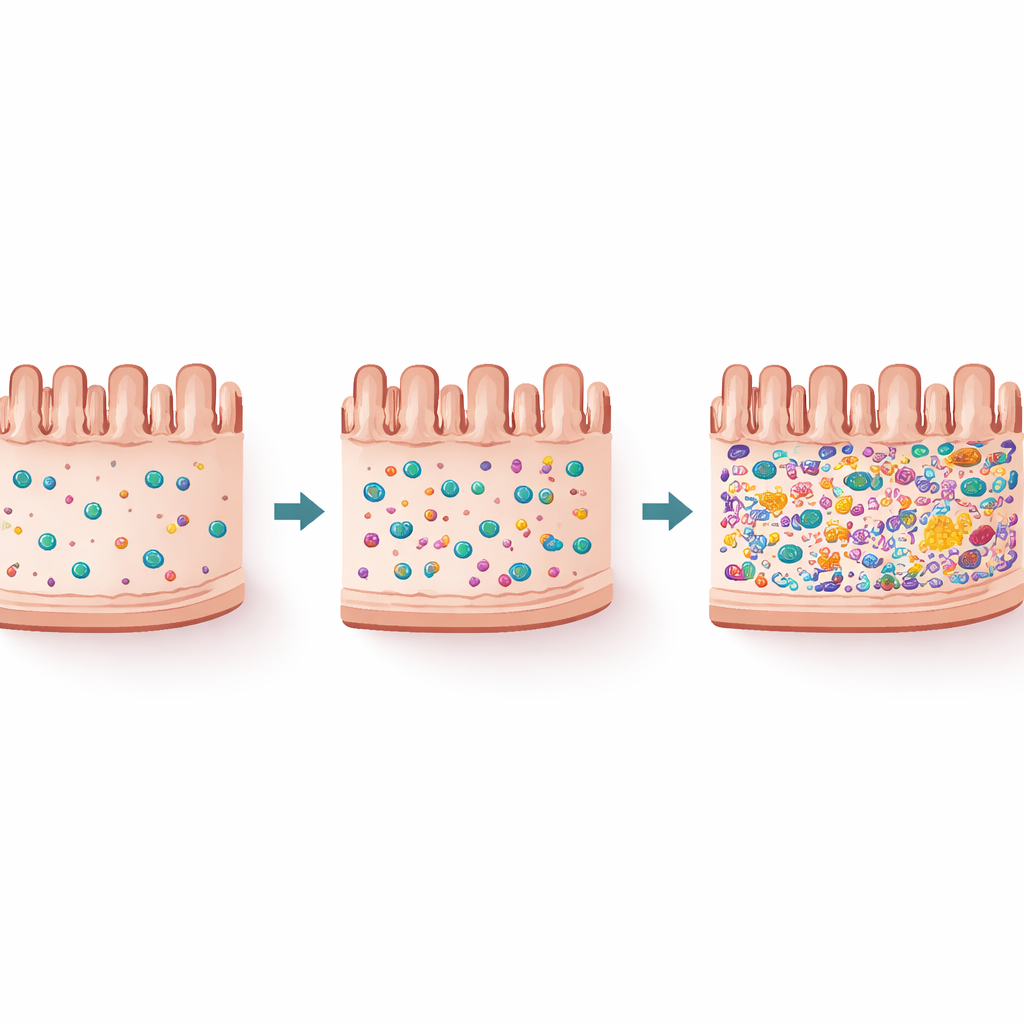
The small intestine usually contains fewer microbes than the large intestine. When large numbers of bacteria, fungi, or methane-producing organisms crowd into the small intestine, this is called microbial overgrowth. The most familiar form is small intestinal bacterial overgrowth, or SIBO, but there can also be overgrowth of fungi or methane-making microbes. These conditions can trigger gas, bloating, loose stools, or constipation and are typically detected either by directly sampling fluid from the upper small intestine during an endoscopy or by having patients drink a sugar solution and measuring gases in their breath over time.
What This Study Measured
Researchers at Mayo Clinic reviewed records from 256 people with confirmed celiac disease who had fluid samples taken from the small intestine, plus a smaller group who had breath tests. They checked how often bacterial or fungal overgrowth occurred and compared this with each person’s Marsh score and whether their celiac disease was considered “refractory,” meaning symptoms and gut damage continued despite a strict gluten-free diet. Using two different cutoffs for what counts as bacterial overgrowth, they found that between about one in six and one in two of these patients had SIBO. Fungal overgrowth was much less common and was usually found along with bacterial overgrowth rather than on its own.
Surprising Links—and Non-Links
One of the most striking findings was what did not line up. The amount of bacterial overgrowth did not match how damaged the intestine looked; people with low Marsh scores, suggesting healed or nearly healed tissue, could still have plenty of excess bacteria. In contrast, those with refractory celiac disease were far more likely to have SIBO than those whose disease was not refractory. Among the 39 people who had breath tests, almost a quarter had signs of microbial overgrowth, and every positive test showed a pattern linked to methane-producing microbes, which are often associated with slower gut movement and constipation rather than diarrhea.
What This Means for Patients
This study shows that extra growth of microbes in the small intestine is common in people with celiac disease cared for at a large referral center, especially in those whose symptoms persist despite avoiding gluten. However, this overgrowth does not appear to be the main driver of the gut lining damage seen under the microscope. Instead, it may be one of several factors that keep symptoms going even after the tissue has begun to heal. For people with celiac disease who remain uncomfortable on a strict gluten-free diet, doctors may want to think about testing for microbial overgrowth as a treatable piece of the puzzle, while recognizing that it is only part of a larger, complex picture of gut health.
Citation: Damianos, J.A., King, K.S., Lee, A. et al. Small intestinal bacterial overgrowth is common in celiac disease but is not associated with Marsh score. npj Gut Liver 3, 16 (2026). https://doi.org/10.1038/s44355-026-00059-x
Keywords: celiac disease, gut microbiome, small intestinal bacterial overgrowth, intestinal methanogen overgrowth, gluten-free diet symptoms