Clear Sky Science · en
Modal synergies between dockless electric bikes and rail transit in Lausanne Switzerland
Why bikes and trains matter for everyday trips
Many cities want people to drive less, but simply running more buses and trains is rarely enough. A big, practical question remains: how do you actually get people to and from the station, especially if they live on a hill or a bit too far to walk? This study looks at a new dockless electric bikesharing service in Lausanne, Switzerland, and asks whether these e-bikes really help people reach trains and metros – and by how much they can stretch the reach of public transport into surrounding neighborhoods.
From scattered bikes to station helpers
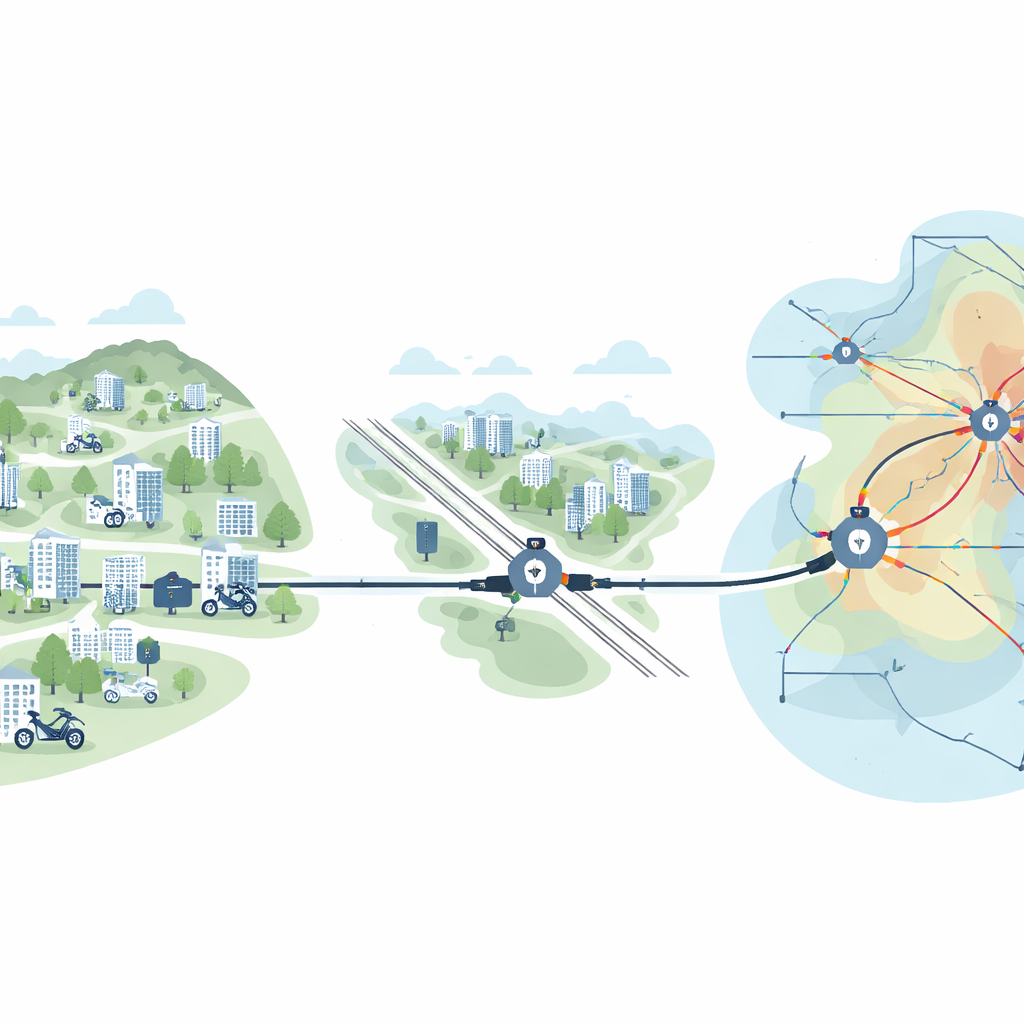
The researchers examined more than 59,000 trips made on Bird’s dockless e-bikes over 15 months across Lausanne and the nearby university campus. Unlike station-based bike systems, these e-bikes can be picked up and dropped off in virtual parking zones without fixed docks. Using detailed operator data, the team rebuilt each trip’s likely route on the street network and then focused on those that started or ended near rail and metro stations. Because they did not have direct information about whether a rider actually boarded a train, they created a careful proxy: if a bike trip began or ended within a short walking distance of a station entrance, and during hours when trains were running, it was treated as a potential station access or exit leg.
Finding bike–train chains in the data
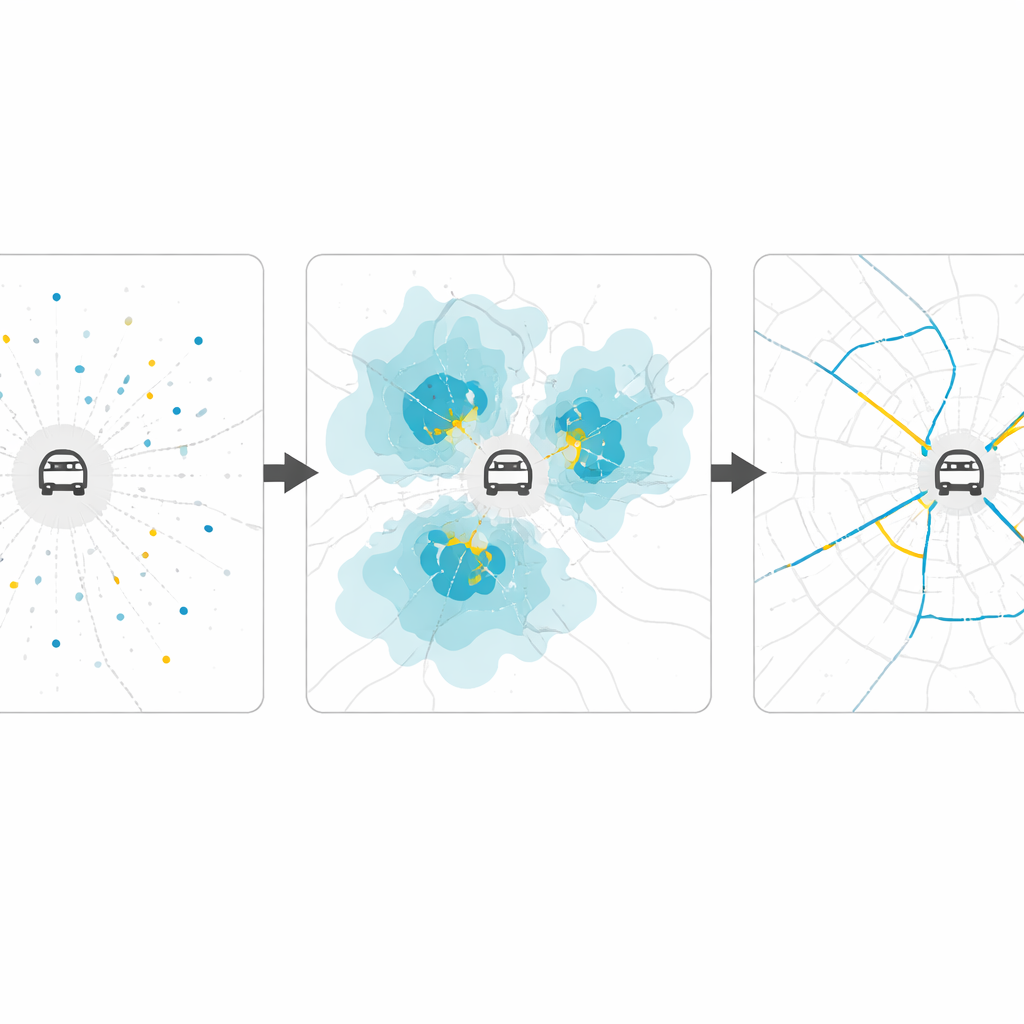
To capture these station–bike links more realistically than a simple circle on a map, the authors built what they call “Inside Station Catchment Area” (ISCA) trips. Around each of 43 stations they generated one-minute walking zones that follow real streets and paths, not just straight-line distance. Then they clustered nearby start and end points to smooth out GPS noise and checked which clusters fell inside those walkable areas. They also screened out odd cases that looked more like a bike replacing a short train or metro hop rather than feeding into it, and discarded rides that occurred when trains were not operating. What remained – about 16,000 trips by more than 3,000 riders – formed a robust sample of bike legs that are highly compatible with train or metro use.
How much e-bikes extend a station’s reach
The analysis shows that roughly one in four dockless e-bike trips in Lausanne likely serves as access to or from rail. Stations with many lines and services dominate: four major hubs account for more than two-thirds of these potential transfers, with the main Lausanne station alone drawing nearly half. Typical access and exit legs are short and brisk – around 1.4 kilometers and seven minutes – but that is far enough to matter. Using an accepted “comfortable” cycling distance for first- and last-mile links (about 2.4 kilometers), the team compared a city where people only walk to stations with one where they can also hop on an e-bike. They found that the area effectively served by rail grows about 2.6 times, the share of the street network inside station catchments jumps from roughly half to more than four-fifths, and access to buildings, jobs, and everyday destinations rises sharply. In population terms, reachable residents increase from about 70% to over 90% of the metropolitan area.
Who uses these links and where
Patterns in the data suggest that these bike–train chains mainly serve commuters. Potential transfer trips cluster in the morning and especially the late afternoon and evening peaks, with a strong balance between first- and last-mile legs. Younger adults and holders of public transport passes are more likely to appear in this group, and areas with good cycling infrastructure and dense, fine-grained street networks see more such use. Hills still matter: even with electric assist, steeper areas generate fewer station-linked bike trips. Interestingly, neighborhoods with more car and bike ownership show higher levels of intermodal e-bike use, hinting that shared e-bikes often complement, rather than simply replace, existing travel options.
What this means for cities and climate goals
Switzerland, and the canton of Vaud in particular, has ambitious climate targets that depend heavily on shifting everyday trips away from private cars. This study suggests that dockless e-bikes can be more than just a trendy gadget: used well, they become a practical tool to make rail services viable for many more people and places, especially in a hilly, medium-sized city like Lausanne. By turning a 20-minute uphill walk into a quick e-bike ride, they help close the awkward gaps in people’s journeys that often push them back into cars. The authors argue that their ISCA method can be reused in other cities to test whether shared micromobility is truly feeding public transport, and to guide where to invest in bike parking, lanes, and shared fleets so that trains and bikes work together as a coherent, low-carbon system.
Citation: Moinse, D., Lurkin, V. Modal synergies between dockless electric bikes and rail transit in Lausanne Switzerland. npj. Sustain. Mobil. Transp. 3, 34 (2026). https://doi.org/10.1038/s44333-026-00104-5
Keywords: dockless e-bikes, rail transit access, first and last mile, shared micromobility, station catchment areas