Clear Sky Science · en
Replacement of internal combustion engine vehicles by electric vehicles in Chinese ridesharing markets
Why This Matters for Everyday Riders
Ridesharing services have become part of daily life in many big cities, and more of those trips could soon be made in cleaner, quieter electric cars. This study looks under the hood of a major ridesharing platform in Beijing to see whether electric vehicles can really stand in for traditional gasoline cars in the demanding world of high-mileage driving. The findings help explain when switching to electric works smoothly and where better charging options are still needed.
Two Kinds of Shared Trips
The researchers examined detailed trip records from late 2015 for two types of services on the same platform. In car-sharing, ordinary car owners post their planned journeys and pick up passengers going in the same direction, mainly to offset their own costs. In private car-hailing, professional or semi-professional drivers use their cars all day to earn income, more like app-based taxis. By comparing electric and gasoline cars across both services, the team asked two core questions: do electric cars perform as well as gasoline cars, and do they end up serving different kinds of trips?
How Drivers Actually Use Electric Cars
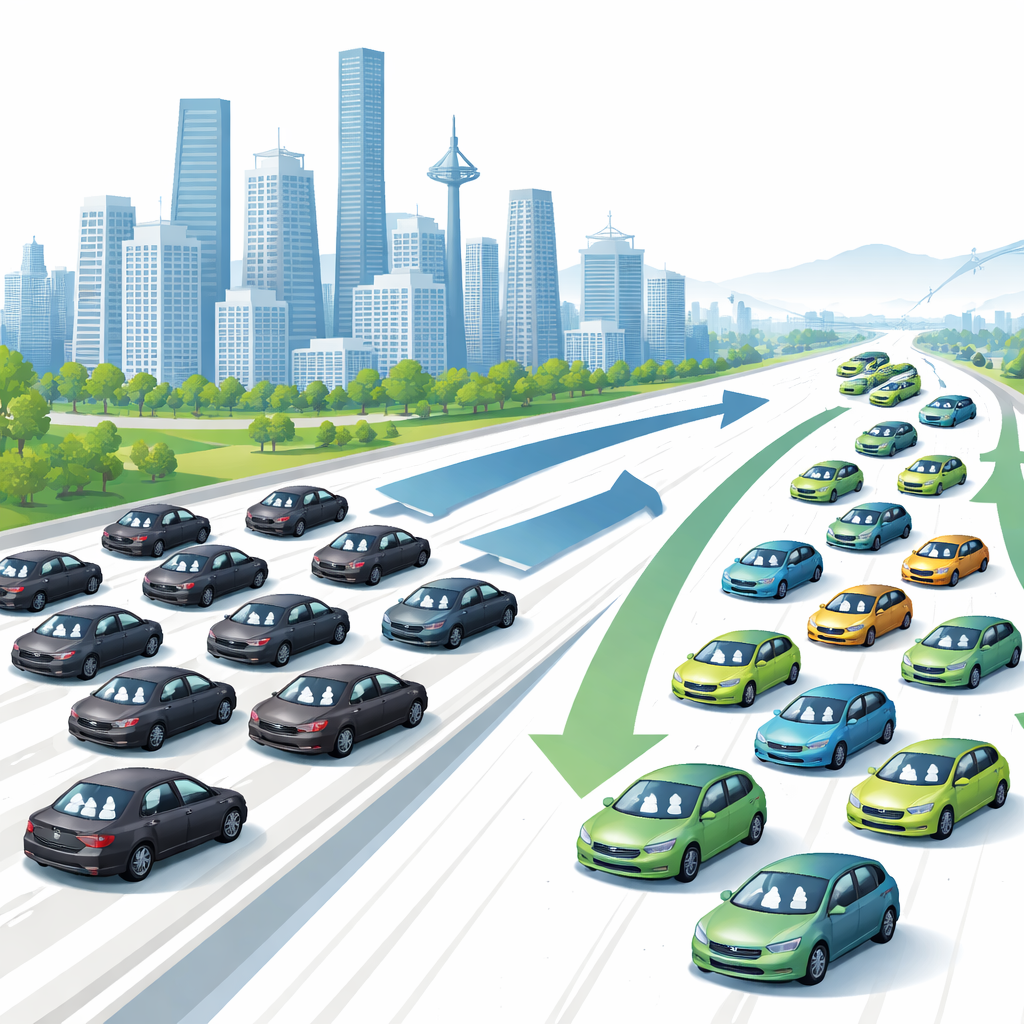
At the driver level, the story differs between the two services. In the casual car-sharing mode, electric and gasoline cars look surprisingly similar. Over weeks and months, there is no meaningful gap in how many trips drivers complete, how far they travel, or how much they earn from fares once statistically tested. Electric-car drivers do tend to log slightly fewer kilometers, but the differences are small and not clearly distinct from random variation, partly because there are still relatively few electric cars in this sample.
Busy Workdays and Charging Breaks
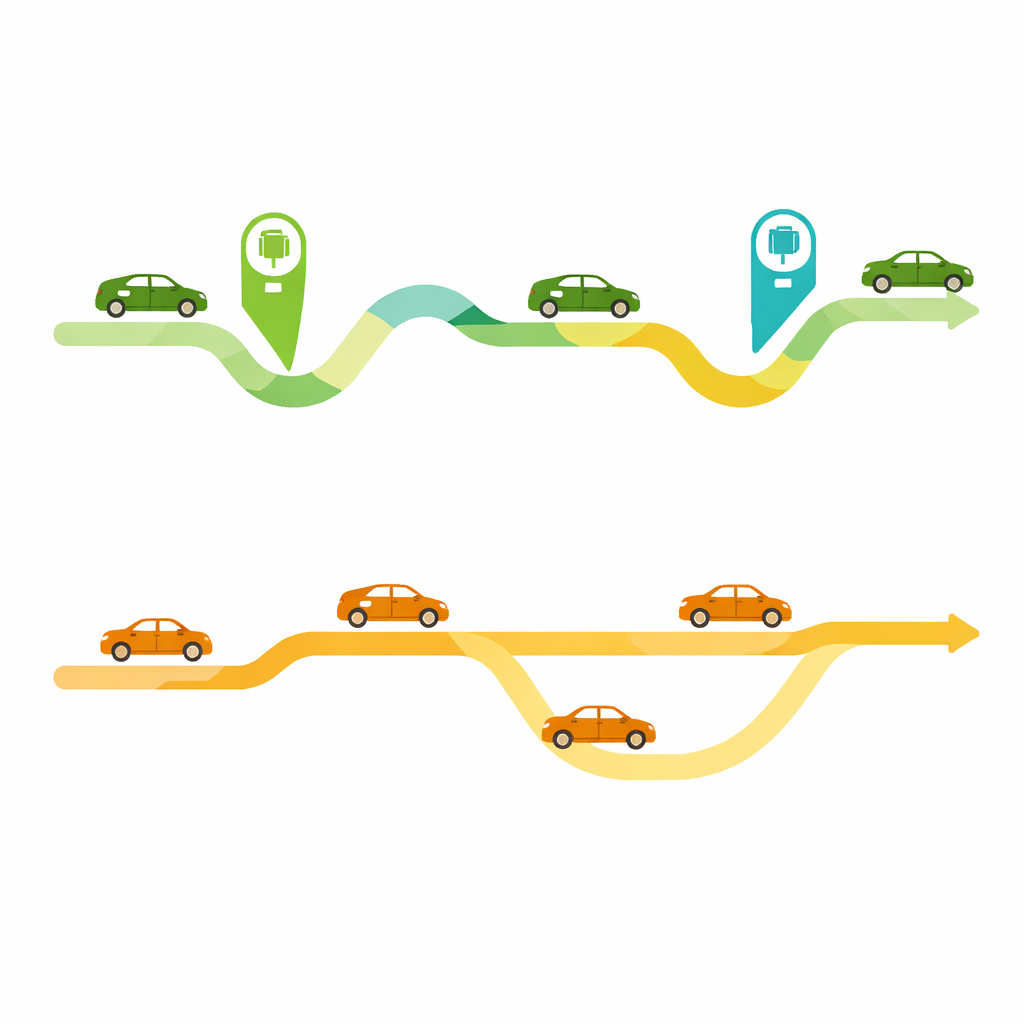
The professional private car-hailing service paints a sharper picture. Here, ridesharing drivers using electric cars spend more time online in the app each day than those in gasoline cars, yet they end up driving fewer total kilometers. When the researchers account for “deadheading” distance—the empty travel between one passenger drop-off and the next pickup—electric-car drivers still cover less ground. The most likely reason is mid-shift charging: drivers may stay logged into the platform while waiting at fast chargers, stretching their working hours without adding billable distance. Over longer time spans, such as weeks or months, these day-to-day gaps shrink, but they signal that charging logistics are a real constraint for high-use electric cars.
Which Trips Electric Cars Take On
The team then zooms in on individual trips. In casual car-sharing, electric cars handle trips of similar length to gasoline cars, and they are no more or less likely to be used for long journeys. In private car-hailing, however, electric cars actually serve somewhat longer trips on average. Among full-time drivers, the difference grows: electric cars are especially likely to take on very long rides over 100 kilometers, even after accounting for other factors. This suggests that concerns about limited driving range do not automatically exclude electric cars from demanding trips and that either drivers or the platform’s matching system may steer electric cars toward certain types of orders.
Can Electric Cars Replace Gasoline Cars?
To test substitution potential, the researchers compared the daily distance driven by gasoline cars with realistic range limits for 2015-era electric models, including a reduction for cold winter conditions. In car-sharing, even under the most conservative range assumption, electric cars could have covered more than 96 percent of gasoline-car days, or about 91 percent when deadheading is included. In private car-hailing, the picture is tougher: under the strictest range case, electric cars could match about 62 percent of gasoline-car days by trip distance alone, but only around 39 percent once deadheading is counted. These figures improve markedly as assumed range increases, but they highlight how extra empty travel and sparse charging can quickly eat into effective range.
What This Means for the Future of Shared Rides
For a lay reader, the central message is that electric cars already work well for most shared trips, especially when drivers are simply sharing their own journeys, but they face more hurdles when cars are driven all day for hire. The limiting factor is less the technology of batteries themselves and more where and how fast cars can recharge during a shift. The study, based on early-market data, sets a conservative benchmark, meaning today’s improved batteries and chargers likely make substitution even easier. Still, it underscores that building convenient charging hubs along busy routes and designing smart platform rules will be essential if cities want ridesharing fleets to go fully electric and deliver the promised cuts in pollution and greenhouse gases.
Citation: Cheng, X., Ran, Y., Kesternich, M. et al. Replacement of internal combustion engine vehicles by electric vehicles in Chinese ridesharing markets. npj. Sustain. Mobil. Transp. 3, 30 (2026). https://doi.org/10.1038/s44333-026-00099-z
Keywords: electric vehicles, ridesharing, Beijing, charging infrastructure, shared mobility