Clear Sky Science · en
Simulating protective cordon pricing to balance congestion management and affordability in San Francisco
Why paying to drive downtown matters
Anyone who has sat in traffic knows that crowded streets waste time, foul the air, and fray nerves. Cities around the world are testing a controversial fix: charging drivers a fee to enter the busiest areas at rush hour. This study asks what would happen if such “cordon pricing” were applied to downtown San Francisco—and, crucially, whether it could tame congestion without unfairly hurting people with lower incomes.
What the researchers set out to test
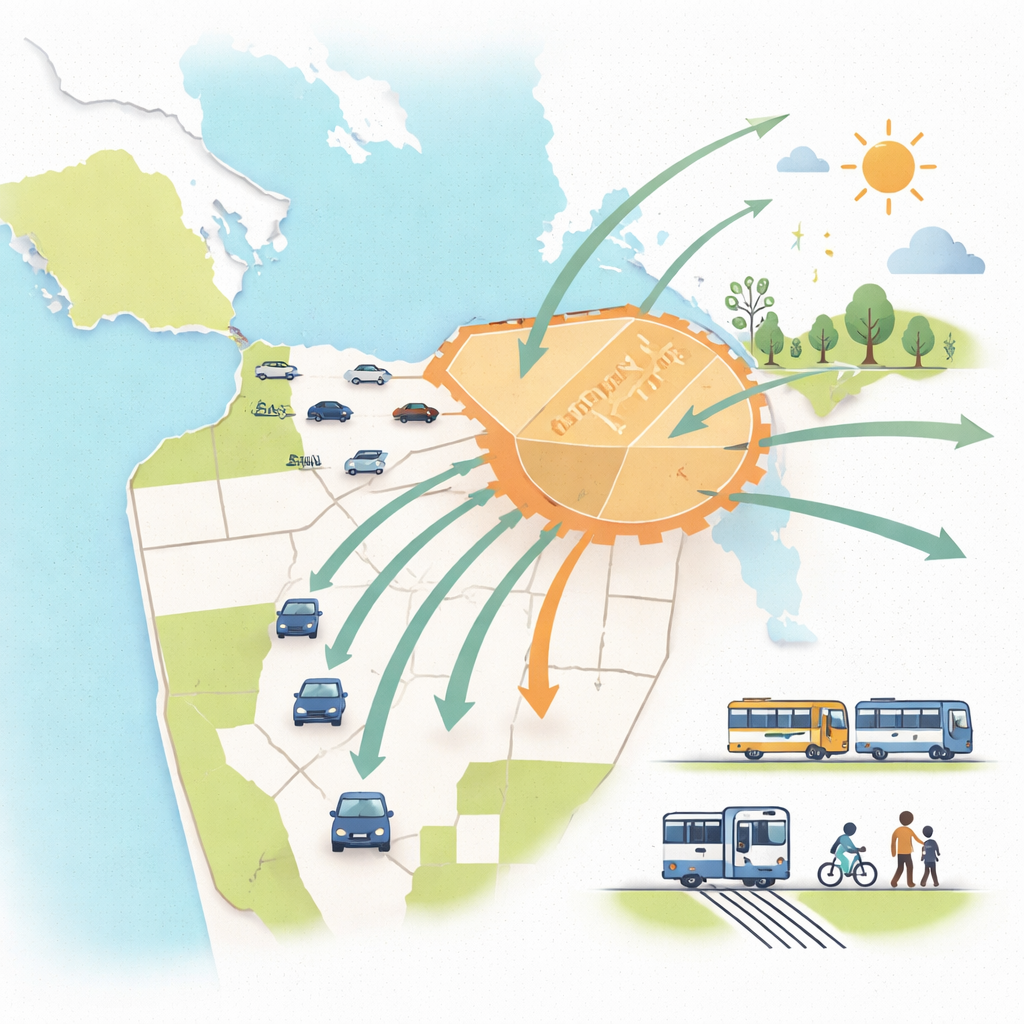
The team examined two ways to charge vehicles entering a proposed zone in downtown San Francisco on weekday mornings and afternoons. One option is a flat fee, the same charge for everyone. The other is income-based: households with higher incomes pay the full fee, middle-income households pay a reduced amount, low-income households pay less still, and the lowest-income drivers are exempt. Using a detailed computer model of Bay Area travel, the researchers simulated how hundreds of thousands of people would adjust their routes, travel times, and choice of car, transit, or active modes such as walking and biking under each policy.
How virtual travelers and traffic responded
In the simulations, both pricing schemes did what they were meant to do inside the downtown cordon. Vehicle entries into the zone fell by roughly 30 percent overall, and by nearly half during the busiest hours. Drivers shifted some trips to earlier or later times to avoid fees, and they took fewer car trips into the zone. Total miles driven by cars within the cordon dropped sharply—about one quarter under flat pricing and roughly one sixth under income-based pricing. Outside the zone, however, some traffic increased as drivers chose longer routes around the priced area or changed destinations, slightly raising car miles traveled in surrounding neighborhoods even as citywide driving still declined.
Shifts in how people travel
Charging to drive downtown nudged people toward other modes. For trips into the priced area, the share made by car fell from about half to the low forties, while transit use and active travel both rose by several percentage points. Ride-hailing services, such as app-based taxis, became less attractive because each trip crossing the cordon paid the full toll, leading to a noticeable drop in their use within the zone. For trips that did not enter downtown, changes in mode choice were smaller, but still reflected the new traffic patterns and travel times created by the pricing schemes.
Who wins, who loses, and what happens to the air
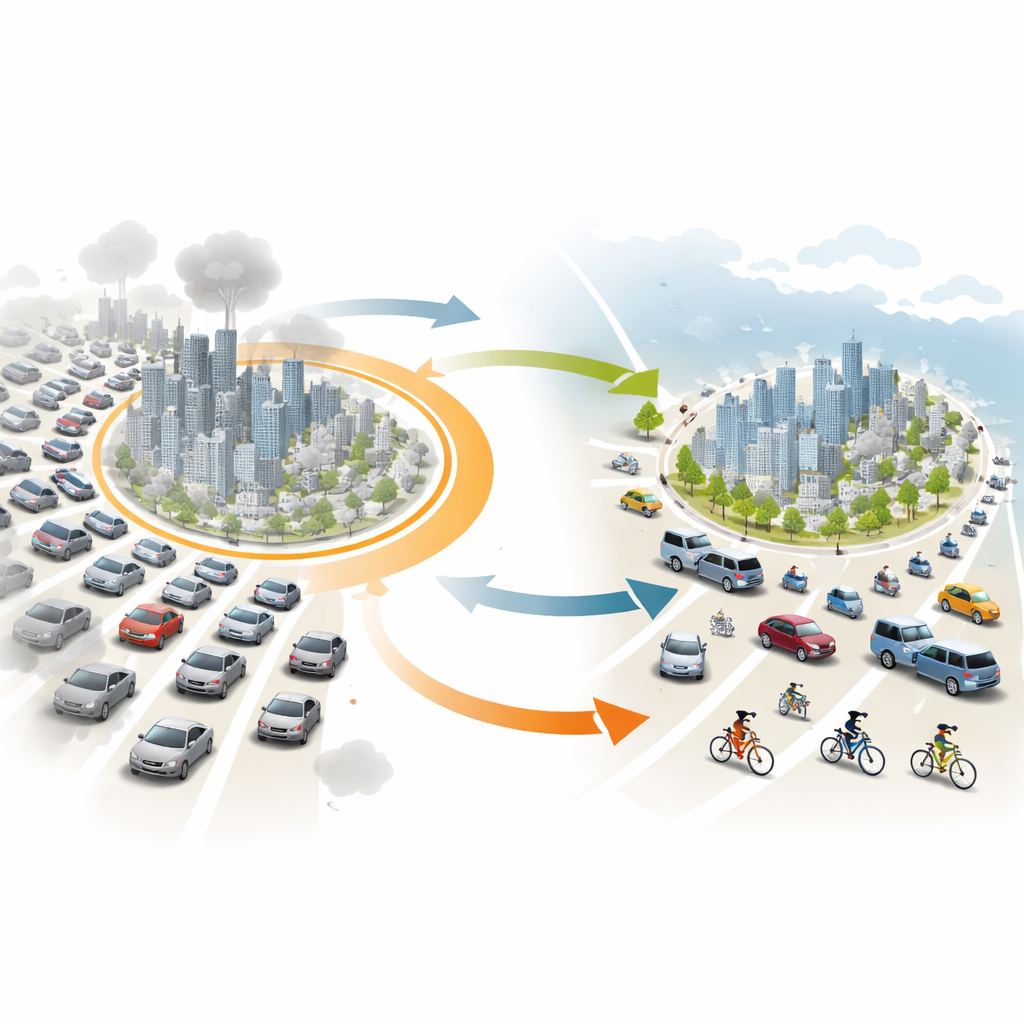
To gauge fairness, the authors looked beyond out-of-pocket fees to a broader measure of “accessibility,” which blends travel time, cost, and the usefulness of different options. Under a flat fee, people in the lowest-income group lost more accessibility per trip than high-income travelers, making the policy regressive. The income-based design changed that pattern: very low-income travelers saw the smallest losses, while high-income travelers experienced about the same impact as under the flat fee. Even so, exemptions did not fully shield poorer travelers. Much of their lost accessibility came not from paying tolls—many paid little or nothing—but from the way everyone else’s behavior reshaped congestion and routes across the entire network. On the environmental side, both pricing schemes reduced emissions of greenhouse gases and health-damaging particles most strongly inside the cordon, but also modestly across the wider Bay Area. The authors estimate that these cleaner-air benefits could prevent roughly four to six premature deaths per year region-wide.
What this means for city streets
The study concludes that congestion relief and affordability do not have to be locked in a zero-sum battle. An income-based cordon in downtown San Francisco nearly matches the traffic reduction of a flat fee while cutting accessibility losses for the poorest travelers by more than half. Still, it cannot erase all inequities because changes in traffic ripple throughout the urban network. The authors argue that the best path forward is to pair income-aware road pricing with strong investments in transit and active travel, funded by toll revenue. Done thoughtfully, charging to drive into busy city centers could mean faster trips, cleaner air, and fairer access to opportunities for residents across the income spectrum.
Citation: Guirado, C., Poliziani, C., Fujita, K.S. et al. Simulating protective cordon pricing to balance congestion management and affordability in San Francisco. npj. Sustain. Mobil. Transp. 3, 27 (2026). https://doi.org/10.1038/s44333-026-00093-5
Keywords: congestion pricing, San Francisco traffic, transport equity, urban air quality, cordon tolls