Clear Sky Science · en
Country-level instability is related to a stronger perceived climate of polarization across 44 countries
Why this matters for everyday life
Across the world, many people feel that politics has turned into a bitter feud, with citizens splitting into rival camps that distrust and avoid each other. This study asks a simple but powerful question: when and where do people feel that their whole society is polarized, and what is going on in those countries that might feed this impression? By looking at data from tens of hundreds of people in 44 nations, the authors explore how economic strain, violence, government quality, and the digital media environment relate to how divided people think their societies are.
How the researchers took a global snapshot
The team worked with an international survey company to collect responses from about 200 adults in each of 44 countries, spanning every major region of the world. Participants were asked not about their own feelings toward particular parties, but about how they believed the dominant voter groups in their country relate to one another. Did those groups dislike each other, distrust each other, and keep their distance? Combining these answers yielded a measure of the perceived climate of polarization – a sense of how hostile and separated political camps seem in everyday life, from the perspective of both partisans and independents.
Looking at the bigger national picture
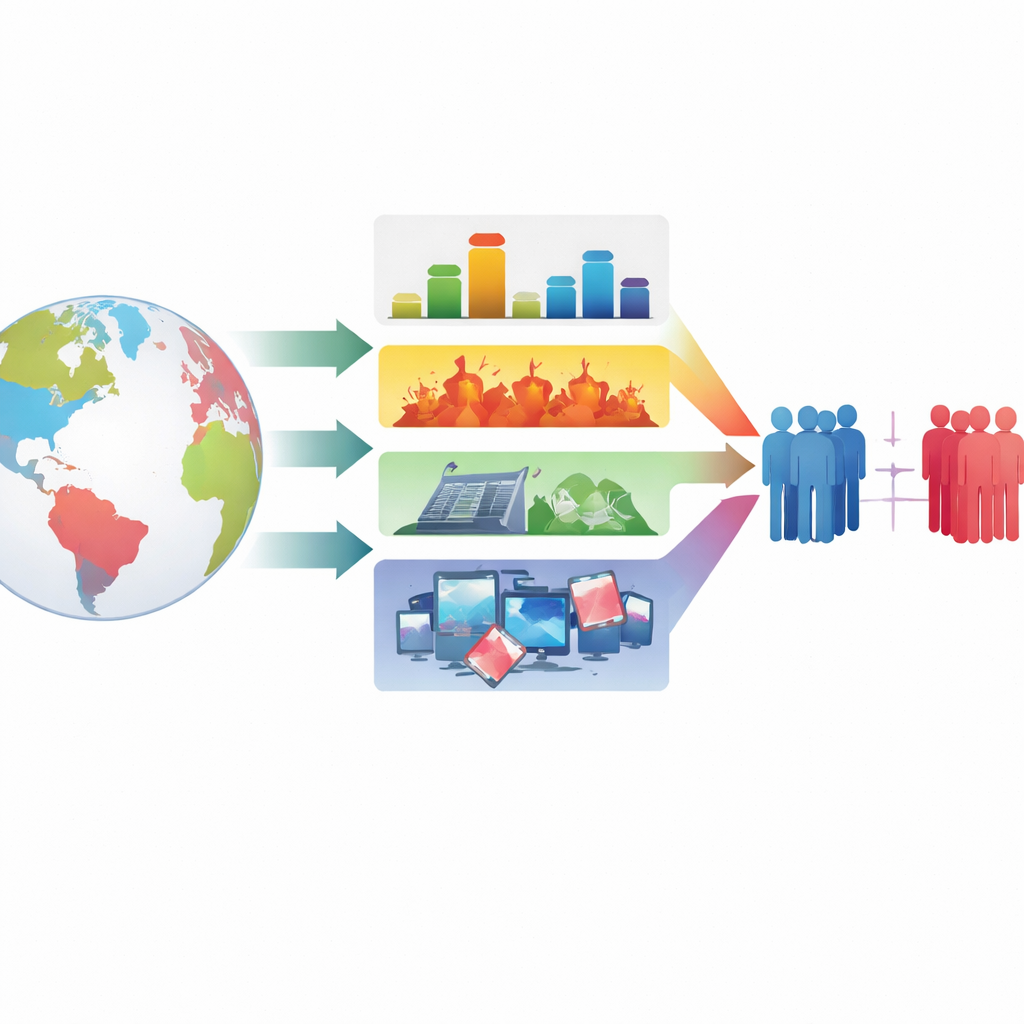
To understand what might shape these perceptions, the authors linked the survey data to a wide range of country-level indicators. These included measures of economic conditions (such as average income and inequality), rates of unemployment and youth not in work or study, levels of conflict, homicide, and political violence, as well as expert ratings of government effectiveness, corruption, and the rule of law. They also examined aspects of the digital media environment, such as how much time people spend online and on social media, and how consistent news coverage is across major outlets. Environmental and health measures, like disaster impact, disease prevalence, food insecurity, and life expectancy, were also included, alongside ratings of how democratic a country is.
Feeling that society is breaking down
A key idea in the study is "anomie": the feeling that social rules and institutions are falling apart. Participants completed a widely used scale that captures two aspects of this sense of breakdown. One focuses on leadership – for example, whether politicians are seen as caring about ordinary people and whether government works for the common good. The other focuses on the social fabric – whether people believe there are shared moral standards, that others are cooperative and trustworthy, and that everyday interactions are guided by common norms. These perceptions are not about one disagreement or one scandal, but about a broader impression that society is unraveling.
What the data revealed across 44 countries
The analyses showed a consistent pattern: people tended to see their countries as more politically polarized when they lived in places marked by economic hardship, greater inequality, higher unemployment and youth disengagement, and higher levels of violence and conflict. Weak governance was especially important. Countries where public institutions were seen as less effective, more corrupt, and less bound by the rule of law had citizens who perceived stronger partisan dislike, distrust, and social distance. A more chaotic digital media landscape was also linked to stronger perceived polarization: lower consistency in online news and greater use of the internet and social media went hand in hand with a sense that political groups deeply dislike and avoid one another.
How feelings of disorder connect the dots
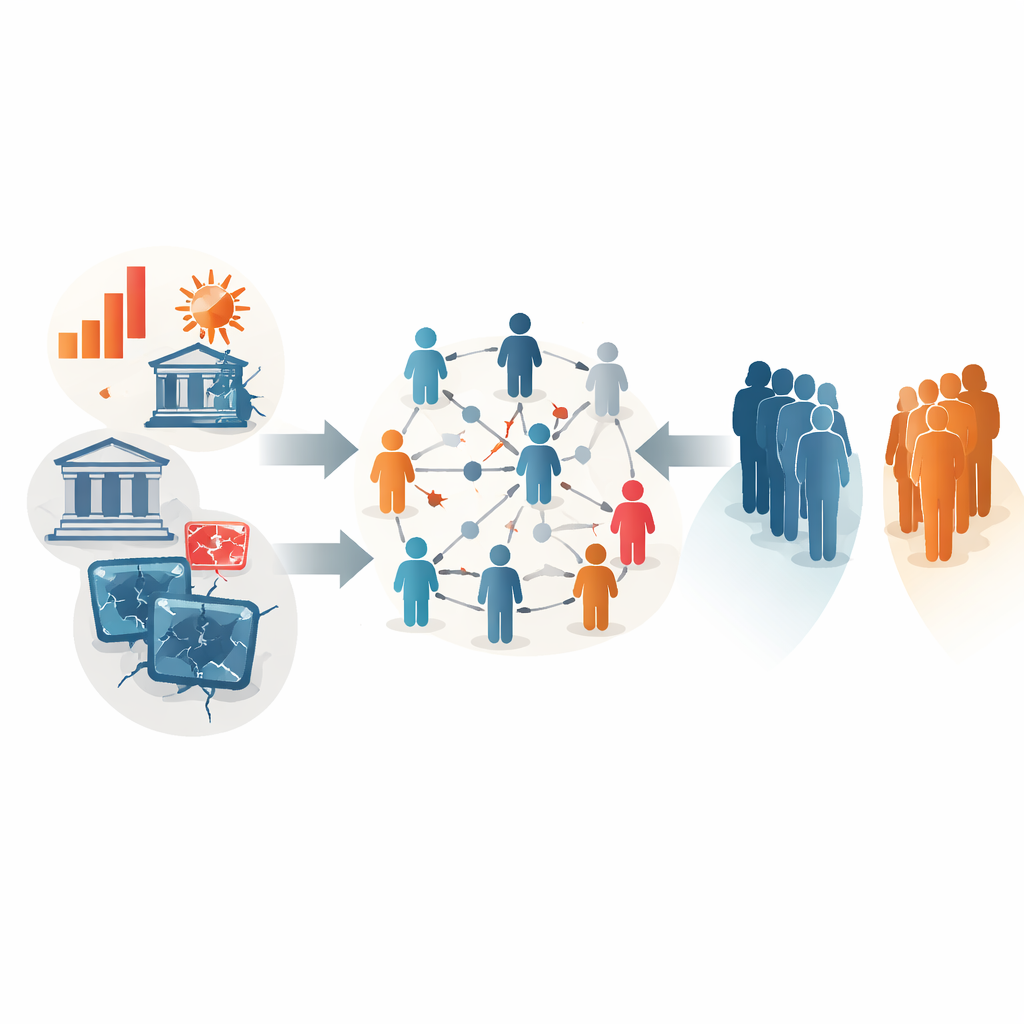
Many of these same national conditions were also associated with stronger feelings of anomie. Economic strain, violent contexts, weak institutions, and fragmented online media were all tied to the belief that leadership is failing and that the social fabric is fraying. People who felt this way were, in turn, more likely to see their society as divided into hostile political camps. Statistical models suggested that especially the sense that the social fabric is breaking down helps to explain why adverse country conditions coincide with perceptions of intense polarization. By contrast, environmental and public health indicators, as well as overall democratic strength, showed little or no consistent relationship with how polarized people felt their societies were.
What this means for understanding division
To a lay reader, the message is that people are more likely to feel trapped in a bitter “us versus them” political climate when their everyday environment seems unstable and poorly held together. When money is tight, violence is common, institutions seem corrupt or ineffective, and online spaces feel chaotic and conflict-driven, citizens are more inclined to believe that political groups detest and avoid one another. That belief may grow not just from party loyalties, but from a broader sense that society itself is coming apart. While this study cannot prove cause and effect, it suggests that tackling economic injustice, improving public safety and governance, and calming the digital information sphere may all help reduce the feeling that politics is hopelessly polarized.
Citation: Lee, A.S.G., Kirkland, K. & Bastian, B. Country-level instability is related to a stronger perceived climate of polarization across 44 countries. Commun Psychol 4, 63 (2026). https://doi.org/10.1038/s44271-026-00422-x
Keywords: political polarization, social instability, anomie, governance, digital media