Clear Sky Science · en
PCBP1 regulates alternative splicing of AARS2 in congenital cardiomyopathy
Why some babies are born with failing hearts
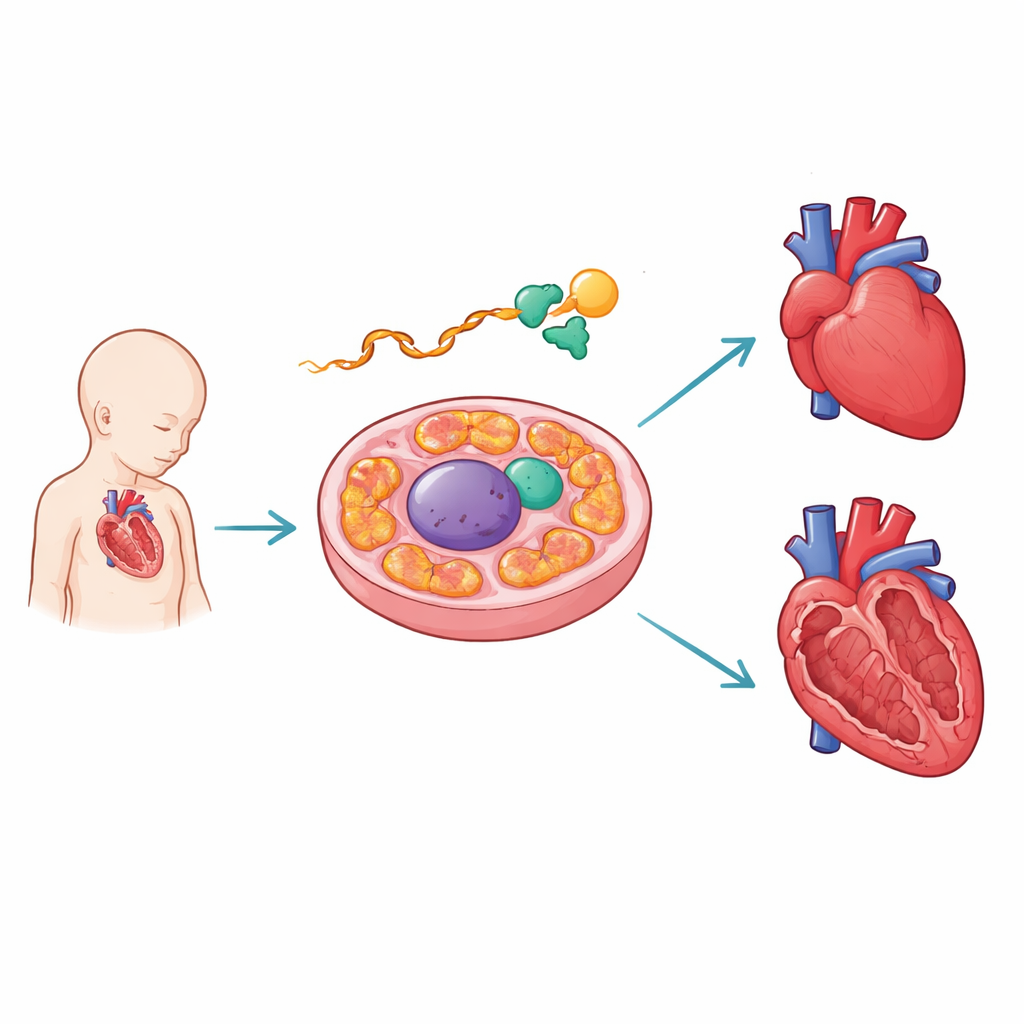
Some infants develop a severe form of heart failure soon after birth, caused not by blocked arteries but by tiny faults in how their heart cells make energy. Doctors have linked this condition to mutations in a gene called AARS2, yet the steps connecting a DNA change to a weak, poorly formed heart have remained murky. This study uncovers a crucial missing link: a molecular "editor" that helps heart cells assemble the AARS2 message correctly so their mitochondria—the cell’s power plants—can keep beating hearts alive.
A molecular editor that guards the growing heart
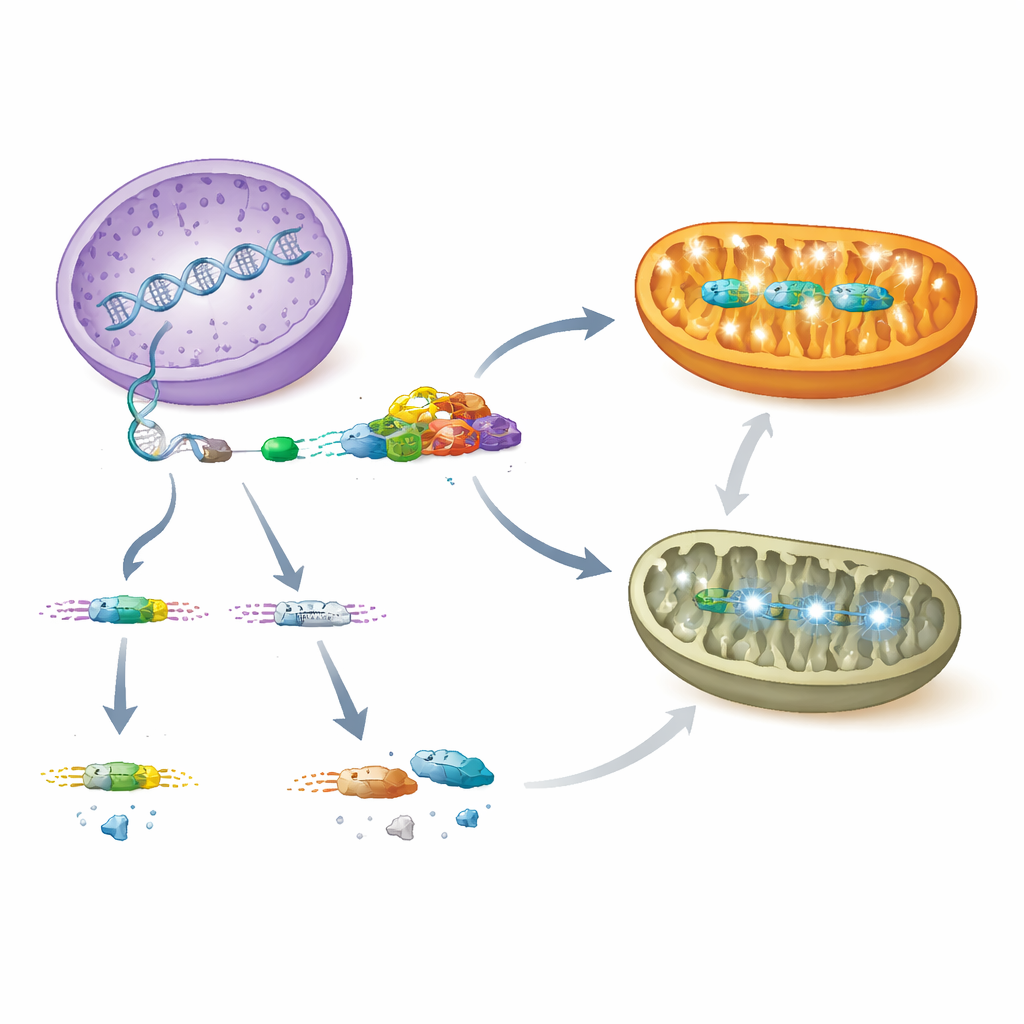
The authors focused on PCBP1, a protein that binds RNA, the intermediate messages copied from DNA. In developing mouse hearts, they found PCBP1 latching onto the RNA for AARS2 near a critical junction. AARS2 helps load the amino acid alanine onto transfer RNAs inside mitochondria, a key step in building the proteins that power energy production. Using high-throughput binding maps and engineered reporter constructs, the team showed that PCBP1’s contact points coincide with human disease mutations that disrupt the joining of one particular piece—exon 16—of the AARS2 message. When PCBP1 is missing or its binding sites are damaged, this exon is skipped, derailing the instructions for making a full-length AARS2 enzyme.
When editing fails, heart structure goes awry
To see what this means for a whole organ, the researchers selectively removed PCBP1 from mouse heart muscle cells. These hearts developed abnormally: their walls were thin and spongy instead of densely compact, and the tip of the heart often split into two, a malformation resembling a human condition called left ventricular non-compaction. Many mice died shortly after birth. At the RNA level, hundreds of genes shifted toward an immature, early-embryo pattern, indicating delayed heart chamber maturation. Notably, the Aars2 message almost always skipped exon 16, leading to a shortened transcript and a dramatic drop in AARS2 protein, confirming that faulty splicing of this single gene is a major consequence of losing PCBP1.
Directly damaging AARS2 recreates the disease
Next, the team engineered mice in which exon 16 of Aars2 could be deleted only in heart muscle cells. These animals closely mimicked the PCBP1 knockouts: they showed malformed ventricular walls, died around birth, and their hearts displayed the same immature gene-expression signature. When the researchers triggered Aars2 loss later in life using a second, postnatal genetic switch, the animals initially seemed healthy but soon developed enlarged, weakened hearts with extensive scarring. Electron microscopy revealed that their mitochondria had fewer internal folds, and detailed biochemical assays showed that key energy-producing complexes in the respiratory chain, especially complexes I and IV, were destabilized and lost activity well before overt heart failure appeared.
How struggling mitochondria talk back to the nucleus
The breakdown of AARS2 left heart-cell mitochondria unable to maintain normal oxidative phosphorylation, the main way they generate ATP. In both PCBP1-deficient and Aars2-deficient hearts, many nuclear genes encoding components of the energy machinery were turned down, and the actual mitochondrial proteins they make were depleted. At the same time, the cells flipped on a coordinated stress program known as the unfolded protein response and the integrated stress response. Central players in this pathway, including the protein ATF4 and its upstream trigger, phosphorylated eIF2α, rose sharply, as did LONP1, a mitochondrial protease that clears damaged proteins. In older Aars2 mutants, the researchers also saw activation of the growth regulator MYC and enlargement of the nucleolus—the factory for making ribosomes—along with a surge in nuclear-encoded mitochondrial translation factors, suggesting the nucleus was trying to compensate for failing mitochondrial protein production.
What this means for children with rare heart failure
Together, these findings outline a clear pathway from gene regulation to organ disease. PCBP1 normally binds the AARS2 RNA in heart cells and ensures that exon 16 is included, producing a stable enzyme that supports mitochondrial protein synthesis and robust energy output. When PCBP1 is lost or when mutations disrupt this splicing step, exon 16 is skipped, AARS2 levels collapse, mitochondrial energy complexes fall apart and the heart’s developing walls fail to compact properly, leading to lethal cardiomyopathy. The stressed mitochondria then signal back to the nucleus to activate protective programs, but these responses are not enough to prevent heart failure. By illuminating this PCBP1–AARS2 axis, the study suggests new diagnostic markers and potential therapeutic targets for infants and children with otherwise mysterious mitochondrial heart disease.
Citation: Lu, Y.W., Liang, Z., Dorr, K. et al. PCBP1 regulates alternative splicing of AARS2 in congenital cardiomyopathy. Nat Cardiovasc Res 5, 328–350 (2026). https://doi.org/10.1038/s44161-026-00798-3
Keywords: mitochondrial cardiomyopathy, RNA splicing, congenital heart disease, AARS2 gene, mitochondrial stress response