Clear Sky Science · en
Incorporation of the National Institute of Health (NIH) sex as a biological variable policy by R01 grant awardees
Why who gets studied in research matters
When biomedical studies mostly focus on one sex, the results may not apply equally to everyone. Many medicines and treatments can work differently in males and females, yet research has often relied heavily on male animals or male participants. This article looks at how well a major U.S. policy from the National Institutes of Health (NIH) is actually changing day-to-day research practice so that studies better reflect the health needs of all people.
A policy meant to close a long-standing gap
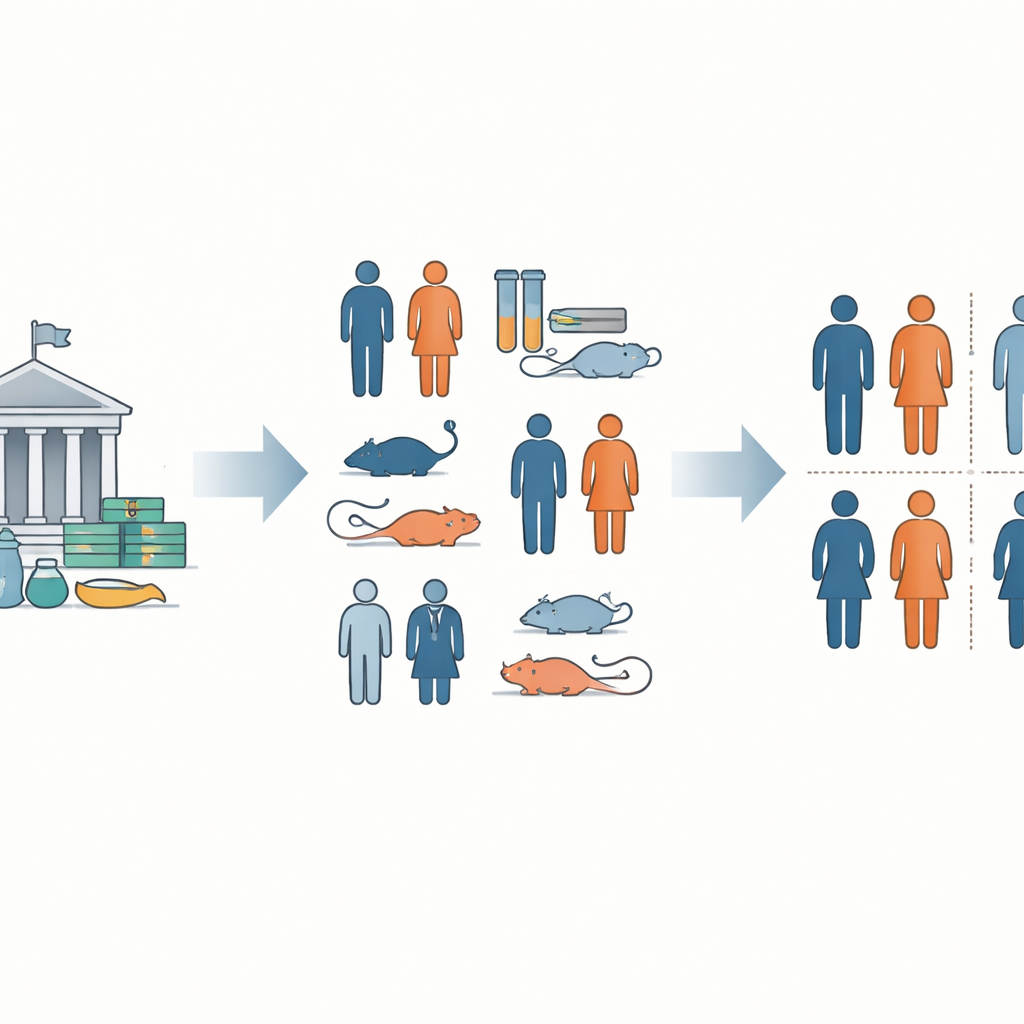
In 2016, the NIH began requiring grant applicants to treat sex as a biological variable in their research. In simple terms, scientists are expected to think about whether they will include both males and females, how many of each they will study, and whether they will actually compare results by sex. The authors focused on R01 grants, NIH’s flagship funding mechanism, because these projects are typically larger, carefully reviewed, and considered high quality. By tracking 574 papers published between 2017 and 2024 and linking them back to specific grants, the study asks: are researchers truly following the spirit of the policy, not just the letter?
How the researchers checked what happens after funding
Using NIH’s public RePORTER database, the team randomly selected 1000 R01 projects from 2017 and 2018 that had reported progress. For each project, they pulled the most recent peer-reviewed article that involved human or vertebrate animal subjects, ending with 574 eligible papers. They recorded whether studies used humans, non-human animals, or both; whether they stated the sex of the subjects; whether both males and females were included; and whether the data were broken down and analyzed by sex. They also looked at the names of the first and last authors and the grant leaders, using a database to infer gender, to see if the gender makeup of research teams was linked to how sex was handled in the science.
Progress on inclusion, but analysis lags behind
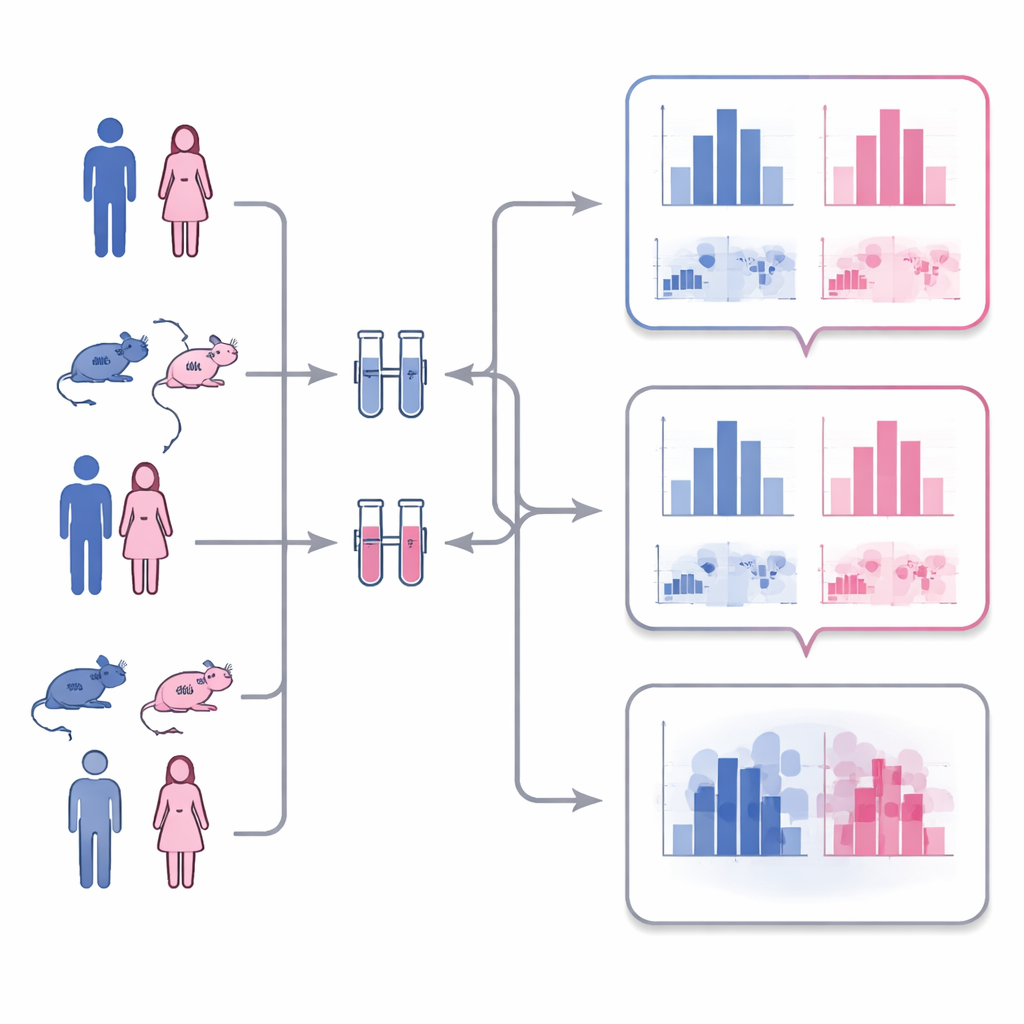
The study found that 61% of the papers included both male and female subjects, suggesting that the policy has encouraged more sex-inclusive designs. Human studies were much more likely than animal studies to include both sexes. However, simply including both sexes is only the first step. Among studies that did include both, 83% reported how many males and females they studied, but fewer than half—only 44%—actually compared or adjusted their results by sex. Animal-based work was especially likely to skip these comparisons. In addition, very few papers—about 4%—offered any explanation for why they used only one sex or chose not to analyze differences, and some still relied on outdated concerns about hormonal cycles in females as a reason for exclusion.
Who leads the research can shape what gets asked
When the authors examined patterns by gender, they saw striking differences. Most principal investigators and senior (last) authors were men, even though first authors were about evenly split between men and women. Articles with women as first authors were more likely to analyze data by sex than those with men first authors. The strongest pattern appeared when looking at first-and-last author pairs: teams with women in both roles had more than twice the odds of performing sex-based analyses compared with all-male lead-author teams. This suggests that who is in charge of a project can influence whether sex differences are taken seriously and properly examined.
What these findings mean for future health research
Overall, the study shows that NIH’s policy has helped boost the inclusion of both males and females in funded research, but many scientists still stop short of asking whether results differ by sex. Without those analyses, important differences in effectiveness, side effects, or disease patterns may remain hidden, and treatments may work better for some groups than others. The authors argue that funders, journals, peer reviewers, and research institutions all share responsibility for closing this gap—by expecting clear justifications when only one sex is used, encouraging or requiring analyses by sex whenever feasible, and supporting diverse leadership in science. Doing so will make biomedical research more reliable and more likely to benefit everyone.
Citation: Warden, J.H., Parangalan, M., Welty, L.J. et al. Incorporation of the National Institute of Health (NIH) sex as a biological variable policy by R01 grant awardees. Commun Med 6, 208 (2026). https://doi.org/10.1038/s43856-026-01547-0
Keywords: sex differences, biomedical research policy, NIH R01 grants, research reproducibility, gender diversity in science