Clear Sky Science · en
Can nature-based solutions for climate adaptation promote multispecies justice: insights from European regions
Why this matters for people and the planet
As cities heat up and species disappear, planners are turning to parks, green roofs, wetlands, and restored rivers as nature-based ways to cope with climate change. This paper asks a simple but profound question: can these nature-based solutions protect not only people, but other species as well? Drawing on discussions with officials and practitioners from five European regions, the authors explore how climate projects might move from a “humans first” mindset toward fairer shared futures for humans, animals, and ecosystems.
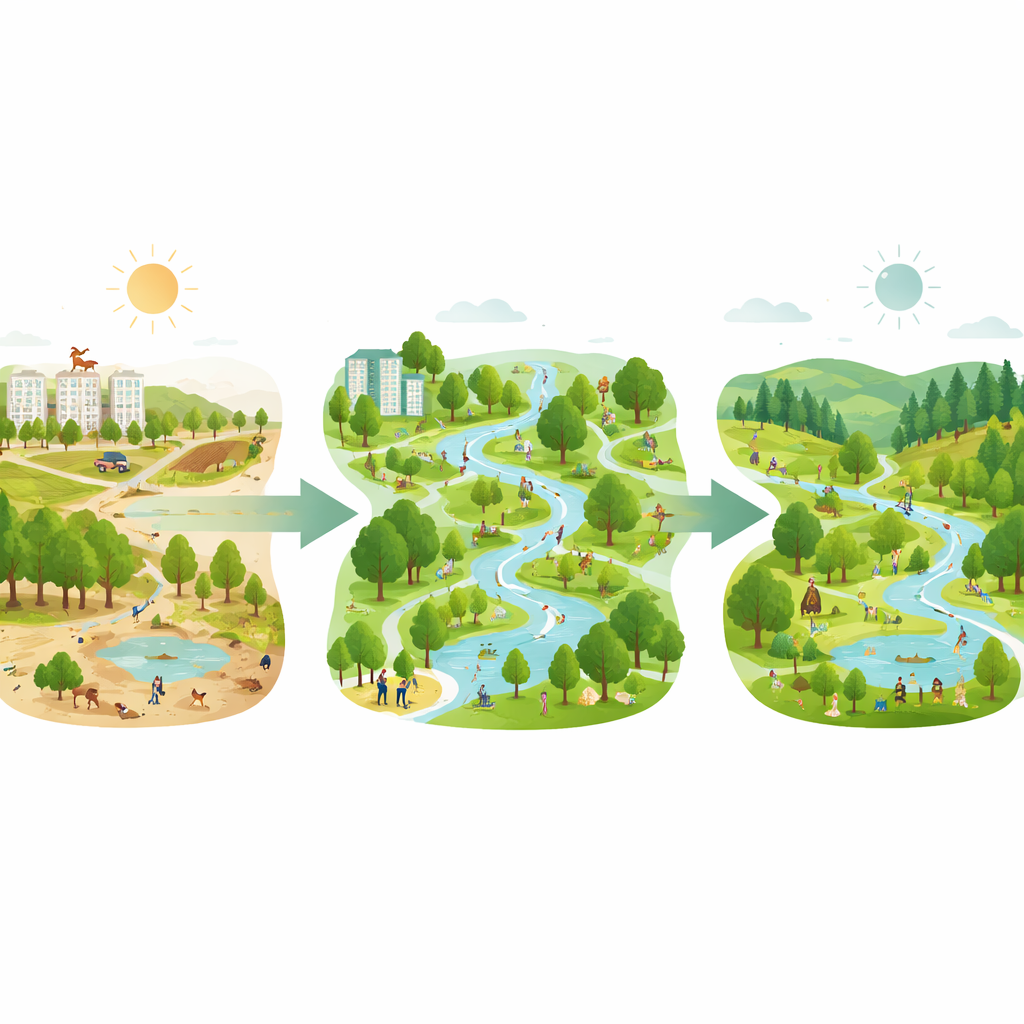
From “nature for people” to shared living spaces
Many policies now promote nature-based solutions as cost‑effective tools that cool cities, reduce floods, and improve health. The study finds that, in practice, these projects are still mostly framed as technical green or blue structures designed to fix human problems in specific locations. Participants tended to see nature as a backdrop that benefits people, not as a living community with its own needs. Biodiversity was often an afterthought, overshadowed by economic or engineering goals. The authors argue that nature-based solutions should instead be understood as relationships that connect people, places, and other species over time, forming an “infrastructure of care” rather than just a set of scattered installations.
What justice usually means – and what it leaves out
When regional planners talked about justice, they mostly referred to fair access for different social groups, such as ensuring that low‑income residents also live near parks or that citizens can join decision-making. These are important questions of who benefits and who participates, but they almost always focused on humans alone. Very few participants considered what fairness might look like for birds, insects, trees, or future generations. The paper connects this gap to broader ideas of “multispecies justice,” which calls for recognizing the vulnerabilities, roles, and habitats of other beings, and treating them as part of what justice is about, not as scenery.
Seeing care as a bridge between people and other species
To move beyond a human‑only view, the authors propose looking at climate adaptation through a lens of care. Care here means the everyday work of maintaining and repairing the webs of life that allow humans and other species to thrive together. In nature-based projects this might include, for example, designing tree‑lined streets that also support pollinators, or wetlands that serve both flood control and wildlife. The focus-group discussions showed that professionals often lacked tools and language to think this way, but they also revealed moments where concern for animals, habitats, or overlooked groups quietly guided decisions. The paper suggests treating these “care-based junctures” as entry points for change, where routines can gradually be adjusted to notice and respond to more-than-human needs.
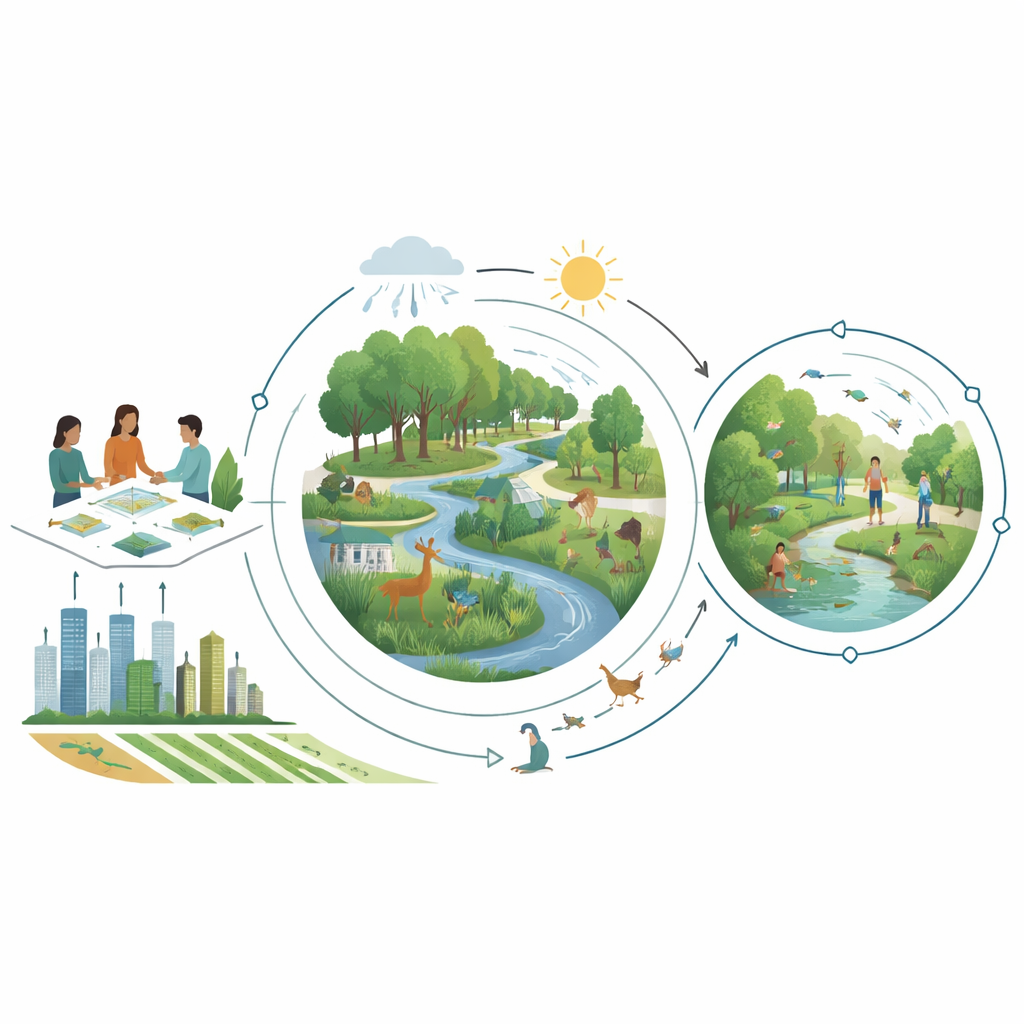
Small steps toward big changes
The study does not call for instant transformation, but for a steady cycle of rethinking, reframing, regenerating, and relearning. Rethinking involves questioning core assumptions, such as growth models that pack more people and cars into cities without considering space for other species. Reframing means weaving justice for nature into existing trends like urban densification or mobility planning, so that green corridors, for instance, serve children, walkers, and pollinators at once. Regenerating focuses on repairing broken relationships across social, institutional, and ecological divides by including more kinds of knowledge and actors in decisions. Relearning asks institutions to place justice – including justice for non‑human life – at the heart of sustainability and climate frameworks rather than treating it as an optional extra.
What the authors conclude for everyday life
For a general reader, the message is that planting more trees or building more ponds is not enough if these efforts ignore the lives they are meant to support. The paper concludes that nature-based solutions can truly help with climate adaptation only when they are designed as shared homes for many species, not just amenities for people. That means planners and policymakers must treat justice as a guiding principle that covers humans, animals, and ecosystems alike, and must adjust rules, habits, and designs accordingly. Change will often come through small but meaningful shifts – like how a single tree, a field, or a wetland is understood and cared for – that, over time, can reshape cities and regions into fairer, more livable places for all forms of life.
Citation: Mottaghi, M., McCormick, K. Can nature-based solutions for climate adaptation promote multispecies justice: insights from European regions. npj Urban Sustain 6, 74 (2026). https://doi.org/10.1038/s42949-026-00403-3
Keywords: nature-based solutions, climate adaptation, biodiversity, multispecies justice, urban planning