Clear Sky Science · en
A vulnerability perspective on loss and damage: evidence from urban informal settlements
Why City Shantytowns Matter in a Warming World
Across the globe, almost a billion people live in crowded city neighborhoods built without formal planning—places often called slums, favelas, or informal settlements. These communities are already on the front lines of floods, heatwaves, and water shortages. This article explains why climate‑related disasters hit these residents so hard, showing that the real story is not just about bad weather, but about long histories of inequality, neglect, and short‑sighted policies in cities like Nairobi, São Paulo, and Jakarta.
Looking Beyond the Storm Clouds
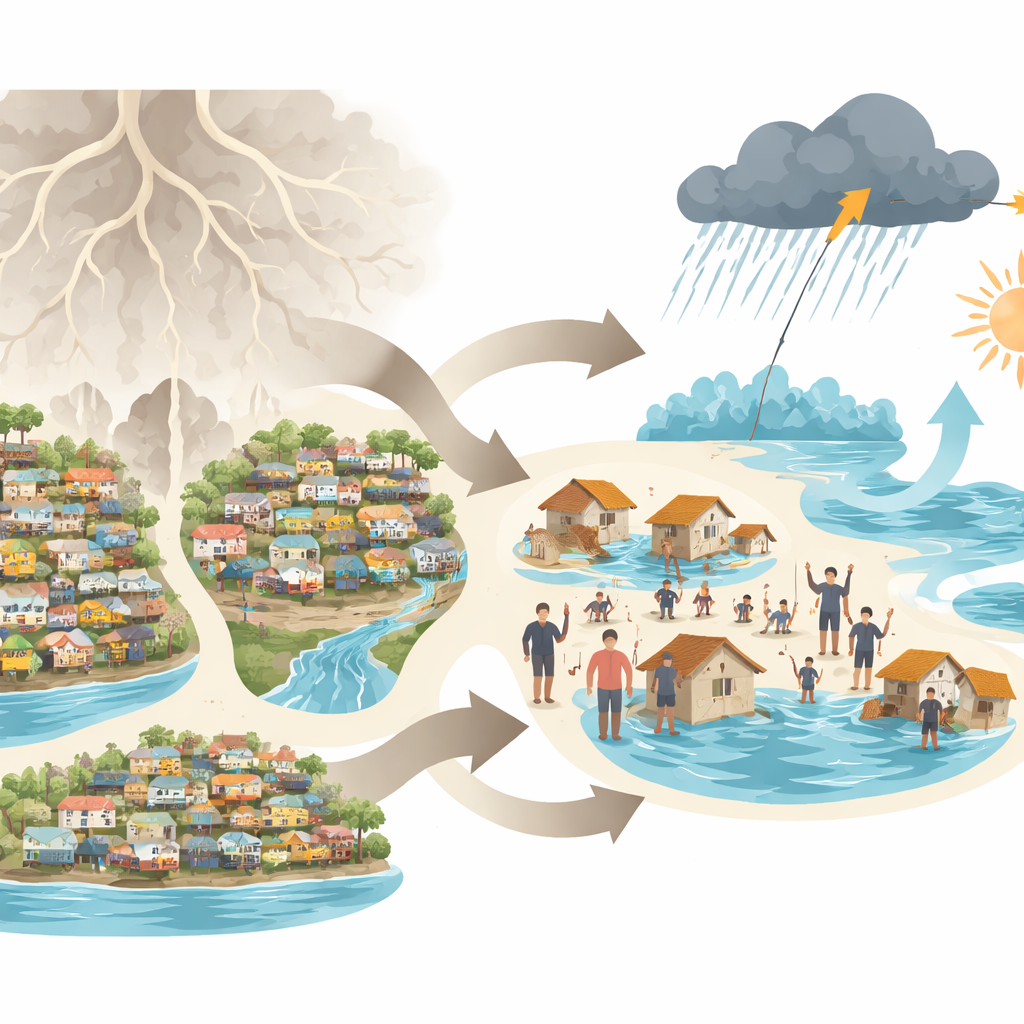
Climate discussions often focus on dramatic events—raging floods, record heat, destructive storms. Loss and Damage, the term used in global climate talks, usually means the harms from such events that cannot be avoided. Yet the authors argue that concentrating only on the hazards hides a crucial part of the picture: who is vulnerable, and why. People in informal settlements are not simply unlucky to be in the path of danger. They are pushed into exposed locations like riverbanks, steep slopes, and low‑lying coasts by a lack of affordable housing, poor services, and deep social divides rooted in colonial and economic histories. To make sense of this, the authors adapt a well‑known disaster framework—the Pressure and Release (PAR) model—to show how hidden social pressures build up long before a flood or heatwave arrives.
Three Neighborhoods, Shared Struggles
The research team interviewed local organization and community representatives in three large informal settlements: Kibera in Nairobi, Jardim Pantanal in São Paulo, and Kalibaru in Jakarta. Each has its own story. Kibera sits on government land yet is controlled by politically connected landlords; basic services like water and drainage are scarce and costly. In Jardim Pantanal, residents—many of them Black or Indigenous—have settled in a floodplain after being shut out of formal housing and still face patchy public services. Kalibaru grew on former wetlands at Jakarta’s edge, where many people work in the informal economy and depend on unreliable wells and fragile housing. In all three places, people contend with a daily mix of poverty, weak infrastructure, and uncertain land rights long before climate hazards strike.
Everyday Life Under Water and Heat
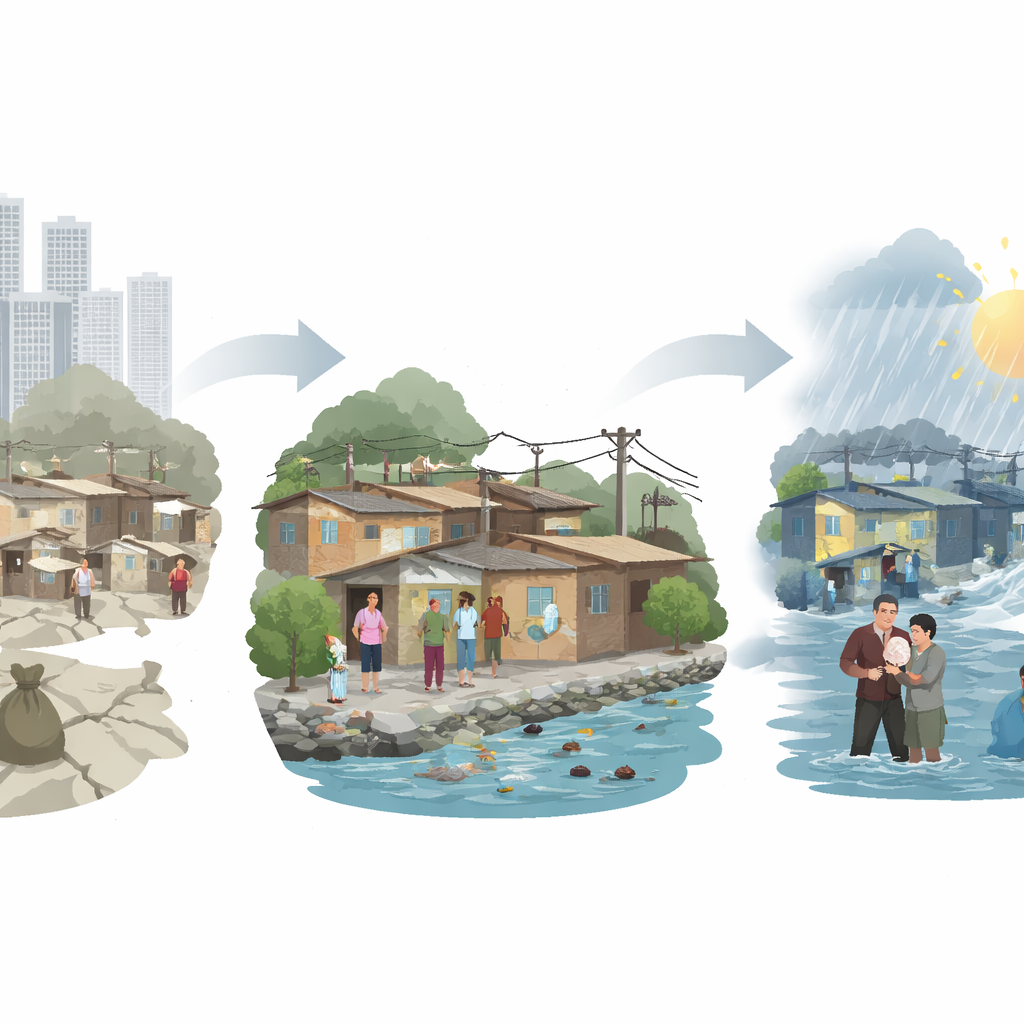
Interviewees described in detail how floods, heat, and water scarcity turn these unsafe conditions into severe losses. In Kibera and Jardim Pantanal, heavy rains overwhelm drains and rivers, filling flimsy homes with dirty water, destroying beds, food, documents, and sometimes taking lives. Roads, schools, and small businesses are shut down, children miss exams, and families lose income with no safety net to fall back on. Heatwaves bring their own cascade of problems: overheated, poorly ventilated rooms, spoiled food for street vendors, dehydration, and worsening health problems. People often must spend the little money they have on water, fans, or medical care, sacrificing food or school fees instead. In São Paulo, residents described children crying whenever it rains and families losing sleep in fear of the next flood, highlighting the toll on mental health as well as on homes and incomes.
When Solutions Create New Problems
The study also shows that responses to climate threats can deepen harm if they ignore root causes. In Jakarta, a major sea wall built to protect coastal districts like Kalibaru has reduced some flooding, but it has also changed water flows, increased salt in local wells, and cut off fisherfolk from their traditional fishing grounds, threatening their livelihoods and even their right to stay. In São Paulo, authorities have proposed removing thousands of families from Jardim Pantanal, while offering little clarity on where they will go. In Nairobi, "slum upgrading" schemes have produced more solid housing, but at prices many long‑time residents cannot afford, effectively displacing the very people they were meant to help. These examples show how climate projects framed as protection can, in practice, act as tools for eviction or reinforce old patterns of exclusion.
Shifting Power to Break the Cycle
The authors conclude that climate‑related losses and damages in cities cannot be fixed by simply rebuilding homes or offering short‑term compensation after disasters. Because these harms grow out of long‑standing inequalities—colonial land grabs, racial and economic segregation, weak social protection, and neglect of informal neighborhoods—real solutions must tackle those foundations. That means securing land rights, extending basic services and social support, including residents in planning decisions, and sharing power and resources beyond central governments that have often helped create the problem. As climate hazards intensify and more people crowd into informal settlements, the study argues that only this deeper shift can stop disasters from repeatedly pushing already vulnerable urban residents into an ever‑steepening spiral of loss.
Citation: van Schie, D., Sandholz, S., Turmena, L. et al. A vulnerability perspective on loss and damage: evidence from urban informal settlements. npj Urban Sustain 6, 70 (2026). https://doi.org/10.1038/s42949-026-00392-3
Keywords: urban informal settlements, climate loss and damage, social vulnerability, floods and heatwaves, climate justice