Clear Sky Science · en
Maternal-infant immune signatures in infants at risk for SARS-CoV-2-associated neurodevelopmental disorders
Why this study matters for parents
Many expectant parents worry about how COVID-19 might affect their baby, especially the brain and future learning. This study followed families in the United States and Brazil to see whether catching SARS-CoV-2 during pregnancy was linked to later developmental delays or early signs of autism in children, and to search for blood markers in mothers and babies that might flag higher risk soon after birth. 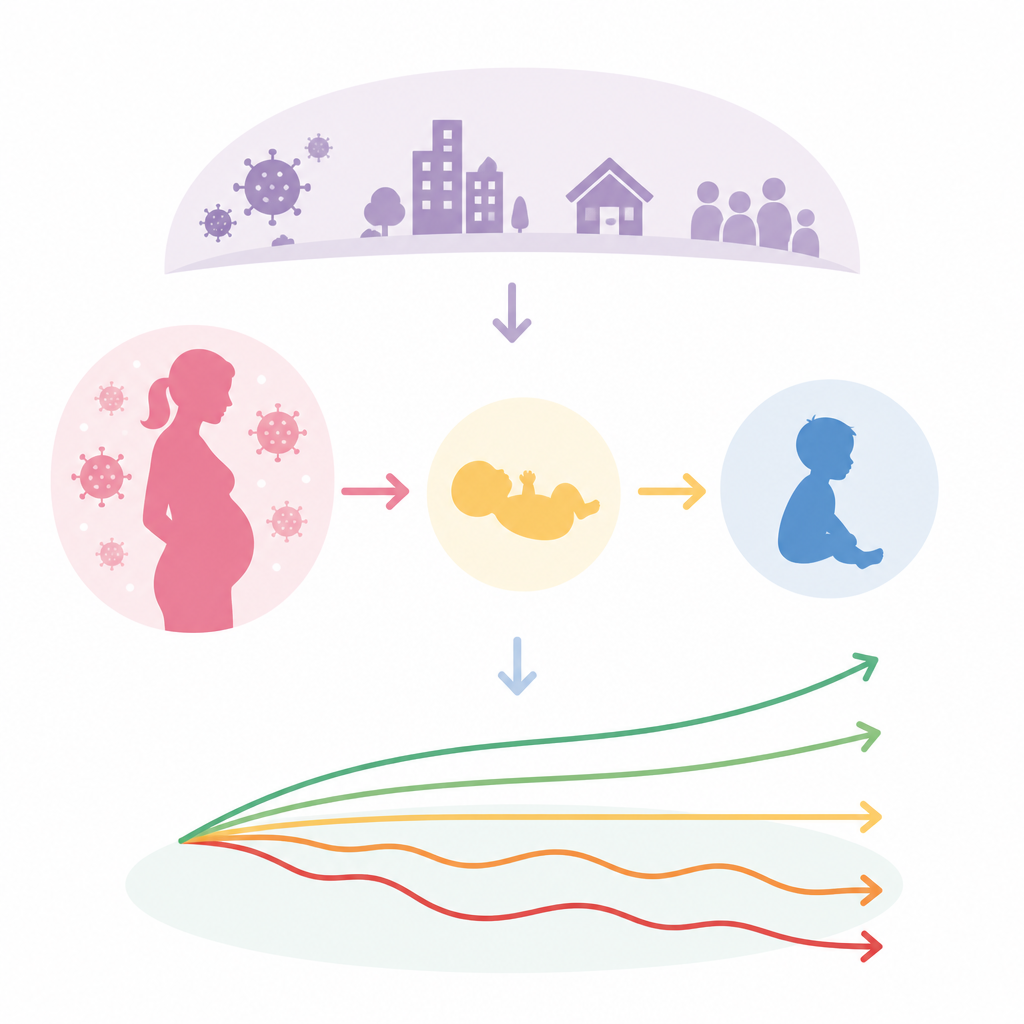
Tracking children’s early development
Researchers enrolled pregnant people who had confirmed COVID-19 and then followed their children for the first few years of life, comparing them to children born before the pandemic. The team used standard tools that pediatricians already rely on, including checklists that screen toddlers for possible autism and tests that measure language, movement, and problem solving. Among 218 children exposed to the virus before birth, about 10 percent screened positive for possible autism, nearly twice the rate seen in more than 500 pre-pandemic control children. Earlier work in the same cohort had already shown roughly ten times more developmental delay in exposed infants compared with unexposed peers.
What the screening results suggest
Importantly, none of the exposed babies in this study tested positive for the virus at birth, supporting the idea that any effect on the brain is more likely tied to the mother’s immune response than to direct infection of the fetus. Both preterm and full-term exposed infants showed more positive autism screens than their unexposed counterparts, so prematurity alone did not explain the pattern. Boys in the exposed group had a slightly higher chance of a positive screen, echoing broader autism trends. Vaccination against COVID-19 before delivery was linked to a lower risk of a failed screen, hinting that preventing severe infection during pregnancy may also help protect early brain development.
Clues from blood markers at birth
To understand how COVID-19 in pregnancy might influence the developing brain, the researchers examined proteins in blood samples from 27 exposed newborns and 7 unexposed controls, and from 33 infected pregnant women and 18 healthy pregnant women. In babies exposed in the womb who later had positive autism screens, 62 blood markers were altered compared with controls. These markers pointed to ramped-up immune and inflammatory activity, including systems involved in energy balance inside cells, activation of brain immune cells called microglia, and movement of white blood cells out of blood vessels. In contrast, some pathways that normally guide immune cells to where they are needed were dialed down. 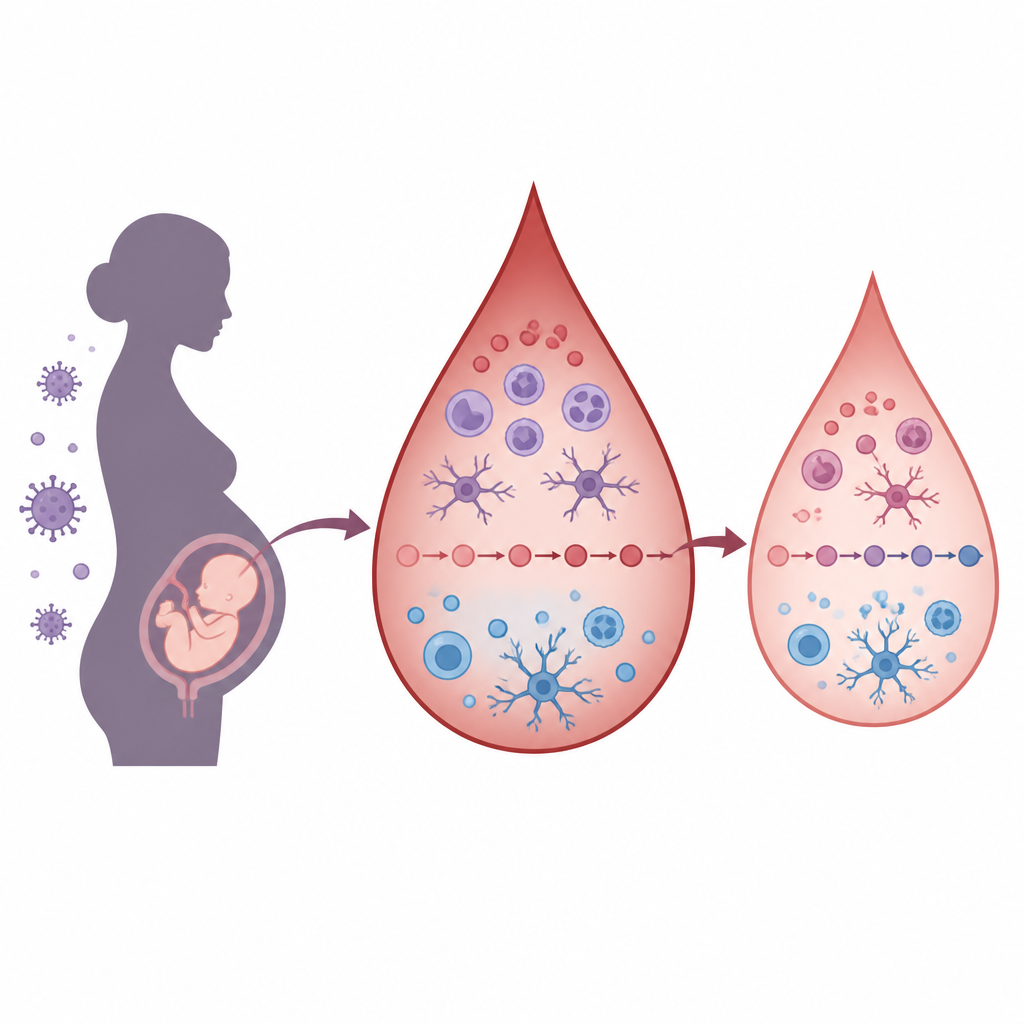
How the mother’s immune system is linked to the baby
In mothers who had COVID-19 and whose children screened positive, 34 blood markers were different from healthy pregnancies. Many of these were tied to cell death and stress responses, suggesting that infection had triggered stronger signals that can damage cells if not carefully controlled. A marker of blood and vessel repair was also higher, hinting at strain on the blood vessels that support the placenta. When the scientists compared mothers’ and infants’ protein patterns across groups, they found they tended to move in the same direction, reinforcing the close connection between maternal and infant immunity during pregnancy and early life.
What this means for families and future research
Together, the clinical data and blood profiles suggest that COVID-19 during pregnancy may disturb immune and stress signals in both mother and baby in ways that are linked to a higher chance of early developmental concerns, including possible autism. The screening tools used here do not provide a final diagnosis, and many children with positive screens will not go on to have autism. However, the findings support careful developmental follow-up for children exposed to SARS-CoV-2 before birth and point to biological pathways that future studies can explore in larger groups. For families, the work underlines the value of maternal vaccination and routine developmental screening to detect potential issues early, when support can be most helpful.
Citation: Fajardo-Martinez, V., Ferreira, F., Salem, G.M. et al. Maternal-infant immune signatures in infants at risk for SARS-CoV-2-associated neurodevelopmental disorders. Commun Biol 9, 628 (2026). https://doi.org/10.1038/s42003-026-10019-z
Keywords: COVID-19 in pregnancy, infant neurodevelopment, autism risk, maternal immune activation, serum proteomics