Clear Sky Science · en
A first-in-human phase 1 study of the SHP2 inhibitor BBP-398 in patients with advanced solid tumors
New Hope for Hard-to-Treat Cancers
Many people with advanced cancers run out of treatment options after standard therapies stop working. This study tested a new experimental pill, called BBP-398, designed to quiet a key growth signal that many tumors use to thrive. Researchers wanted to know whether this drug could be given safely to such patients and whether it might at least slow their disease, even when cure was not expected. 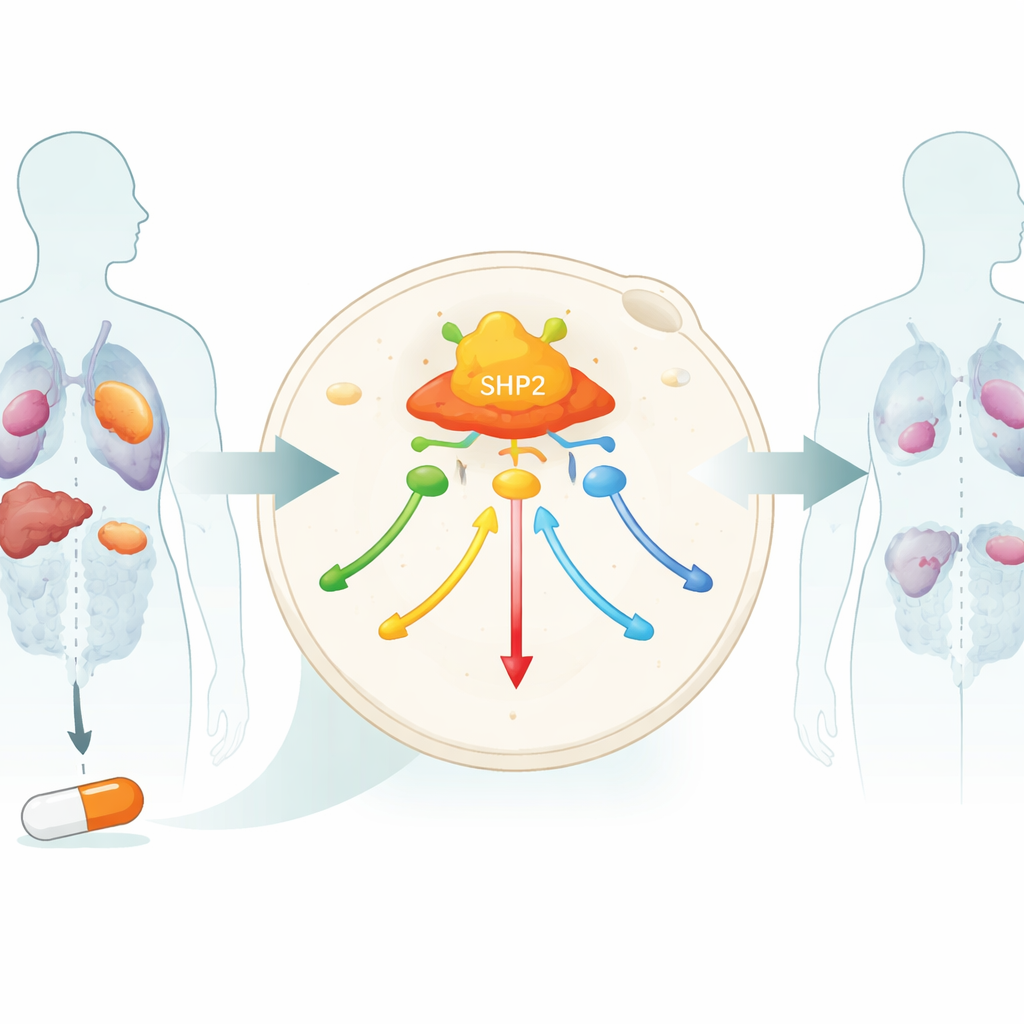
A Pill Aimed at Cancer’s Growth Switch
Cancer cells often hijack an internal wiring system that tells normal cells when to grow and divide. One important piece of this wiring is a protein called SHP2, which helps pass along growth messages inside the cell. BBP-398 is a pill that latches onto SHP2 in a way that holds it in its “off” position, preventing it from sending signals forward. Because many tumors, especially those with changes in the RAS–MAPK pathway, depend on these signals, turning them down with BBP-398 could help keep cancers from worsening.
Who Joined the Trial
This first-in-human phase 1 study enrolled adults with advanced solid tumors that carried specific pathway changes, including RAS mutations, and who had no remaining good standard treatments. Thirty-five patients joined the initial dose-escalation phase, and 37 more entered an expansion phase once a safe dose range was identified. Most had cancers of the colon, pancreas, or lung, and nearly all had already received at least three prior types of therapy. These were people with heavy treatment histories, whose cancers had already proven difficult to control.
Safety First: Finding a Tolerable Dose
Patients took BBP-398 once a day at doses between 80 and 550 milligrams. The main goal was to see what side effects appeared, how serious they were, and whether they limited further dose increases. The most frequent problems included diarrhea, nausea, swelling of the legs or body, weight gain, and drops in blood platelets or red blood cells. Blood clots in the lungs and veins were closely watched and occurred in a minority of patients, sometimes seriously. At the highest tested dose, 550 milligrams, platelet drops and swelling became more common, so the researchers stopped increasing the dose there. Even so, an official “maximum tolerated dose” was not reached, and daily doses up to 450 milligrams were considered to have an acceptable safety profile for this very ill group.
What the Drug Did to the Cancer
Although no tumors shrank enough to be called a formal response, nearly 30% of evaluable patients in both phases of the trial had stable disease, meaning their cancers stopped growing for a period of time. For these patients, the median duration of stability was about four months. Overall, patients stayed free from clear worsening of disease for about two months on average, and lived a median of roughly six months after starting the drug. Importantly, blood tests showed that BBP-398 reached levels expected to block its target and that a marker of growth signaling inside immune cells (called pERK) fell by more than 85% at the 350- and 450-milligram doses, confirming that the pill was hitting the intended switch. 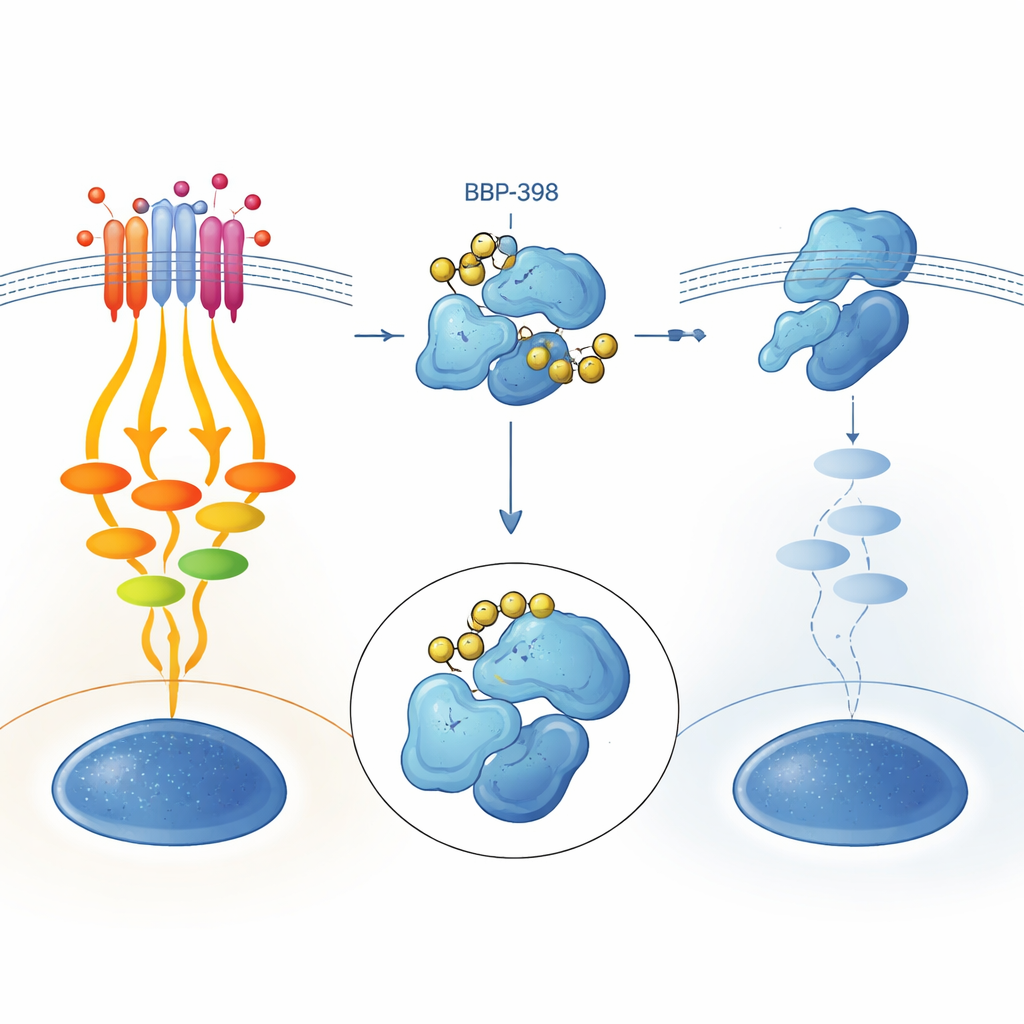
Looking Ahead to Combination Treatments
Because BBP-398 on its own mainly slowed tumors rather than shrinking them, the researchers see its greatest promise as part of drug combinations. Laboratory studies suggest that pairing SHP2 blockers like BBP-398 with other targeted drugs or with immune therapies can produce stronger and longer-lasting tumor control. Several such combination trials were launched but halted early for business reasons, so their results are not yet available. Even so, this first-in-human study shows that BBP-398 can safely and consistently turn down a major cancer growth pathway in people and can stabilize disease in a meaningful fraction of heavily pretreated patients. For individuals facing advanced cancers with few options, these findings support further development of BBP-398—especially in carefully chosen combinations—as a potential new tool to keep aggressive tumors in check.
Citation: Falchook, G., Braganca Xavier, C., Van Veenhuyzen, D. et al. A first-in-human phase 1 study of the SHP2 inhibitor BBP-398 in patients with advanced solid tumors. npj Precis. Onc. 10, 148 (2026). https://doi.org/10.1038/s41698-026-01340-1
Keywords: SHP2 inhibitor, BBP-398, advanced solid tumors, RAS MAPK pathway, phase 1 clinical trial