Clear Sky Science · en
The impact of psychological distress on working memory during COVID-19 by disentangling cognitive deficits from emotional burden
Why stress and memory during COVID still matter
The COVID-19 pandemic changed not only our bodies but also our minds. Many people noticed becoming more forgetful or easily distracted, and it has been hard to tell whether this came from the virus itself or from the strain of living through a crisis. This study follows people over a year to ask a simple but important question: how much of the memory trouble after COVID is linked to the illness, and how much is tied to ongoing psychological distress such as anxiety and stress symptoms?
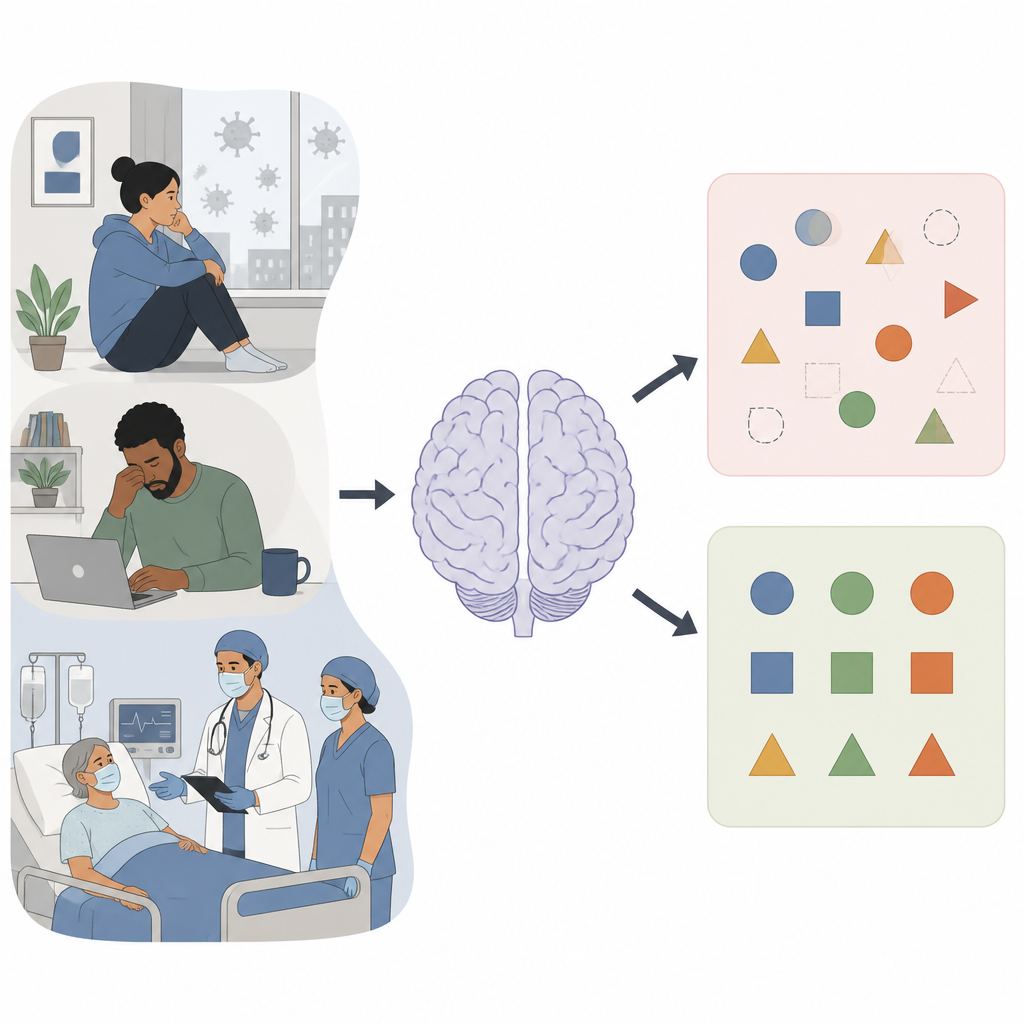
Three groups, two kinds of memory
Researchers in Germany followed 127 adults who had either a severe COVID infection that required hospital care, a mild or symptom free infection, or no infection at all. They tested two kinds of working memory, which is the mental “notepad” we use to hold and manipulate information in the moment. One task measured visual spatial memory with a pattern of blocks to be tapped in reverse order. The other task measured auditory memory using strings of spoken numbers that had to be repeated backward. People were tested soon after infection and again about a year later, and they also filled in questionnaires about mental health.
Measuring psychological burden
To capture psychological distress, the team used a standardized questionnaire that asks about symptoms of anxiety, depression, physical complaints without clear medical cause, and other emotional problems. From this, they calculated scores for overall distress, anxiety, and psychosomatic symptoms. Importantly, they treated medical COVID severity and psychological distress as two separate things. COVID burden was defined only by how serious the infection was and how long someone stayed in the hospital, while psychological distress reflected how troubled people felt in daily life.
Who felt worse and who remembered what
Across the study, people who had been seriously ill with COVID reported the highest psychological burden. They showed more anxiety and more physical complaints than those with mild illness or no infection, and these differences persisted even a year later, although distress generally declined over time. When the researchers looked at memory, they saw no big early differences between the groups. Later on, those with severe COVID did somewhat worse on the auditory memory task than the other groups, while visual spatial memory scores remained similar across groups at both time points.
Stress hits visual memory harder
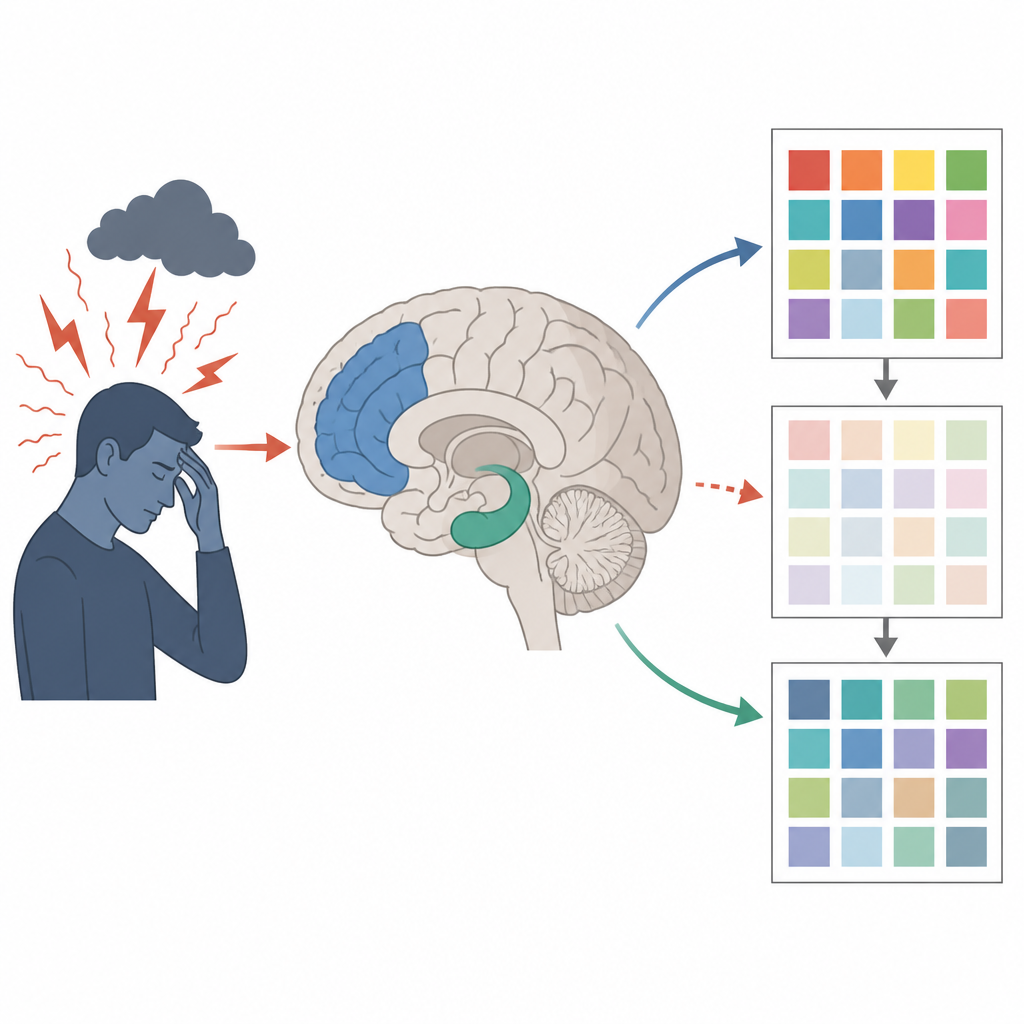
The most striking pattern appeared when the scientists looked at psychological distress instead of disease severity. Higher distress scores were linked to poorer performance on the visual spatial memory task, even after taking age, sex, and education into account. Older participants also did worse on this visual test. In contrast, distress was not clearly related to the auditory memory task. Instead, people with more years of education performed better when recalling numbers backward, suggesting that life experience and mental training may buffer this form of memory against the impact of stress.
What this means for recovery
Taken together, the study suggests that living with high psychological distress after COVID is closely tied to difficulties with visual spatial working memory, while the virus’s clinical severity on its own is less clearly linked to memory scores. For patients and clinicians, this means that treating lingering cognitive complaints should not focus only on possible brain damage from infection. Supporting mental health, especially reducing anxiety and somatic worries, may be just as important for helping people think clearly again in everyday life.
Citation: Chiara, K., Sabrina, T., Michael, H. et al. The impact of psychological distress on working memory during COVID-19 by disentangling cognitive deficits from emotional burden. Sci Rep 16, 15178 (2026). https://doi.org/10.1038/s41598-026-52320-1
Keywords: COVID-19, psychological distress, working memory, anxiety, cognitive function