Clear Sky Science · en
Synthesis, characterization, and anticancer potency of sulfadiazine salicylaldehyde-based Schiff bases
Why this research matters
Cancer drugs often damage healthy cells along with tumors, causing difficult side effects. This study explores two closely related laboratory-made molecules that aim to push cancer cells into a controlled form of self destruction while sparing normal cells as much as possible. By tracking how these molecules behave in cancer cells, the researchers look for early clues that could guide safer, more precise treatments in the future.
Designing new small molecules
The team focused on a family of compounds known as Schiff bases, a flexible class of small molecules already known for a wide range of biological effects. Using a common antibiotic building block, sulfadiazine, they created two new variants called SB1 and SB2 by attaching slightly different ring structures. Careful chemical tests, including infrared light measurements and nuclear magnetic resonance, confirmed that both molecules had the intended shapes and high purity, which is essential before any biological testing can be trusted.
Testing cancer cells in the lab
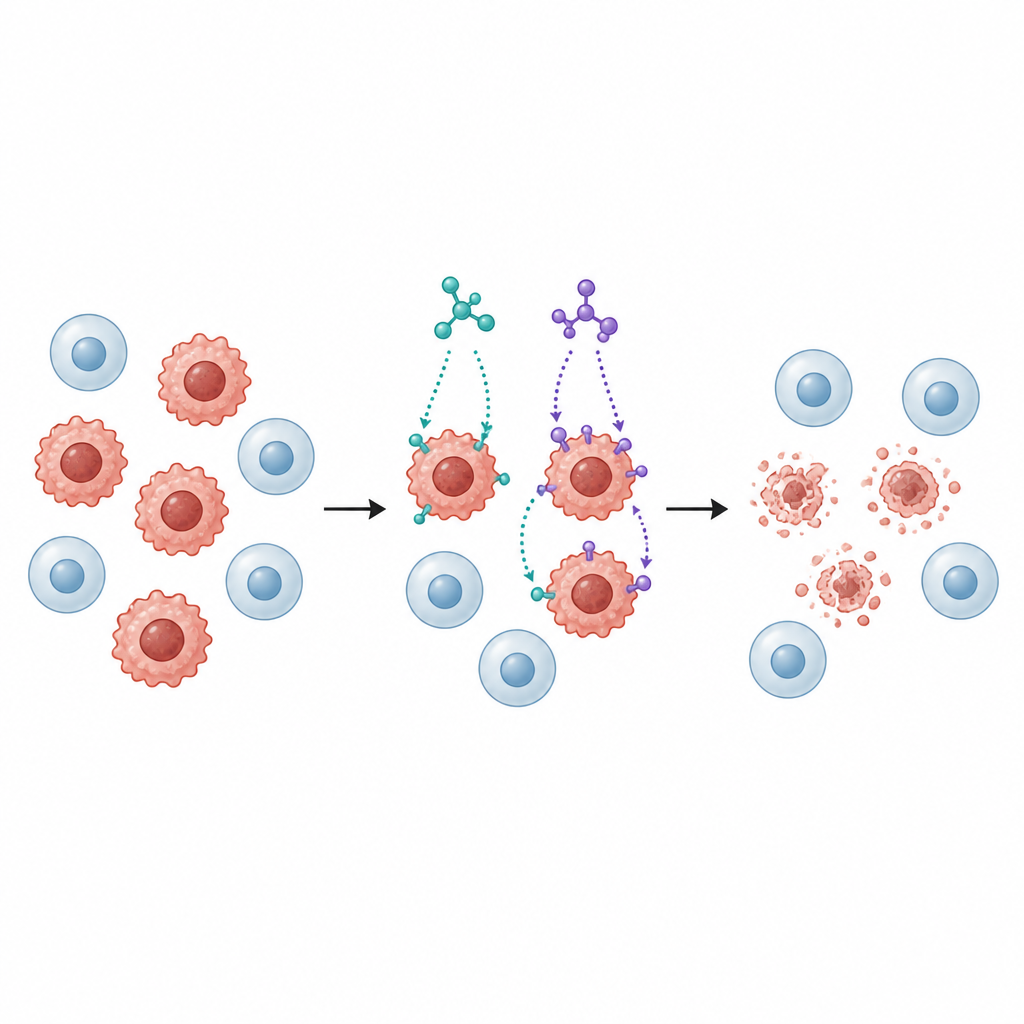
Next, the researchers exposed several human cancer cell lines to SB1 and SB2, including breast, colon, lung, liver, and bladder cancer cells, along with a normal lung cell line for comparison. Both molecules slowed cancer cell growth in a dose dependent way, but SB2 usually worked at lower doses than SB1, especially against breast (MCF 7) and colon (HCT116) cancer cells. Importantly, normal lung cells were less sensitive than tumor cells, suggesting some degree of selectivity, an important quality for any potential cancer medicine.
Triggering a tidy cell death program
Stopping growth is useful only if cancer cells are also removed. The team therefore examined whether SB1 and SB2 push cells into apoptosis, a tidy self destruction program in which cells break down without spilling harmful contents into surrounding tissue. Using a dye based flow cytometry test, they showed that both molecules greatly increased the fraction of cells undergoing early and late stages of apoptosis in breast and colon cancer lines. Levels of key proteins linked to this pathway shifted in a coordinated way: pro death signals rose, protective proteins fell, and enzymes called caspases switched on, all patterns consistent with a mitochondrial route to apoptosis.
Stressing DNA and vital enzymes
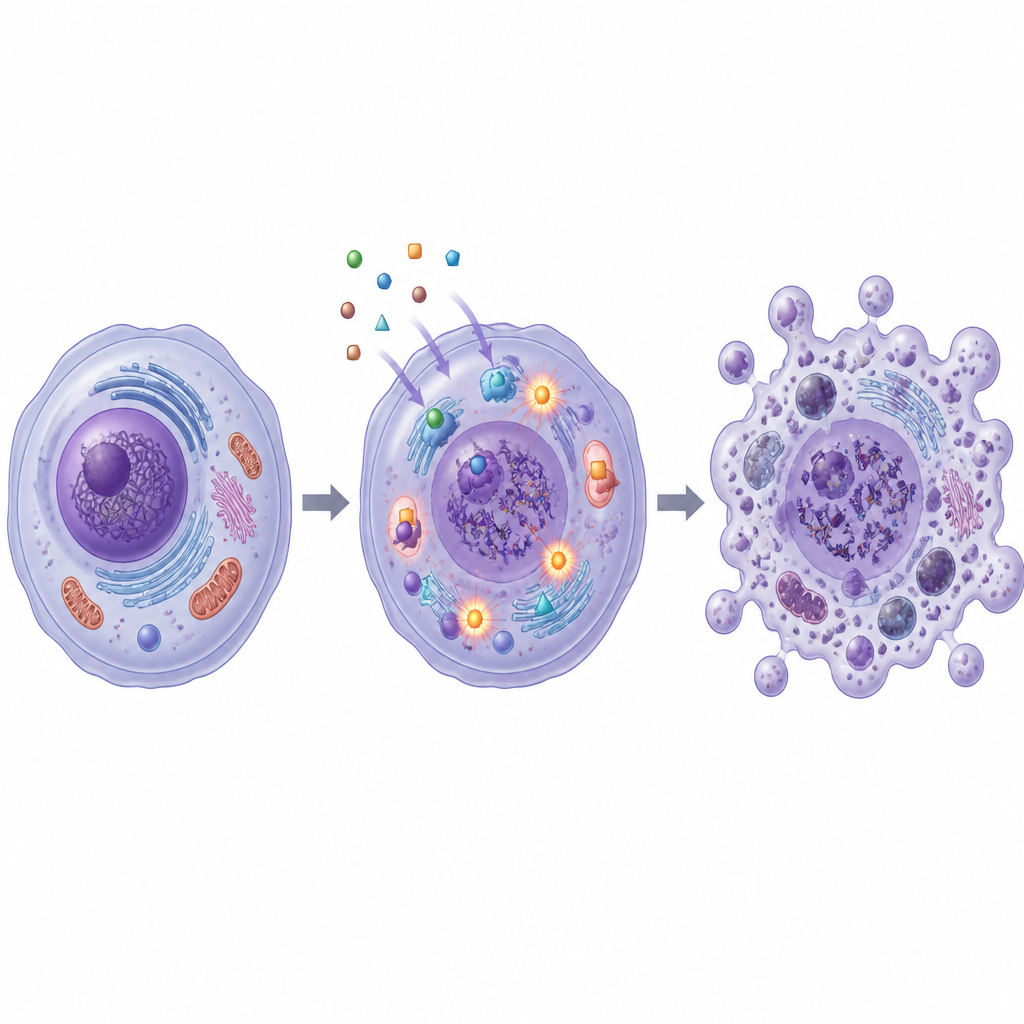
The study also probed how these molecules damage cancer cells from the inside. SB1 and SB2 boosted the production of reactive oxygen species, unstable molecules that can harm cellular structures and DNA. A color based test of DNA fragments showed that treated cancer cells carried much more broken genetic material, especially with SB2. At the same time, both compounds reduced the activity of enzymes called topoisomerases I and II, which manage the twisting and untwisting of DNA during copying and repair. Computer simulations supported these lab findings, indicating that SB1 and SB2 can fit snugly into the binding pockets of topoisomerase II and another cancer related protein, carbonic anhydrase XII.
The role of a single atom
Although SB1 and SB2 differ only by the presence of a single bromine atom on SB2, this small chemical tweak had a clear impact. Across most tests, SB2 showed stronger ability to halt cancer cell growth, raise oxidative stress, fragment DNA, and block topoisomerase activity. The added bromine likely changes how the molecule interacts with cell membranes and protein targets, improving its entry into cells and its grip on critical sites inside them. This illustrates how subtle changes in molecular design can markedly reshape biological behavior.
What this means going forward
Taken together, the results suggest that these sulfadiazine based Schiff bases, and especially SB2, can push cancer cells toward a controlled self destruct pathway while being less harmful to normal cells in lab dishes. They appear to act through a combination of increased oxidative stress, DNA damage, and blockage of enzymes that cancer cells rely on to grow and divide. While these compounds are not ready to be used as drugs, they provide promising starting points, or lead molecules, for chemists to refine into future anticancer agents with better stability and safety profiles.
Citation: Nasr, E., Moustafa, A.H., El-Sayed, A.S.A. et al. Synthesis, characterization, and anticancer potency of sulfadiazine salicylaldehyde-based Schiff bases. Sci Rep 16, 15047 (2026). https://doi.org/10.1038/s41598-026-51752-z
Keywords: Schiff bases, anticancer compounds, apoptosis, reactive oxygen species, topoisomerase inhibition