Clear Sky Science · en
A cross-sectional survey on depersonalization/derealization and meditation-induced alterations of the self
When Feeling Unreal Feels Very Different
Many people know meditation as a path to calm and insight. Fewer realize that it can sometimes bring on eerie sensations: feeling outside your body, watching life like a movie, or sensing that the world is strangely flat or dreamlike. The same kinds of experiences also appear in a little-known mental health condition called depersonalization/derealization disorder. This study asks a simple but important question: when people feel this way during meditation versus after trauma, stress, or drug use, are they actually going through the same thing—and if so, why does it so often feel helpful in one setting and terrifying in another? 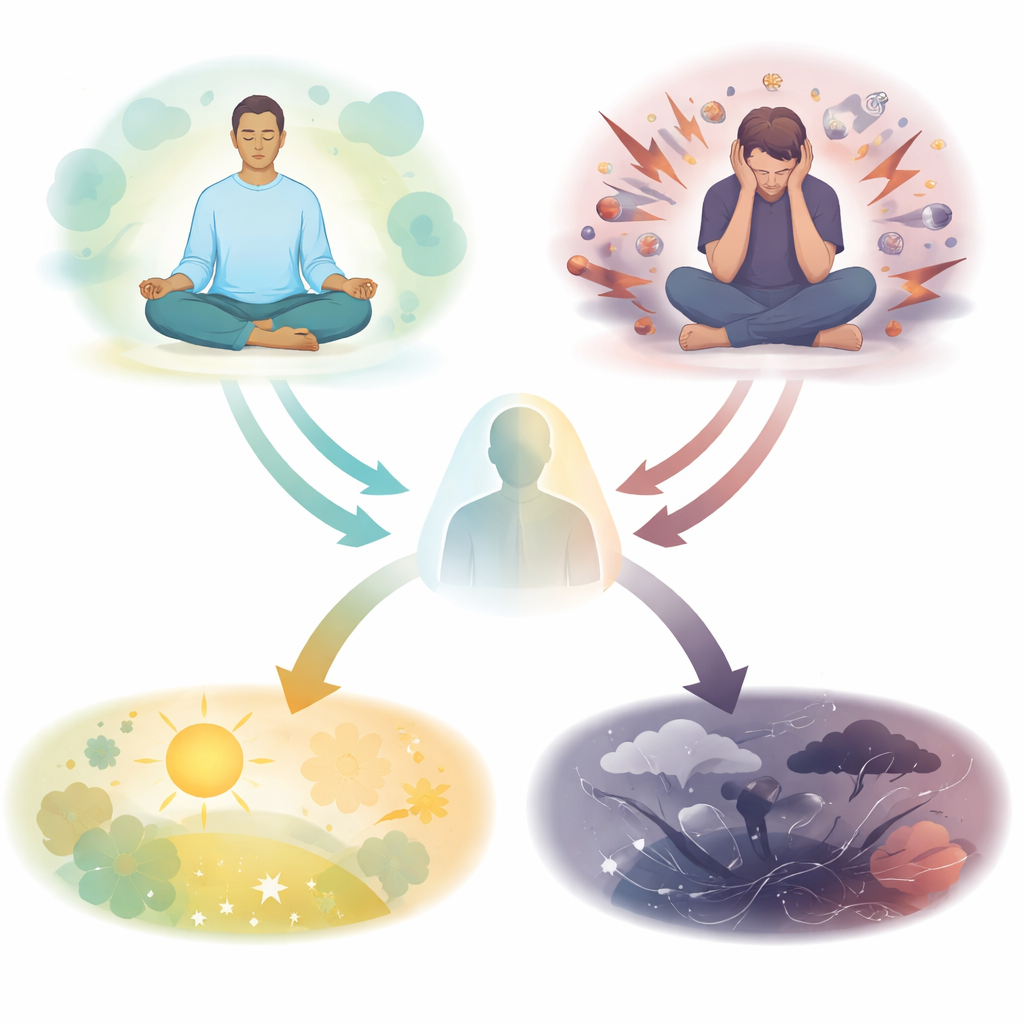
Strange Feelings of Self and World
Depersonalization means feeling cut off from your own thoughts, body, or emotions, as if you were a robot or an outside observer. Derealization means that the world around you feels unreal, foggy, or oddly distant. Together, these experiences are called DPDR and are usually linked to trauma, intense stress, or drug effects, and are often highly distressing. Yet remarkably similar descriptions come from advanced meditators, who sometimes report a cool, detached clarity or a sense of being a neutral observer. In many contemplative traditions, this is not seen as illness but as a glimpse into how the sense of self is constructed and can loosen or even vanish.
Comparing Two Paths to the Same Odd State
The researchers recruited 121 adults who had lived through DPDR-like states. One group reported that these states were triggered by meditation; the other traced them mainly to non-meditation causes such as stress, trauma, depression, or cannabis. All participants filled out a set of questionnaires about how often and how strongly they experienced DPDR symptoms, how mystical or spiritual their experiences felt, how much their usual sense of self seemed to dissolve, how emotionally challenging the episodes were, and how inclined they generally were to notice inner life without judging or reacting to it.
A key finding was that, on a standard measure of DPDR symptoms, the two groups looked remarkably similar. Many in both groups scored above a common clinical cutoff, meaning their experiences were strong enough to resemble those seen in patients diagnosed with DPDR disorder. Yet only a handful had ever received a formal diagnosis. This suggests that intense, DPDR-like states are more widespread than clinical records imply and can appear in everyday settings, including meditation practice.
Same Core Experience, Different Emotional Story
Where the groups diverged was in how these states felt and what they seemed to mean. People whose episodes came through meditation were far more likely to describe them as positive, insightful, or spiritually important, and they scored high on scales of mystical experience and ego dissolution—feelings of unity and loss of a fixed “I.” Their scores on measures of non-judging and non-reactivity were also higher, hinting that they were more able to allow odd states to come and go without panicking. By contrast, those whose DPDR episodes followed trauma, stress, or similar triggers reported more emotional struggle and higher scores on a questionnaire of challenging experiences, even though the basic symptoms overlapped. Importantly, however, not all meditation-triggered states were pleasant; among people with especially strong DPDR scores, distress levels in the meditation group could match those in the non-meditation group. 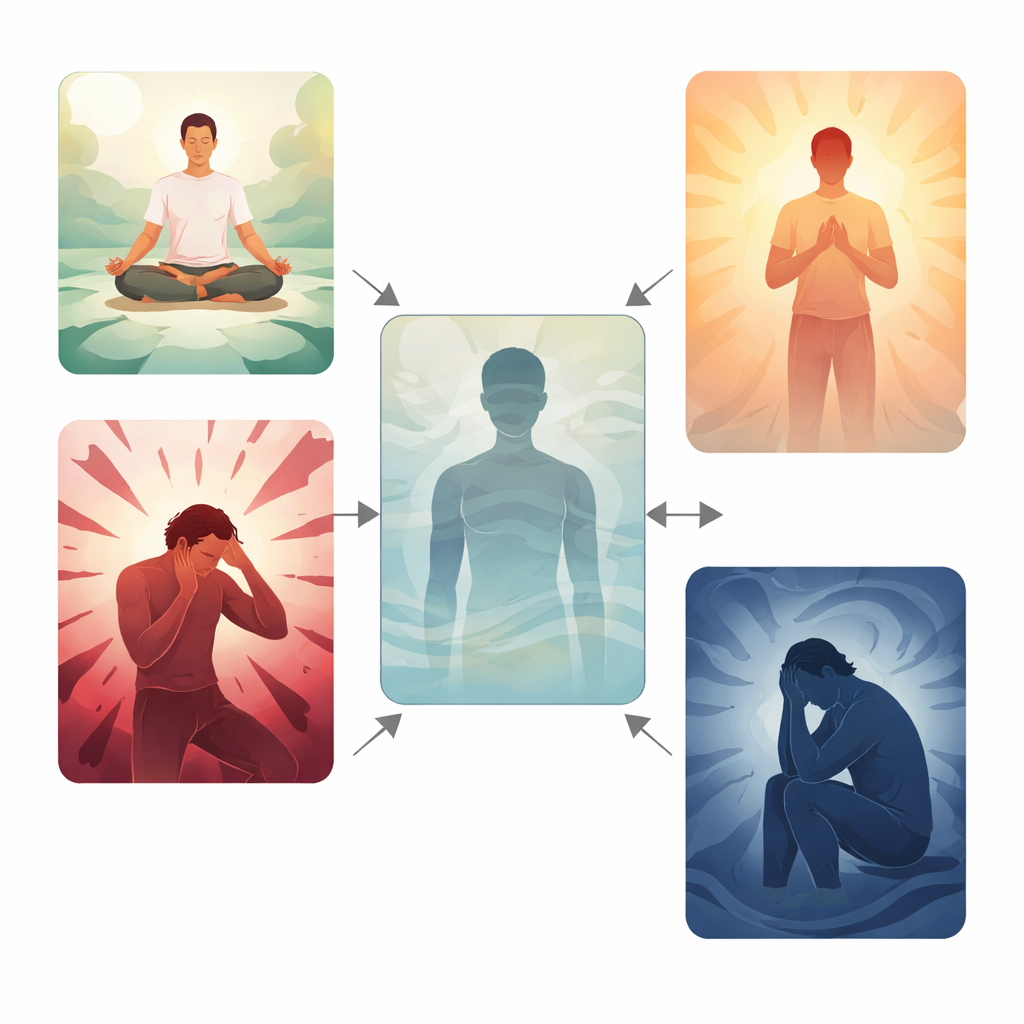
What This Means for Meditators and Clinicians
The study shows that meditation can bring about states that look, on paper, very much like a psychiatric condition—but that can be welcomed, confusing, or deeply upsetting depending on context, expectations, and personal history. For clinicians, this suggests that insights from contemplative traditions might help people with DPDR find new ways to relate to their symptoms, perhaps by learning to observe them with less fear and more curiosity. For meditation teachers and app designers, it is a reminder that dramatic shifts in how the self and world are felt can arise even in relatively new practitioners and should be named, normalized, and carefully guided rather than ignored. In short, the same kind of “unrealness” can be a doorway to growth or a source of suffering—and how we frame and support it may tilt the balance.
Citation: Pons, E., Galante, J., Van Dam, N. et al. A cross-sectional survey on depersonalization/derealization and meditation-induced alterations of the self. Sci Rep 16, 14673 (2026). https://doi.org/10.1038/s41598-026-51014-y
Keywords: meditation, depersonalization, derealization, sense of self, mental health