Clear Sky Science · en
Trauma and resilience among non-displaced in the early phase of the war in Ukraine
Everyday Life in a War Zone
When war dominates the news, we often picture people fleeing across borders. But many civilians stay where they are, even as shells fall nearby. This article looks closely at such people in the suburbs around Kyiv, Ukraine, who chose not to leave during the first months of the 2022 invasion. It asks how they endure danger, loss, and uncertainty, and what helps some of them hold together mentally while others are overwhelmed. Their experiences reveal how strength in war is not only about inner toughness, but also about family ties, neighbors, public support, and even distant friends abroad.
Why Staying Put Matters
Since the invasion began, millions of Ukrainians have escaped abroad or moved within the country. Research has focused heavily on these displaced groups, documenting high levels of distress and post-traumatic stress symptoms. Far less is known about those who stayed in heavily hit places like Bucha and Irpin, which became symbols of both brutality and civilian courage. The authors of this study focus on these non-displaced residents: adults who lived through bombardment and occupation on their home streets and then tried to rebuild their lives in the same place. By studying this often overlooked group, the researchers aim to broaden our understanding of war’s impact and of what recovery can look like while the conflict is still ongoing.
Looking at Trauma from Many Angles
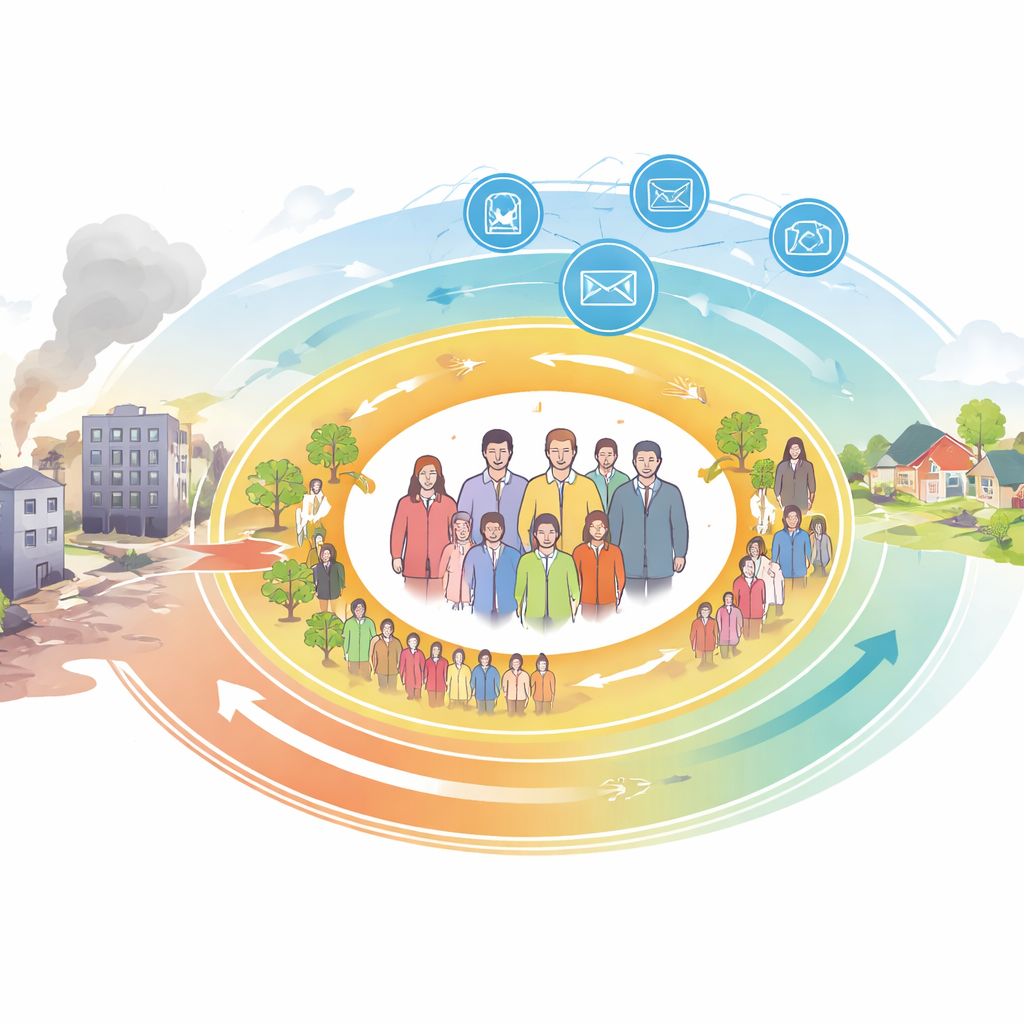
The team combined two kinds of evidence. First, participants filled out a standard questionnaire that measures symptoms linked to post-traumatic stress, such as intrusive memories, avoidance, and constant tension. Scores varied widely, from relatively mild to extremely high, suggesting that even among people living in similar conditions, mental reactions can differ greatly. Second, the researchers carried out 19 in-depth interviews in the Kyiv suburbs, listening to people describe in their own words how they endured the first months of war and how they are coping now. Instead of treating resilience as a fixed inner trait, the study uses a “many-layered” view: it looks at the individual, close relationships, the wider society, and even cross-border ties as interacting parts of a larger system that can either support or strain a person under pressure.
Two Lives, Two Paths Through the Same Storm
To make these ideas concrete, the article presents two contrasting portraits. One is “Oleg,” a businessman whose house was burned down and who took on the grim task of documenting the dead. His test score for post-traumatic stress was the highest in the group. Oleg describes pushing himself into constant action, tightly controlling his emotions and focusing on tasks. His wife’s support and the help of strangers were vital, yet he remains exhausted, deeply frustrated by corruption and what he sees as the state’s failure to protect people like him. For Oleg, civic dedication and personal discipline help him function day to day, but they also risk becoming a form of overstrain in the absence of reliable public structures and long-term help.
The second portrait is “Irina,” a woman from Bucha whose score was the lowest in the sample, despite direct exposure to occupation and violence. She still has painful memories and avoids certain spots in the local park where she recalls the faces of the dead. At the same time, she leans on everyday routines like walking her dog, stays closely connected with her husband and grown children, and imagines a future beyond the war. Her sense of belonging to Ukraine, even though she identifies ethnically as Russian, and her belief in eventual victory give her a moral compass in chaos. Irina also draws comfort from knowing that, if needed, her family could rely on relatives or contacts abroad, even if they never actually leave. Together, these stories show how differences in social support, shared purpose, and perceived options can shape mental well-being as much as the level of exposure itself.
The Power of Community and Distant Support
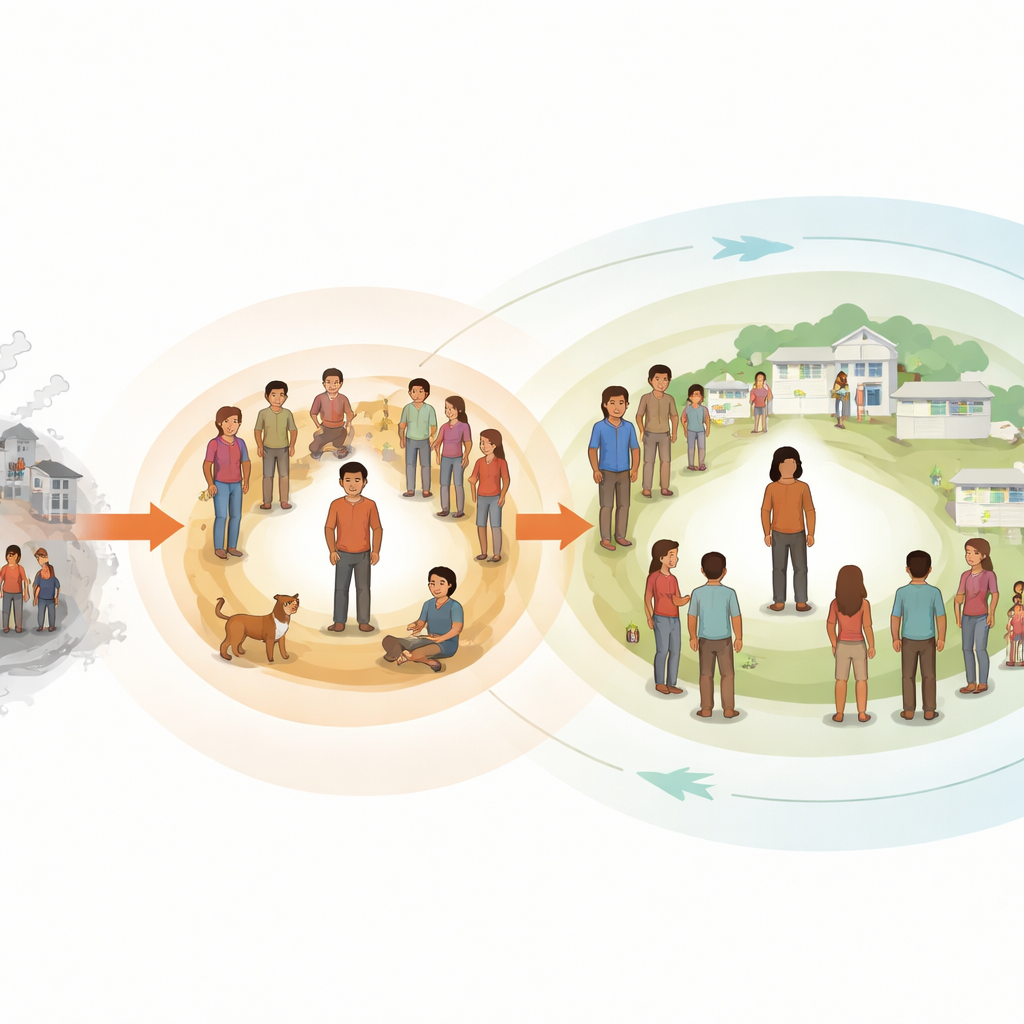
Across all interviews, several patterns repeat. People describe a mix of practical problem-solving and emotional strategies: rebuilding homes, volunteering, deepening their faith, or clinging to small rituals that restore a sense of normal life. Family, neighbors, and colleagues emerge as the strongest sources of protection, often stepping in where formal services are thin or absent. Many speak of new bonds in their apartment blocks and streets, turning once distant neighbors into a kind of extended family. At the same time, frustration with slow or uneven state support is common, and relying only on “strength from below” leaves many feeling drained. International aid and awareness play a surprisingly personal role: even for those who have never crossed the border, knowing that people abroad care, send supplies, or offer possible refuge can lighten the psychological load and expand their sense of options.
What This Tells Us About Human Strength
This study concludes that resilience in war cannot be reduced to being “strong” or “weak” as an individual. Instead, it is a process shaped by the web of relationships and conditions surrounding a person: their own coping style, the warmth and reliability of loved ones, the fairness and responsiveness of public institutions, and the reach of transnational networks. Non-displaced civilians in Ukraine show that recovery is not only something that happens after war ends; it is an ongoing effort to rebuild meaning, trust, and routine in the middle of danger. For policy-makers and helpers, the message is clear: supporting mental health in conflict zones means investing not just in clinics, but also in communities, shared spaces for storytelling, and cross-border solidarity that reminds those who stay that they are not facing the crisis alone.
Citation: Bekassow, N., Herpertz, S., Dieris-Hirche, J. et al. Trauma and resilience among non-displaced in the early phase of the war in Ukraine. Sci Rep 16, 13883 (2026). https://doi.org/10.1038/s41598-026-49940-y
Keywords: war-related trauma, civilian resilience, Ukraine conflict, post-traumatic stress, social support networks