Clear Sky Science · en
Antimicrobial use at the end of life: a retrospective cohort study
Why this matters for patients and families
Antibiotics are often seen as a basic part of good medical care, but their role becomes less clear when a person is dying. This study from a Swedish hospital asks a simple but emotionally difficult question: when doctors and families have agreed to focus on comfort rather than cure, how often are powerful antibiotics still given, and do they actually help? The answers shed light on how we care for people in their final days—and how our choices affect both individual comfort and the wider problem of drug-resistant germs.
How the study was carried out
Researchers looked back at the medical records of 100 adults who died in a regional Swedish hospital between early 2022 and early 2024. All had been given antibiotics during their stay and had a clearly documented end-of-life discussion, in which the goal of care shifted from trying to prolong life to focusing on relief of symptoms. Some patients continued to receive antibiotics after that point, while others did not. The team compared these two groups in terms of age, health problems, type of suspected infection, use of intravenous fluids, and how long they lived after the end-of-life discussion.
What treatments patients received
More than one third of the patients—36 out of 100—continued to receive antibiotics even after doctors had agreed that comfort, not cure, should be the priority. The patients were elderly on average, with a median age of just over 80 years, and nearly all had at least one serious long-term illness, such as cancer or chronic kidney disease. Lung infections were the most common reason for antibiotic use, followed by urinary tract infections. Strong, broad-acting drugs like piperacillin-tazobactam and cefotaxime were used most often, even though only about 40% of patients had an infection clearly confirmed by tests or scans. 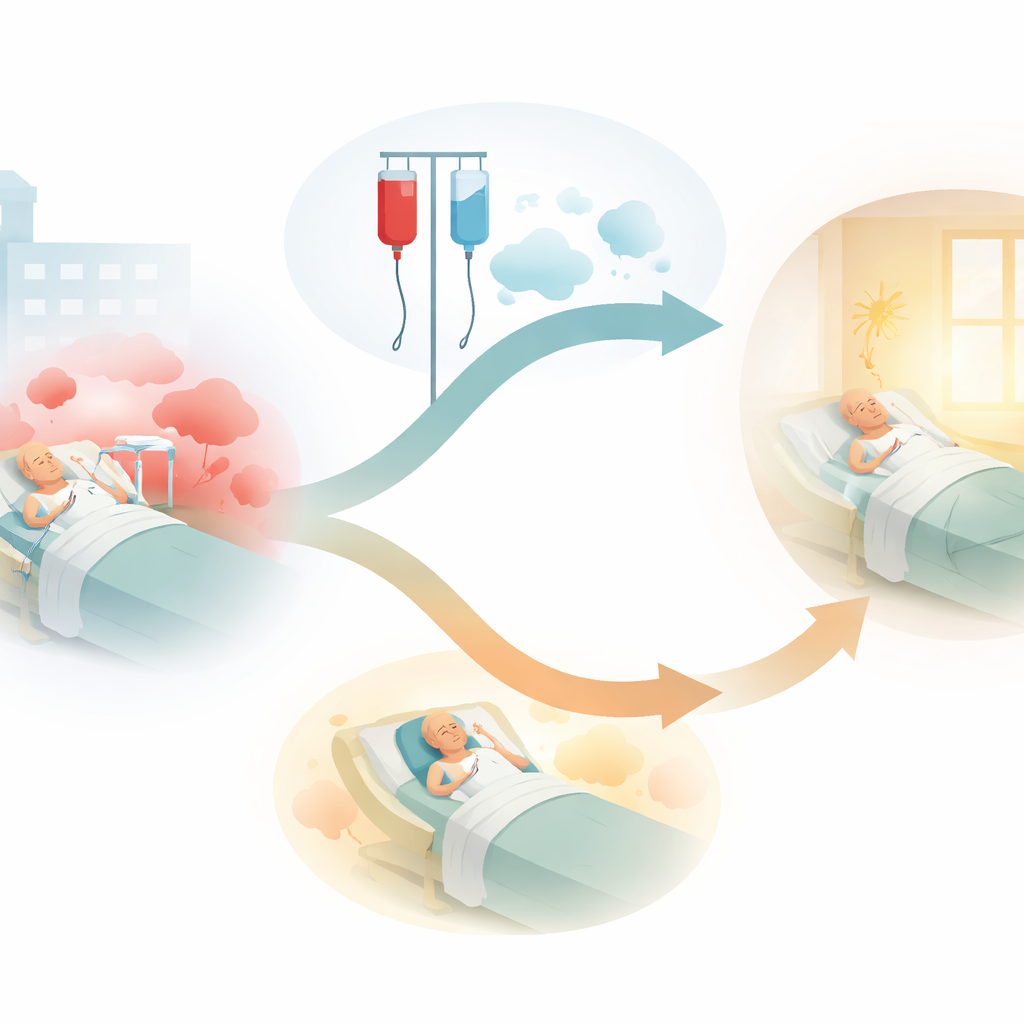
Did antibiotics change how long patients lived?
The key question was whether continuing antibiotics after the end-of-life discussion helped patients live longer. On average, people died about two days after this conversation, regardless of whether antibiotics were continued. Those who stayed on antibiotics lived slightly longer—around 2.7 days compared with 1.9 days for those who stopped—but this difference was small and not statistically convincing. In other words, based on this study, there is no solid evidence that antibiotics meaningfully extended life once death was expected and care had shifted to comfort.
Hidden patterns in other treatments
The study also uncovered a telling link between antibiotics and other intensive treatments. Patients who kept receiving antibiotics were far more likely to continue getting intravenous fluids as well: about one in three in the antibiotic group, compared with only one in twenty in the group that stopped antibiotics. This suggests that once one type of active treatment is continued, others tend to follow, even when the official goal is to reduce burdens and focus on relief. Differences between hospital specialties also emerged: infectious disease units were more likely to stop antibiotics after end-of-life discussions, while cardiology units were more likely to continue them, hinting that professional habits and comfort with uncertainty influence these choices. 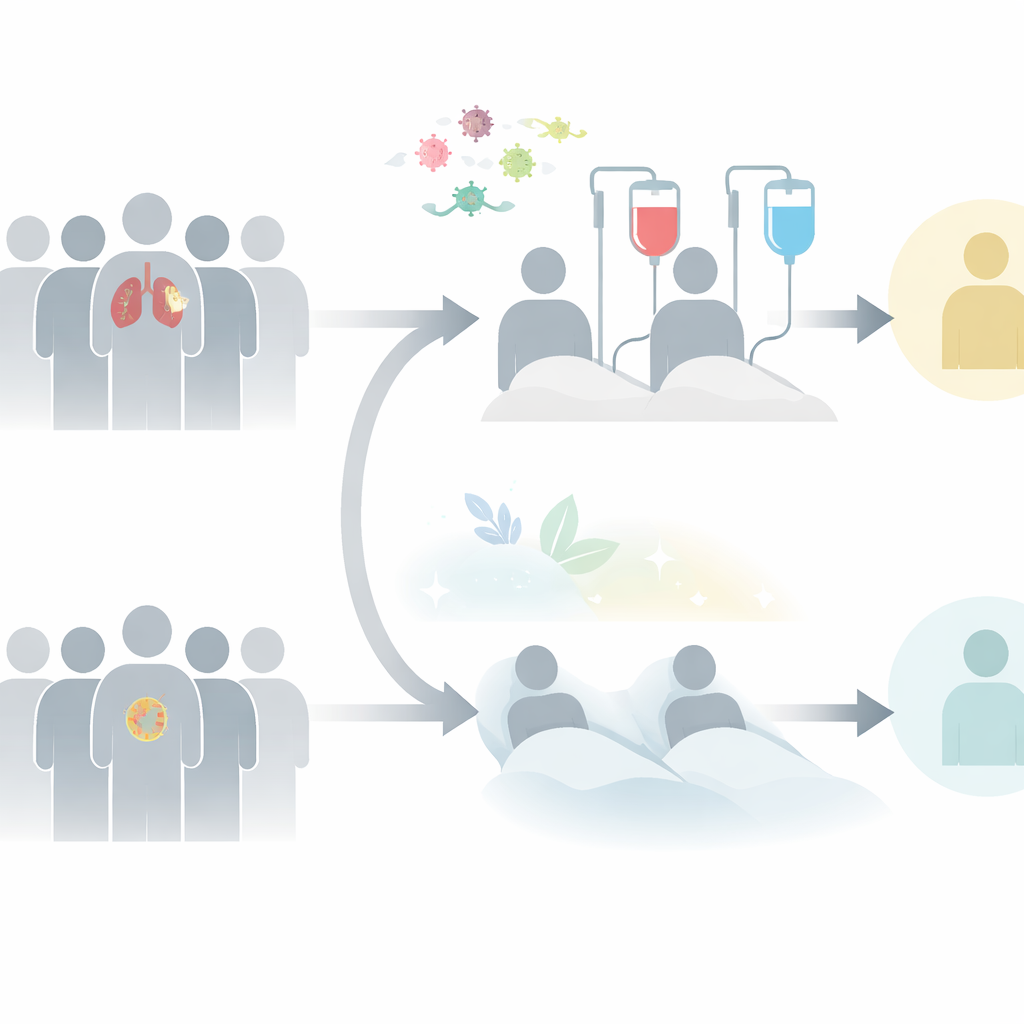
Balancing comfort, ethics, and resistance
The authors stress that their work cannot prove whether each individual decision to use or withhold antibiotics was right or wrong. They could not fully measure symptom relief, and the study was limited to a single hospital with a modest number of patients. Still, the findings fit with earlier research suggesting that antibiotics near the very end of life often do not improve survival and may only rarely ease symptoms, while adding risks such as side effects, discomfort from intravenous lines, and the spread of resistant bacteria. The study concludes that clearer guidance and stronger antibiotic stewardship in palliative care are urgently needed. For patients and families, this means that when death is near, it may be wise to ask whether antibiotics are likely to bring real comfort—or whether a more restrained, comfort-focused approach would better match their goals and values.
Citation: Sandqvist, K., Ekström, M. Antimicrobial use at the end of life: a retrospective cohort study. Sci Rep 16, 12371 (2026). https://doi.org/10.1038/s41598-026-48112-2
Keywords: end-of-life care, antibiotic use, palliative care, antimicrobial resistance, hospital medicine