Clear Sky Science · en
Effect of diode laser pretreatment on dentin thickness and discoloration in deep caries treated with biodentine: a randomized clinical trial
Saving Teeth from the Inside Out
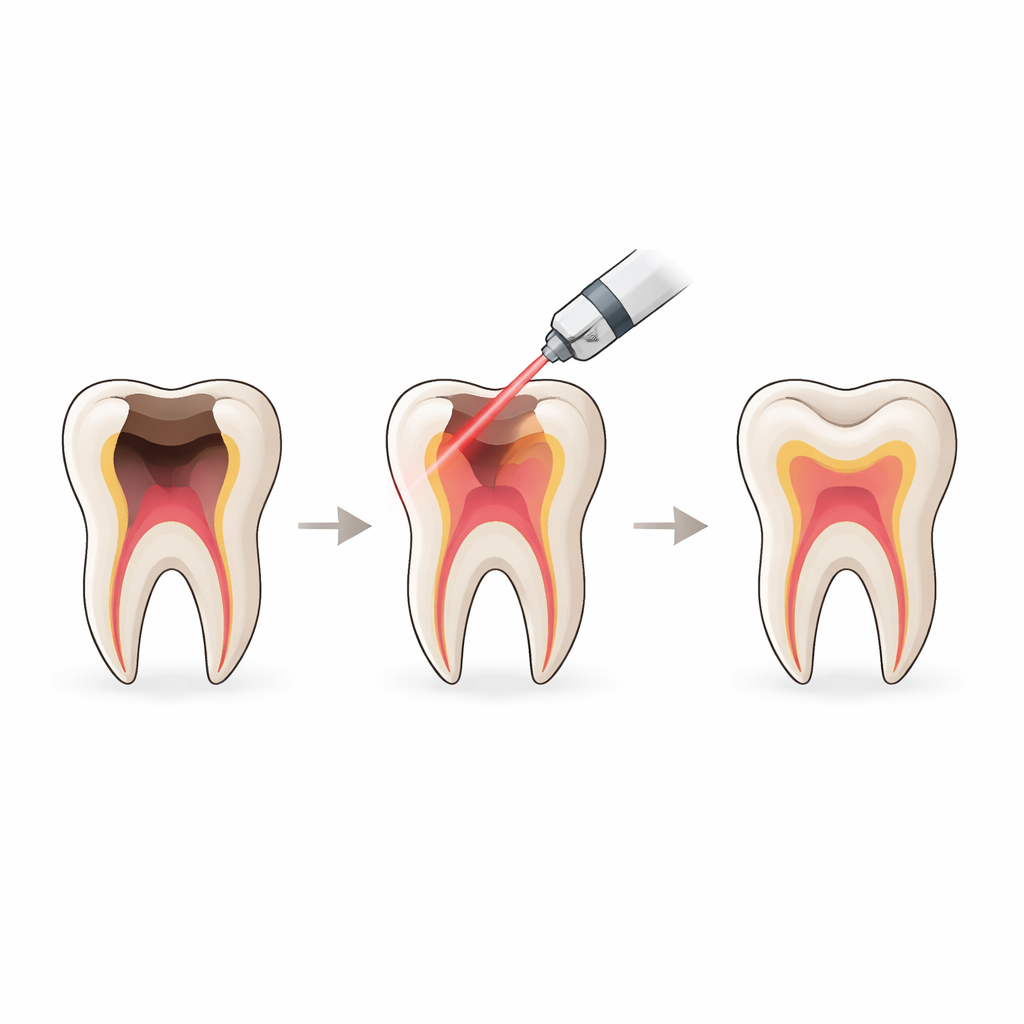
Most of us think that a deep cavity automatically means a dreaded root canal. But dentists today increasingly try to keep the tooth’s soft inner tissue—the pulp—alive instead of removing it. This study tested whether shining a gentle medical laser on deeply decayed teeth before sealing them with a modern repair material could help the tooth rebuild more protective hard tissue from within, without darkening the tooth’s color or increasing discomfort for patients.
Why Deep Cavities Are So Tricky
When decay reaches far into a tooth, the dentist must carefully clean out the softened area without accidentally killing the pulp that keeps the tooth alive and sensitive. One popular method, called vital pulp therapy, aims to remove only the infected part and then cover the remaining inner dentin with a special material that encourages the tooth to lay down new hard tissue. A newer cement called Biodentine is widely used for this purpose because it is gentle to the pulp, sets quickly, and can trigger the tooth to form a natural barrier of new dentin over time.
A New Partner for a Trusted Material
Lasers have become common tools in dental offices, not only for cutting but also for helping tissue heal. A low-powered diode laser can reduce bleeding, kill bacteria, and may nudge cells to repair themselves faster. The researchers asked whether briefly using such a laser on the cleaned cavity floor, just before placing Biodentine, would help the tooth build a thicker protective layer of hard tissue compared with using Biodentine alone. They also wanted to know whether this extra step might change tooth color or cause more pain.
How the Trial Was Run
The team recruited 48 adults who each had one back tooth with very deep decay but still-living pulp. Half of the teeth were treated with Biodentine alone, and the other half received a short burst of 940 nm diode laser light on the inner dentin before the same Biodentine layer was applied. All teeth were then restored with a glass-like filling material. Using three-dimensional cone-beam CT scans, the researchers measured how much hard tissue lay between the filling and the pulp at the start, after three months, and after six months. They also tracked tooth color with a sensitive color-measuring device and recorded patients’ pain levels over time.
What Happened Inside the Teeth
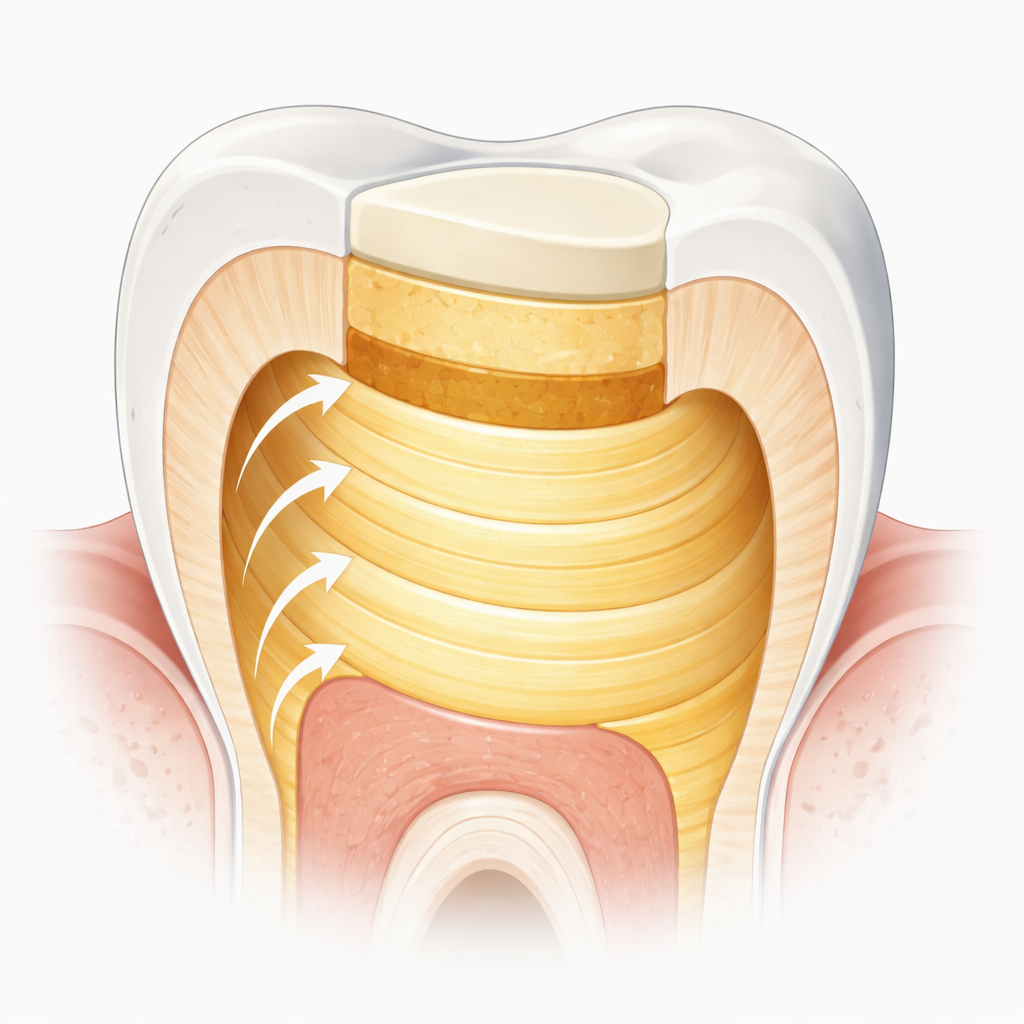
Over six months, both treatments led to a clear increase in the thickness of hard tissue above the pulp, showing that Biodentine alone can successfully encourage the tooth to reinforce itself from within. However, the teeth that received the laser plus Biodentine formed a noticeably thicker layer at both three and six months than those treated with Biodentine alone. At the same time, both groups showed only tiny changes in tooth color—too small for the average person to see—and the laser group actually reported less pain and sensitivity during follow-up visits. All teeth in both groups stayed alive and healthy during the study, and serious failures were rare.
What It Means for Patients’ Smiles
For people facing deep cavities, this work suggests that adding a brief, gentle laser step before placing a modern repair cement may help the tooth build a stronger internal shield without turning the tooth darker or causing extra pain. The scans cannot reveal exactly what kind of hard tissue formed, and longer studies are needed, but the early results point to laser-assisted treatment as a promising way to save more natural teeth and avoid more invasive procedures while keeping smiles looking natural.
Citation: Elgamily, H.M., Sharaf, N., Shaker, I.S. et al. Effect of diode laser pretreatment on dentin thickness and discoloration in deep caries treated with biodentine: a randomized clinical trial. Sci Rep 16, 14424 (2026). https://doi.org/10.1038/s41598-026-47695-0
Keywords: deep dental cavities, vital pulp therapy, Biodentine, dental lasers, tooth regeneration