Clear Sky Science · en
Increasing trends of hospital admissions for unhoused patients in the United States
Why rising hospital stays among people without homes matter
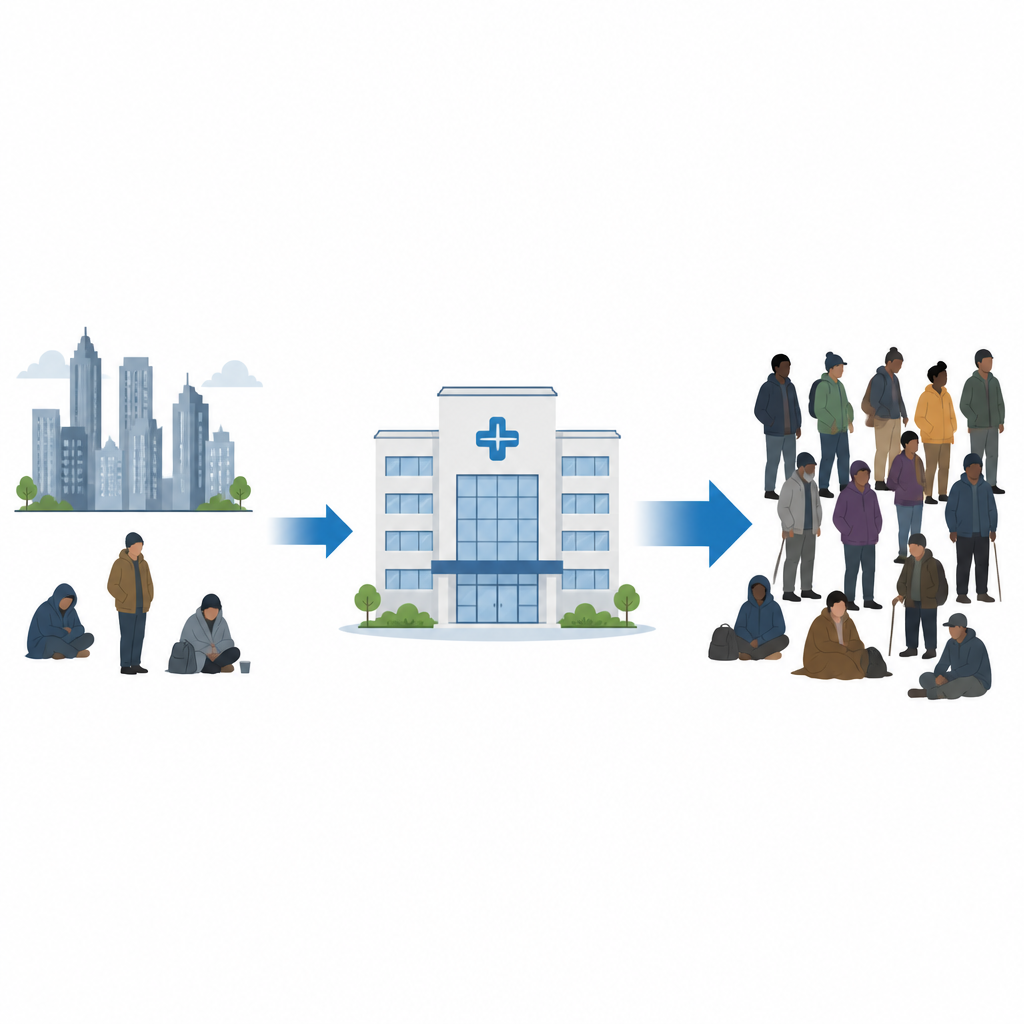
Across the United States, more people are living without stable housing, and this reality is increasingly showing up inside hospital walls. This study asks a simple, urgent question: as housing instability grows, how is it changing who ends up in the hospital, where they are treated, and what that means for patients, communities, and the health care system as a whole.
Looking at hospital records nationwide
The researchers examined a huge national hospital database that captures millions of inpatient stays each year from nearly all states. Using a standard medical code that marks when a patient is unhoused, they tracked every admission between 2016 and 2022 that involved someone without stable housing. In total, they analyzed more than 241 million hospital stays and identified about 2.8 million admissions involving patients who were unhoused at the time of hospitalization.
Hospital care for unhoused people is climbing
Over the seven year period, hospital admissions involving unhoused patients rose sharply even as overall hospitalizations in the country fell. In 2016, roughly 1 in 117 hospital stays involved an unhoused person; by 2022, it was about 1 in 69. The share of occupied hospital beds used by unhoused patients also climbed, increasing by about two thirds over the study period. At the same time, the total hospital charges for caring for unhoused patients, adjusted for inflation, nearly doubled, rising much faster than costs for patients with housing.
Who is most affected and where
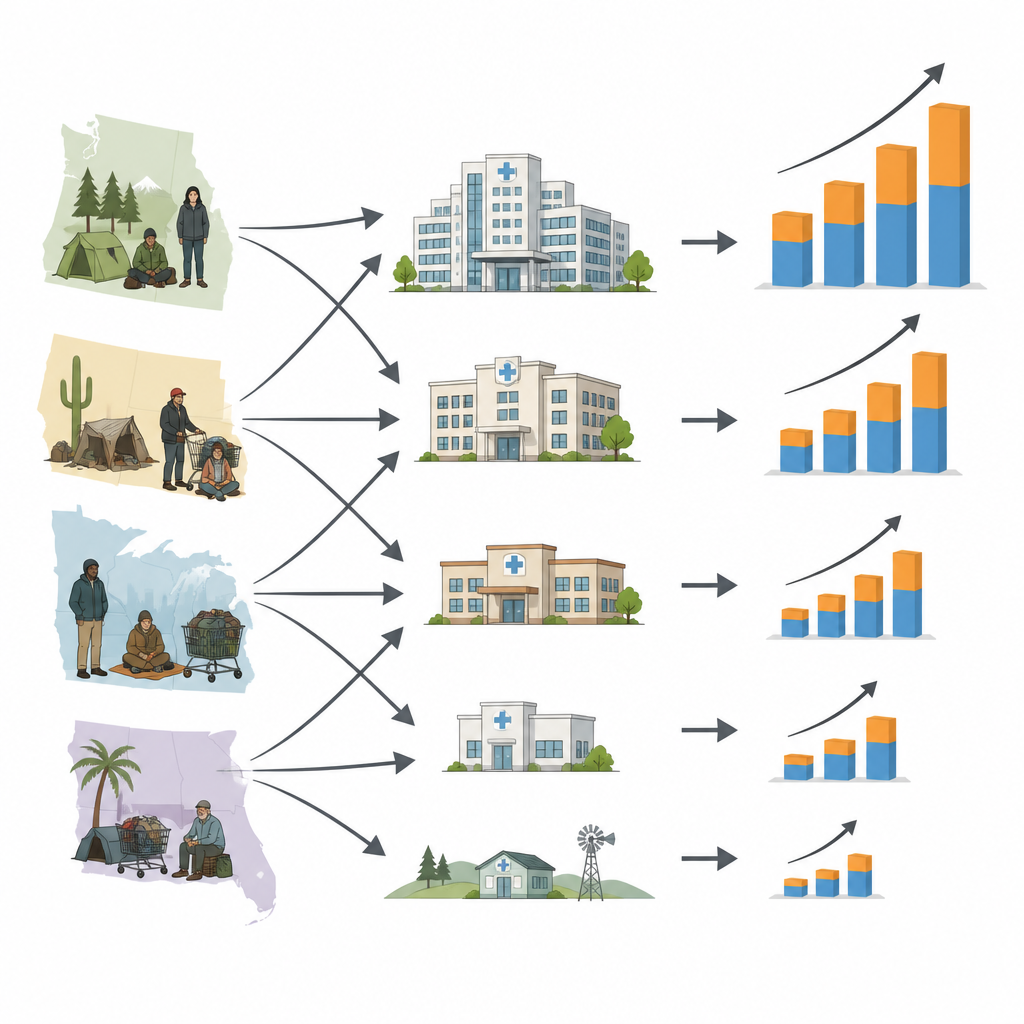
Unhoused patients in this analysis were more often middle aged, male, and insured through Medicaid or paying out of pocket, compared with housed patients. Most were identified as White, but Black patients were more likely than their housed counterparts to be unhoused, and hospitalizations involving Hispanic and Native American patients showed the fastest growth over time. Geography also mattered. Hospitals in the Pacific division, which includes states with high rates of homelessness, had the highest share of unhoused admissions. Yet the fastest growth was seen in parts of the Midwest and South, and in rural hospitals, which often have fewer resources to provide social support and follow up care.
Strain on hospitals and gaps in support
Despite worries that rising admissions might be driven mainly by more severe illness, the study found that overall medical complexity was similar between unhoused and housed patients. In fact, in hospital death rates were slightly lower among unhoused patients, likely because they were younger on average. The authors argue that what makes care especially challenging is not just medical need, but the difficulty of arranging safe discharge plans for people without stable housing or reliable follow up. This can lengthen hospital stays or lead to repeat admissions, while financial pressures mount for hospitals that already serve many low income patients.
What these findings mean for patients and communities
The study concludes that as general hospital use declines, admissions involving people without stable housing are rising and becoming more concentrated in certain regions and hospital types. For a lay observer, the message is that housing is tightly linked to health care, and that hospitals alone cannot solve the problem. The authors call for better screening and documentation of housing status, stronger social services within hospitals, and wider policy changes in housing, income support, and other basic needs. Without such steps, communities may see growing pressure on hospitals and continued inequities in who bears the burden of unstable housing.
Citation: Fernandez, J.A., Duval, C.J., McIntyre, D.S. et al. Increasing trends of hospital admissions for unhoused patients in the United States. Sci Rep 16, 15446 (2026). https://doi.org/10.1038/s41598-026-46853-8
Keywords: homelessness, hospital admissions, unhoused patients, health disparities, United States