Clear Sky Science · en
Effects of WhatsApp reminder-supported mental contrasting with implementation intentions on university students’ self-efficacy in sport training
Why small prompts can matter on the court
Many university students want to stay active, but busy schedules, fatigue, and self-doubt can quietly erode their training habits. This study asks a simple question with big implications: can a short, structured thinking exercise, nudged along by everyday phone reminders, help student tennis players feel more capable and in control of their training?

How the mind shapes practice
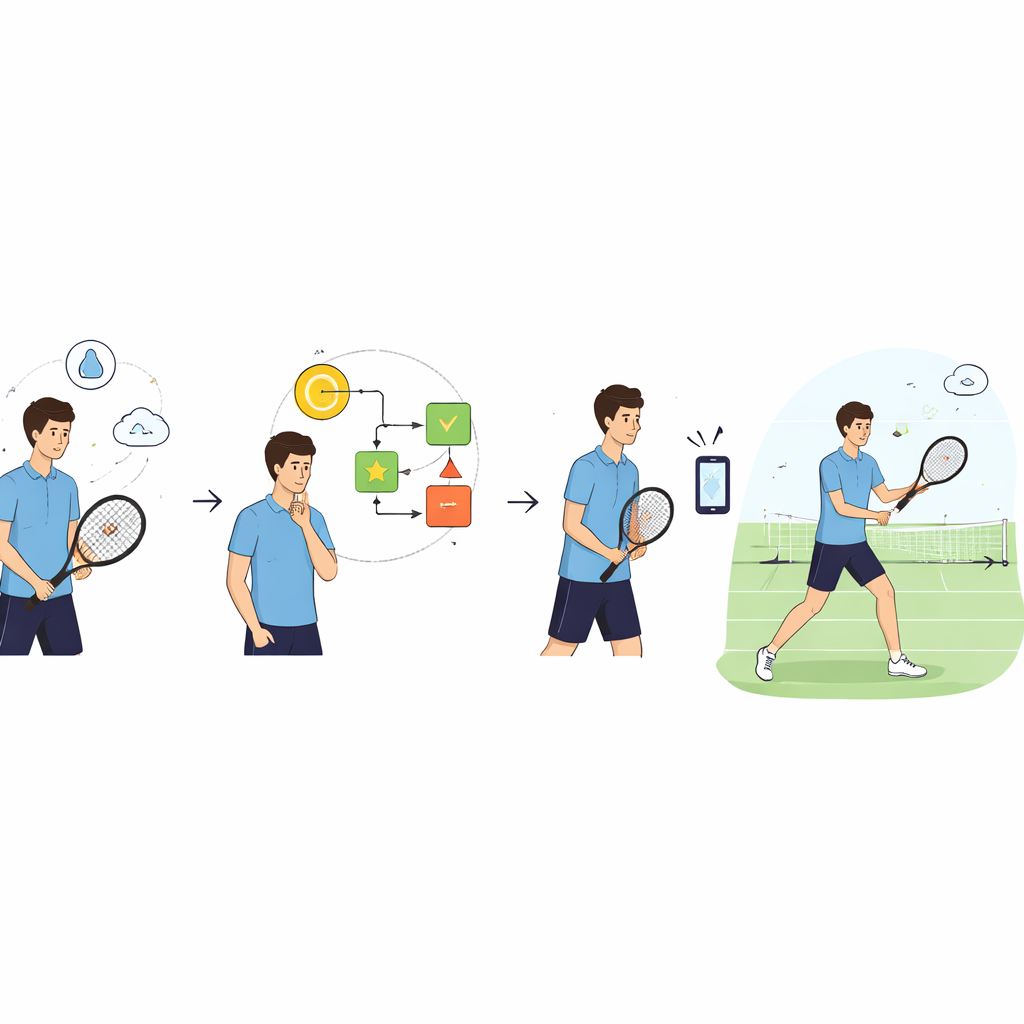
The researchers focused on a self-management method known as “mental contrasting with implementation intentions,” or MCII. In plain terms, MCII asks people to picture a desired outcome, notice the real-world obstacles that could get in the way, and then plan in advance how they will react when those obstacles appear. For tennis players, that might mean imagining a good training session, recognizing that tiredness or distraction could interfere, and deciding beforehand what they will do if those hurdles show up. Rather than relying on willpower in the moment, MCII encourages athletes to prepare their responses ahead of time.
Bringing planning into real tennis sessions
The study took place in a university tennis club in Türkiye. Thirty-one student members volunteered, and 22 eventually completed all parts of the project. Everyone learned the MCII method and filled out short worksheets before practice during a four-week period. On these worksheets, players set a concrete goal for that day’s session, identified likely obstacles such as loss of focus or technical difficulty, and wrote down a specific action they would take if the obstacle appeared. This “micro-dose” program was designed to fit into regular training without turning into a long classroom-style lesson.
Adding everyday digital nudges
The students were randomly split into two groups. One group relied only on the MCII worksheets done before training. The other group used the same worksheets but also received simple WhatsApp messages about a day before each practice. These brief messages reminded them that training was coming up and prompted them to recall their goal, the obstacle they had identified, and the plan they had made. Importantly, both groups attended a similar number of sessions, so any difference in outcome was unlikely to be explained just by extra time on court.
What changed in students’ confidence
To track how capable students felt overall in handling challenges, the researchers used a standard questionnaire called the General Self-Efficacy Scale, given before and after the four-week period. When each group was examined on its own, neither showed a clear, statistically reliable jump in self-belief. However, when the researchers compared the change between groups, a pattern emerged: on average, the reminder group’s self-efficacy scores rose slightly, while the MCII-only group’s scores dipped. The difference between groups was large enough, statistically, to suggest that the reminders may have helped students put their mental plans into action during real practices.
What this means for everyday athletes
For readers, the takeaway is both modest and encouraging. A short planning exercise alone did not dramatically boost these students’ confidence in handling life’s challenges. But pairing that exercise with simple, well-timed phone reminders appeared to prevent a drop in confidence and even nudged it upward. Because the study involved a small number of players and was intended as an early, exploratory test, its results should be viewed as a promising first step rather than final proof. Still, it hints that everyday tools like messaging apps, combined with thoughtful goal-setting and “if–then” planning, may become practical, low-cost ways to help young adults stick with sport and feel more capable on and off the court.
Citation: Aygun, Y., Gurer, H., Tufekci, S. et al. Effects of WhatsApp reminder-supported mental contrasting with implementation intentions on university students’ self-efficacy in sport training. Sci Rep 16, 10951 (2026). https://doi.org/10.1038/s41598-026-46181-x
Keywords: self-regulation, self-efficacy, tennis training, digital reminders, goal setting