Clear Sky Science · en
Mortality in a cohort of transport for London workers
Why this matters for everyday travel
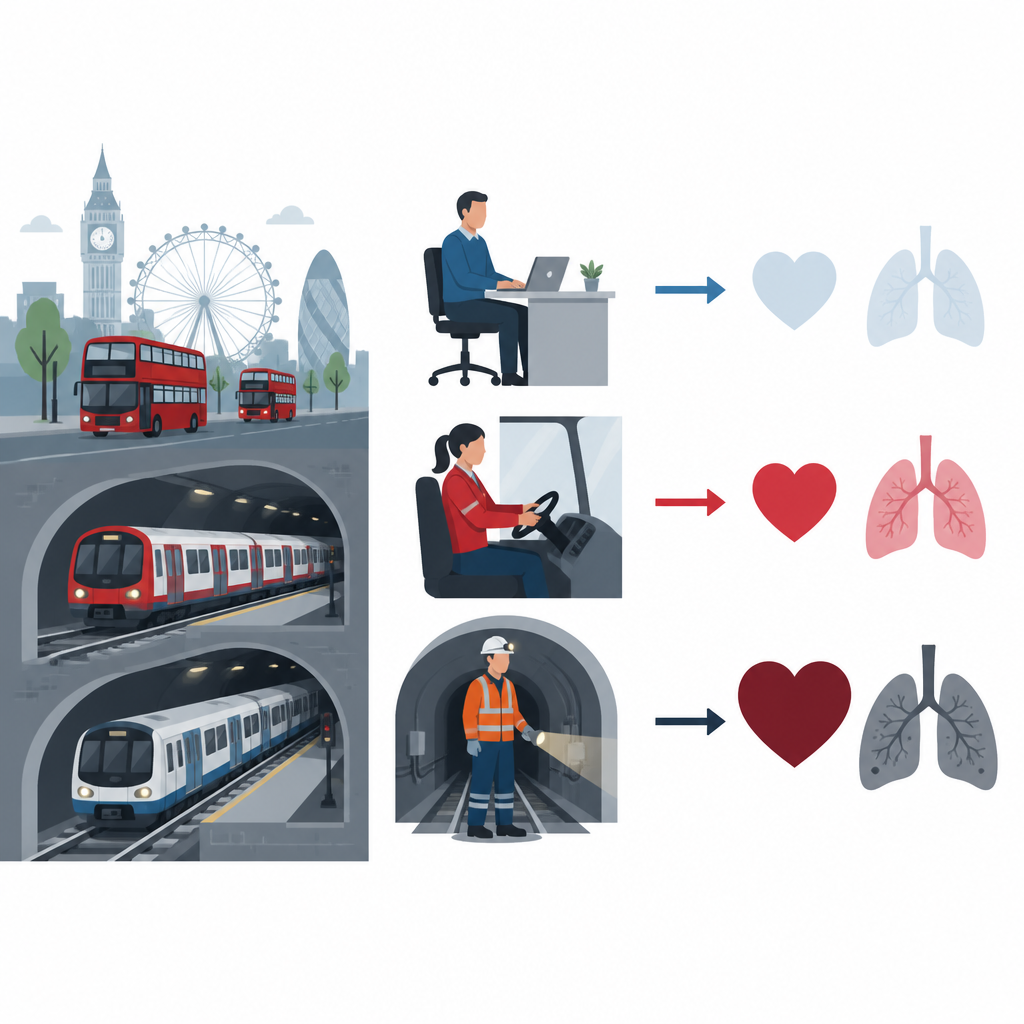
Many of us rely on buses and trains to get around cities, but we may not think about what years of working in those systems do to the people who keep them running. This study looks at long term death patterns among Transport for London staff, comparing office workers with bus and London Underground workers to see whether certain jobs are linked with higher risks of dying from heart disease, lung disease, or cancer.
Who was studied and how
The researchers used records from the Transport for London pension fund to follow more than 117,000 employees who joined between 1960 and 2010. Because staff stay in the pension fund even if they change jobs or leave the company, the records provide a long view of their working lives and deaths. The team grouped workers into four broad job types: office staff, bus workers, engineers, and London Underground workers. They then linked these records to death certificates and used standard statistical methods to compare death rates between groups, taking account of age, sex, when people joined, and how long they were employed.
Patterns in death rates across jobs
By October 2021 about one third of the cohort had died. Bus workers had the highest overall death rate, followed by London Underground staff, while office workers had the lowest. When the researchers looked at specific causes, the most common were heart and blood vessel disease, lung and breathing disease, and cancer. Across all these major causes, bus and Underground workers faced higher risks of death than office workers. For example, both groups were more likely to die from heart problems and from serious lung conditions than their office based colleagues, and this pattern held even after allowing for age and employment duration.
Cancer and lung cancer risks
Cancer related deaths also showed clear differences between job types. All three operational groups bus workers, engineers, and Underground staff had higher cancer mortality than office workers, with the strongest increase seen in the Underground group. When the team focused specifically on lung cancer, the contrast was even sharper. Compared with office staff, bus workers were more than twice as likely, and London Underground workers nearly three times as likely, to die from lung cancer. Engineers did not show a clear increase, although the range of engineering roles was wide and not always well defined, which may blur true differences.
What might explain these differences
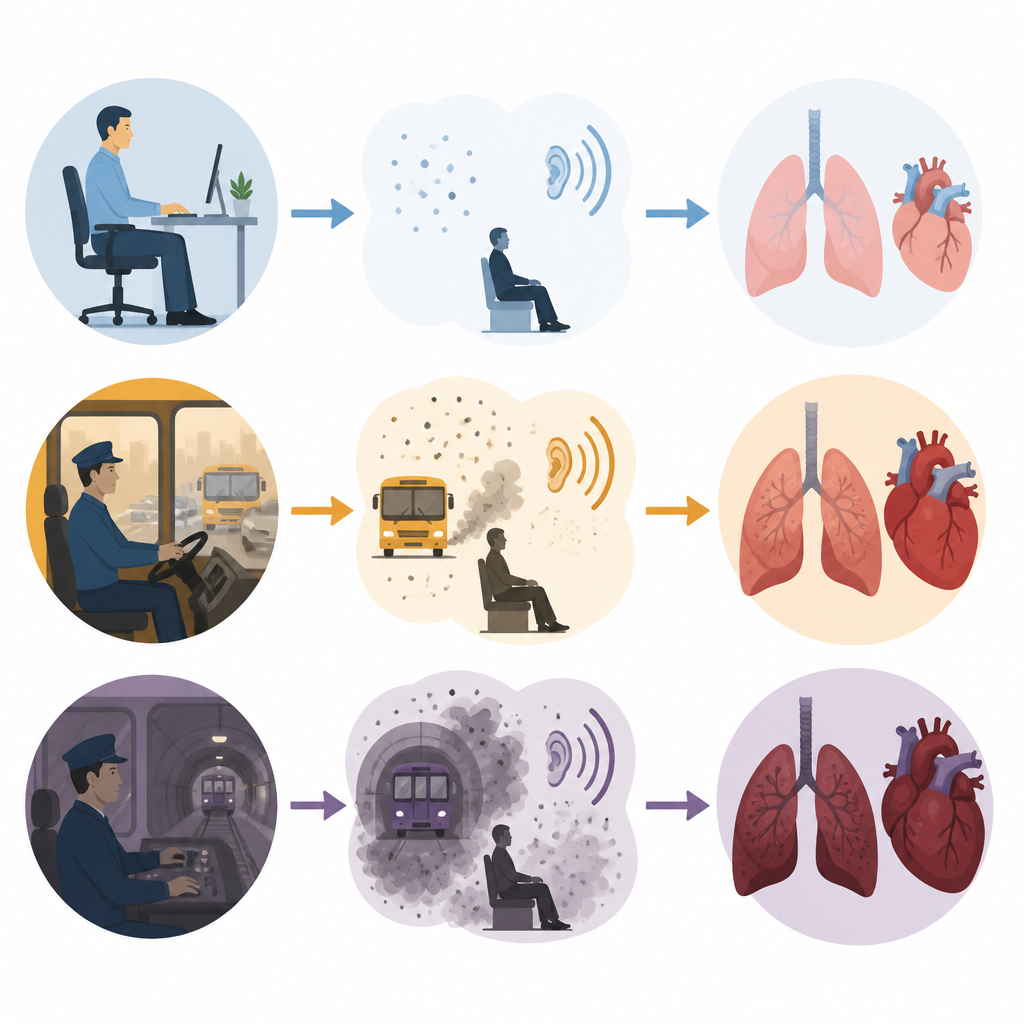
The study cannot pinpoint exact causes, but it highlights several possibilities. Bus and Underground workers are more likely to experience high levels of air pollution, including tiny particles from traffic and from metal dust in tunnels. They may also face other stresses such as irregular shifts, noise, long periods of sitting, and intense responsibility for passenger safety. These factors have all been linked in other research to higher risks of heart and lung disease. However, the dataset lacked key information such as smoking habits, alcohol use, education, and detailed job titles, so it is not possible to say how much of the extra risk is due to workplace exposures rather than lifestyle or social factors.
Limits of the data and what comes next
There were important gaps in the records, especially for older deaths. For about four in ten deceased workers, the cause of death could not be coded reliably, and missing information was most common among office staff who served as the comparison group. Many workers also held several different roles over their careers, but the data often captured only a broad category. These issues likely blurred true differences between job types and mean that the size of the risks should be interpreted with care. Even so, the consistent pattern of higher mortality among bus and Underground workers suggests that job related conditions may play a part.
What this means for workers and passengers
For people who depend on public transport, the study offers a reminder that the health of transport workers is closely tied to the safety and reliability of the system itself. Over five decades, those working on buses and in the Underground faced higher risks of dying from heart disease, breathing problems, cancer, and especially lung cancer than office based staff. The study does not prove that pollution or shift patterns are the direct cause, but it shows that certain front line roles are linked with poorer long term health. The authors argue that more detailed, forward looking studies are needed to uncover the specific workplace conditions that raise these risks, so that transport agencies can design jobs and environments that protect the people who move the city.
Citation: Mak, J., Feary, J., Amaral, A.F.S. et al. Mortality in a cohort of transport for London workers. Sci Rep 16, 14917 (2026). https://doi.org/10.1038/s41598-026-45200-1
Keywords: transport workers, occupational health, London Underground, air pollution, mortality