Clear Sky Science · en
Geophagy in Gibraltar Barbary macaques is a primate tradition anthropogenically induced
Why Monkeys Eating Dirt Matters to Us
On the rocky cliffs of Gibraltar, wild Barbary macaques have picked up an unusual habit: they deliberately eat soil and even bits of road tar. At first glance this looks like simple misbehavior or a quirky taste. But by carefully tracking when, where, and how often the monkeys do this, scientists show that it is a surprisingly common response to human influence—and that it has become a socially shared tradition. Their findings offer a window into how wild animals cope with junk food, tourism, and rapid environmental change.
Monkeys, Tourists, and the Taste for Earth
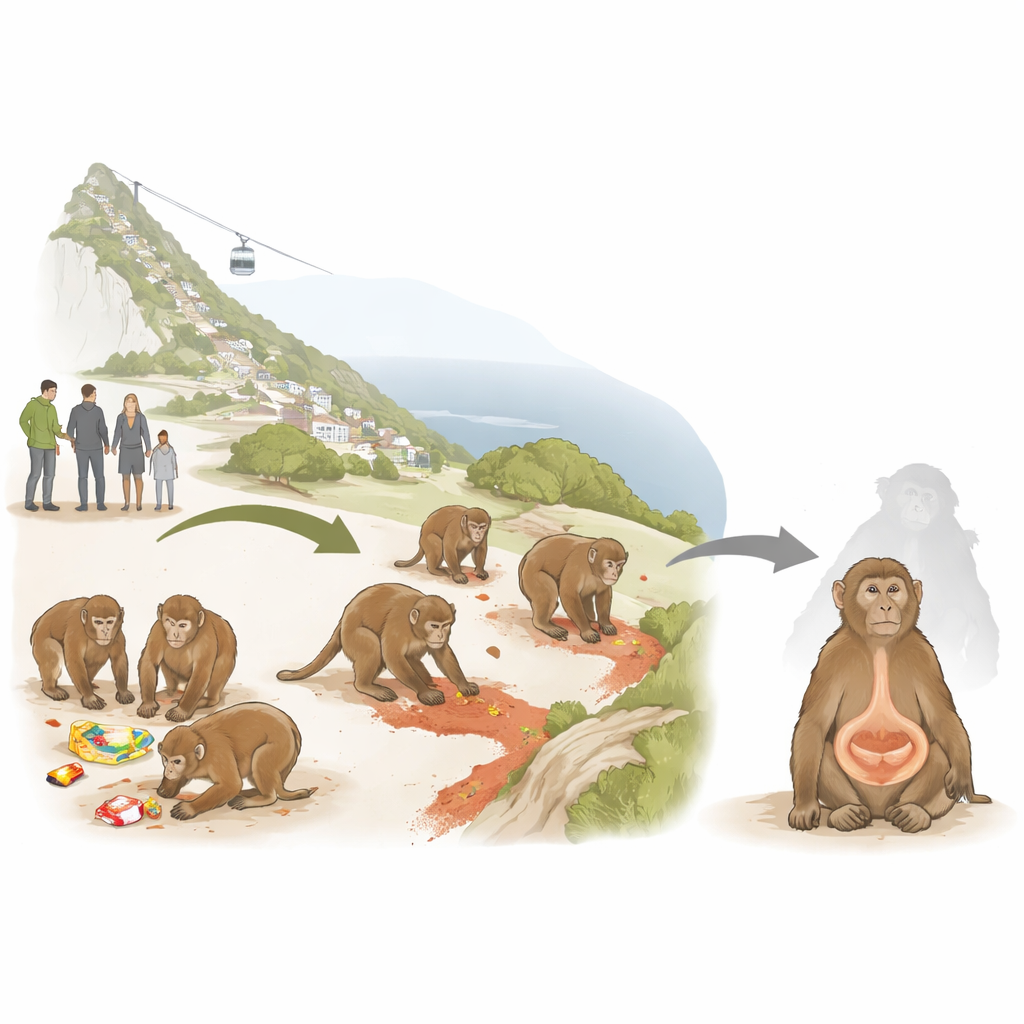
The study focuses on Gibraltar’s famous semi-wild Barbary macaques, who live in a protected reserve crisscrossed by roads, viewpoints, restaurants, and a cable car. Although authorities provide fruits, vegetables, seeds, and water, tourists also offer – or have stolen from them – calorie-rich snacks like crisps, biscuits, chocolate, and ice cream. Over 98 observation days, researchers recorded 46 clear episodes in which 44 different monkeys intentionally picked up and ate pieces of soil or tar. Most of these events happened on red clay-like patches called terra rossa, which dot the upper slopes of the Rock. Compared to other primates, the rate of soil-eating in this population is among the highest ever documented.
When Dirt Becomes Medicine or Supplement
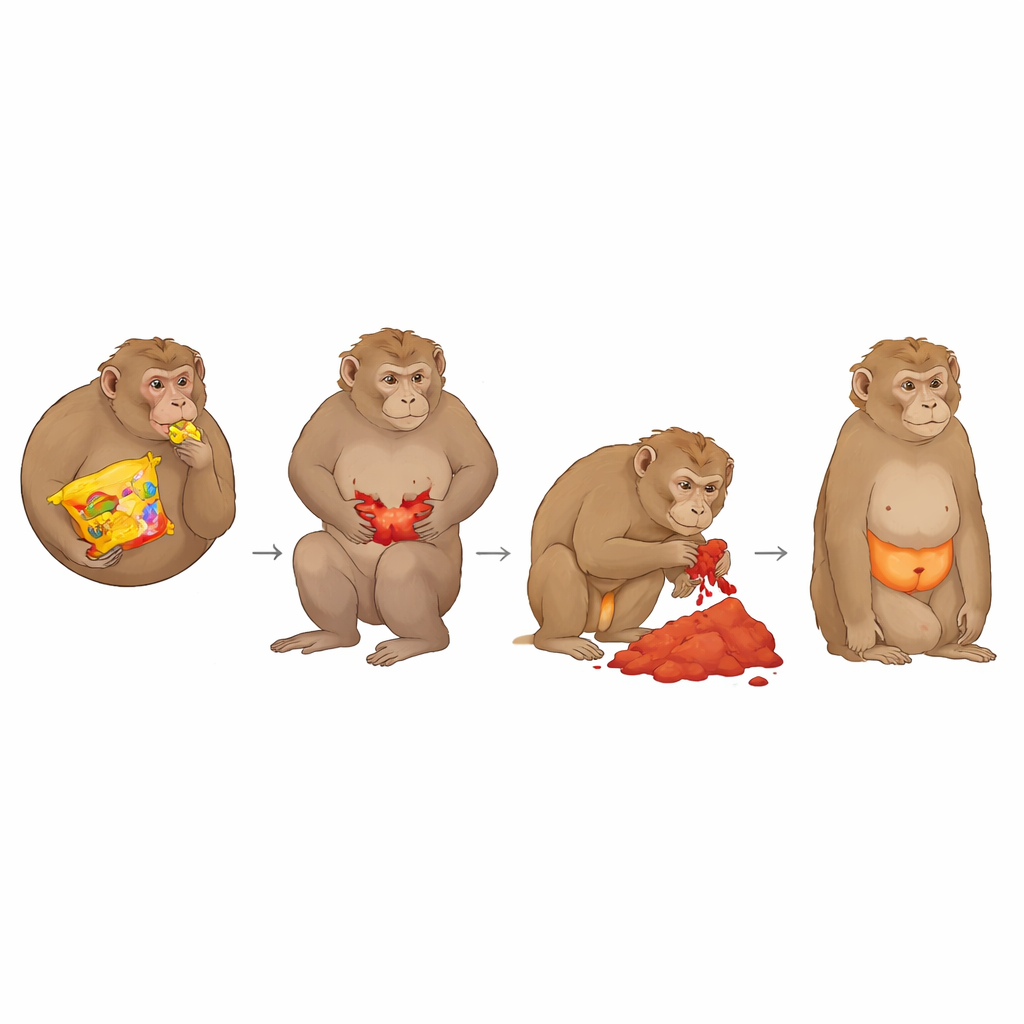
Why would a monkey choose to eat earth when other food is available? Scientists considered two main ideas drawn from work on humans and other animals. The “protection” idea suggests soil can act like a natural medicine, binding toxins, soothing the gut, or influencing gut microbes after a troublesome meal. The “supplementation” idea sees soil as a mineral top-up when diets are low in nutrients such as iron or sodium. By comparing behavior across seasons, sexes, and reproductive states, the team found that soil-eating was more common in summer, when tourist numbers – and access to snack foods – peak, but was not clearly tied to pregnancy or lactation in females. This seasonal pattern, together with the strong link to tourist-food consumption, points more strongly to a protective role than to a simple mineral supplement.
Human Snacks, Upset Stomachs, and Red Clay
Detailed feeding records showed that most of the monkeys’ time is still spent eating non-processed foods provided by managers or found naturally. Yet nearly one fifth of feeding time involved food obtained from tourists, which tends to be sugary, salty, fatty, and often dairy-based. Such items are known to upset the digestive systems of nonhuman primates and can disrupt their gut bacteria. The researchers found that soil-eating was most likely when monkeys had recently consumed more tourist-derived food, and that overall geophagy (soil-eating) was more frequent in summer, mirroring high tourist presence. In contrast, simply having more people nearby did not by itself predict soil ingestion: what mattered was how much human snack food the animals actually ate.
Local Soils, Group Habits, and Learned Traditions
The landscape itself also shapes this behavior. Terra rossa outcrops are unevenly distributed, concentrated in the upper central areas where several monkey groups range and where tourists are most common. Groups living in these zones showed the highest soil-eating rates, while a group that no longer interacts with tourists showed none during the study period. To test whether monkeys had genuine preferences, the team ran simple experiments, offering four types of local material—red soil, yellow soil, black earth, and tar—on a tray. When individuals chose, they most often went first for the red soil, and some groups showed a special liking for tar. Juveniles and infants were especially curious, frequently handling and sometimes tasting the samples, hinting at how youngsters may learn local habits from observing adults.
From Odd Habit to Animal Culture
Although many episodes involved a single monkey eating alone, nearly all took place within sight of other group members, providing ample chances for watching and copying. Different groups showed different patterns of soil type and frequency, and reports from other regions confirmed that Barbary macaques can eat soil elsewhere, but generally much less often and in more restricted settings. Together, these clues suggest that geophagy in Gibraltar is not just an automatic response to discomfort but also a socially learned custom that is maintained locally—what researchers call an animal cultural tradition.
What This Means for Monkeys and People
In everyday terms, the Gibraltar macaques seem to be using the earth beneath their feet as a home-made antacid or gut soother when human junk food upsets their digestion. At the same time, which soils they eat, and how often, depends on where they live, how many tourists they meet, and what they see their group-mates doing. This makes soil-eating both a flexible survival tool and a shared habit passed through the generations. For humans, the message is clear: our snacks and presence do not just feed wild animals; they reshape their bodies, their behavior, and even their cultures in ways we are only beginning to understand.
Citation: Frater, J., Nicourt, M., Landi, F. et al. Geophagy in Gibraltar Barbary macaques is a primate tradition anthropogenically induced. Sci Rep 16, 13139 (2026). https://doi.org/10.1038/s41598-026-44607-0
Keywords: Barbary macaques, geophagy, tourism impacts, animal culture, gut health