Clear Sky Science · en
Sympatric Lepus spp. in the central Italian Alps host significantly different gut microbiotas
Hares on a Warming Mountain
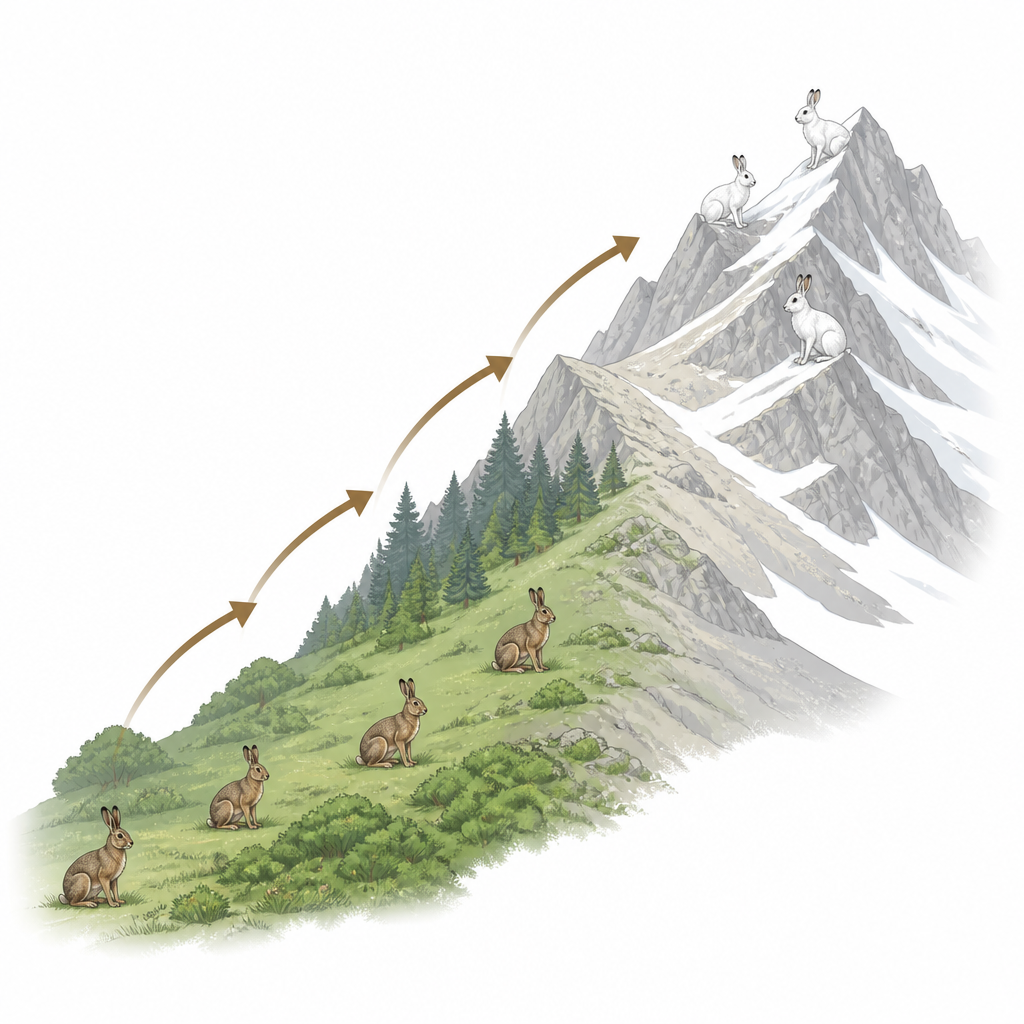
The Italian Alps are warming, and two kinds of hares now share the same slopes more often than before. This overlap raises a simple but important question: as these animals meet and their ranges shift uphill, does the community of tiny organisms living in their guts also change in ways that might affect their health and survival?
Two Hare Neighbors
The study focuses on the mountain hare, which prefers cold, high alpine areas, and the European brown hare, which usually lives lower down in open fields. With rising temperatures, brown hares are climbing higher into terrain once dominated by mountain hares. Scientists worry that this growing overlap could lead to competition for food, mixing of genes through cross breeding, and new health challenges. Because gut microbes help animals digest food, fight disease, and cope with stress, understanding how these communities differ between the two hares can reveal how each species may handle a changing environment.
Collecting Clues from Droppings
To explore this hidden world, researchers collected fresh droppings from both hare species along a mountain slope in northern Italy, from 1000 up to 2500 meters above sea level. They used genetic tests to confirm which pellets came from which species, and then sequenced specific bits of DNA from bacteria and fungi living in the droppings. This allowed them to build a detailed picture of which microbial groups were present, how many kinds there were, and how similar or different the communities were between the two host species and at different heights on the mountain.
Different Microbial Worlds
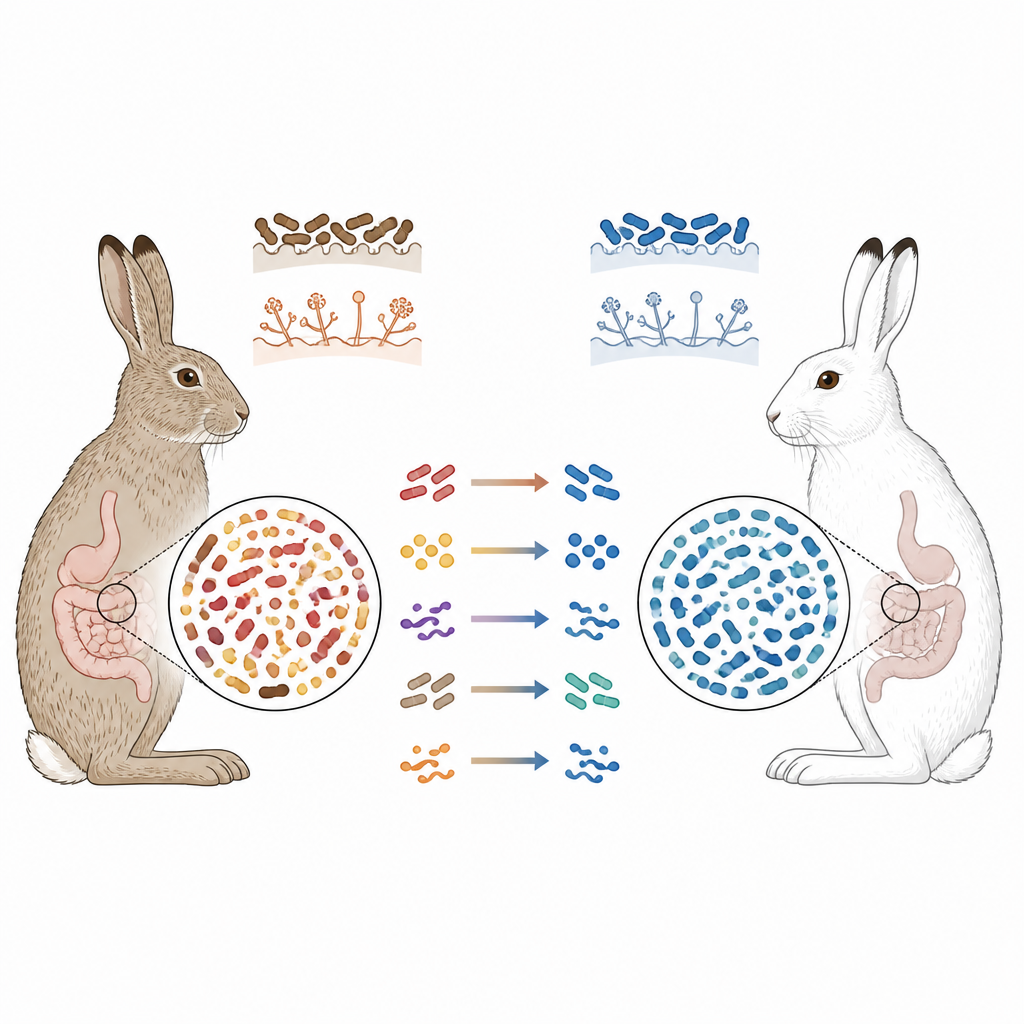
The two hares turned out to host clearly different communities of bacteria and fungi, even where they lived side by side. Brown hares carried gut bacteria dominated by groups commonly found in many plant-eating mammals, while mountain hares had a gut community led by a different bacterial group that can include both harmless and potentially troublesome members. Fungal communities also differed: some fungi that are often linked to grass and crop plants were more common in brown hares, while fungi that cope well with cold and may help with energy balance were more common in mountain hares. Despite these contrasts in composition, both species had a similar overall level of microbial richness and variety.
Height Matters More for Fungi
When the team looked along the elevational gradient, they found a striking split between bacteria and fungi. Bacterial communities in both species stayed fairly stable with height, suggesting a resilient core set of gut bacteria. In contrast, gut fungi changed noticeably between elevations in both hares. For brown hares, these shifts were linked with temperature, rainfall, and plant diversity, hinting that fungi ingested from soil and plants reflect changing conditions on the ground. Many of these fungi are likely passing through rather than living permanently in the gut, but they still trace each animal’s diet and habitat.
What This Means for Alpine Hares
Overall, the work shows that, so far, sharing space has not blurred the microbial differences between the two hare species. Each maintains its own characteristic gut community, shaped by its ecology and likely by diet, while fungi respond more strongly to height and climate than bacteria do. These results offer a valuable starting point for tracking how the mountain hare’s gut life might shift as warming continues and brown hares move higher and are restocked for hunting. By following these hidden microbial communities across more regions and including hybrid animals, scientists hope to better gauge the health and adaptive potential of mountain hares as their alpine world changes.
Citation: Marinangeli, L., Crestanello, B., Praeg, N. et al. Sympatric Lepus spp. in the central Italian Alps host significantly different gut microbiotas. Sci Rep 16, 15866 (2026). https://doi.org/10.1038/s41598-026-44592-4
Keywords: gut microbiota, mountain hare, European brown hare, Alps climate change, wildlife conservation