Clear Sky Science · en
Culture and anthropomorphism towards robots in middle school students: evidence from human–robot interaction
Why Kids and Robots Make a Revealing Match
Robots are entering classrooms, homes, and hospitals, and today’s middle schoolers will grow up alongside them. But children do not all react to robots in the same way. This study asked a simple but powerful question: how do a child’s deeper cultural values—not just nationality—shape whether they see a robot as a mere machine or as something more human-like? The answer helps us design robots that support learning and social development without confusing young users about what robots really are.
Looking Beyond Country and Flag
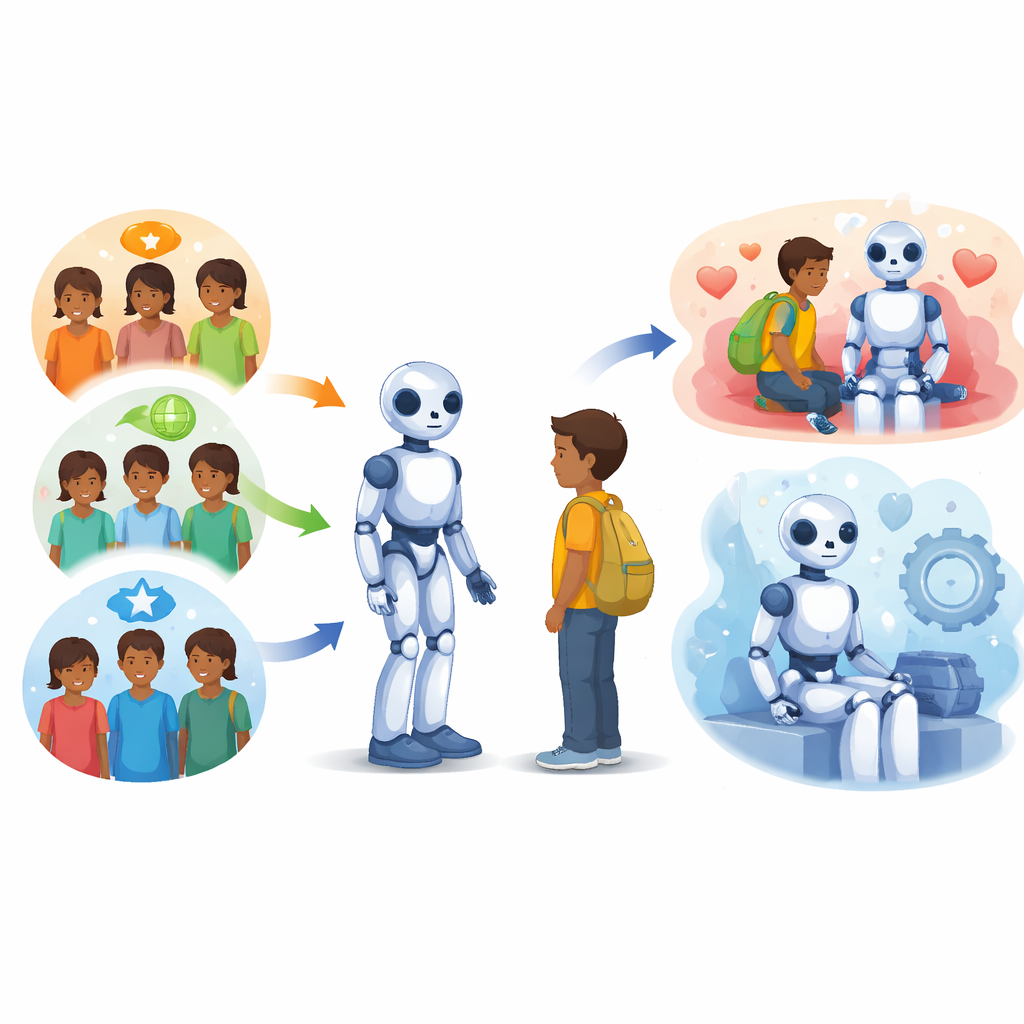
Most research on culture and robots has compared people from different countries—“East” versus “West,” or one nation versus another. The authors argue that this misses a lot. Within any one country, children vary in what they value: some prize stability and rules, others chase achievement and status, and others care most about group harmony. The team treated culture as a personal profile of values rather than a passport. They measured these values using well-known questionnaires about individualism versus collectivism, preference for order and tradition, desire for novelty, and focus on personal success or on others’ well-being. All participants lived in Italy, but their cultural profiles differed.
Putting Culture and Robots to the Test
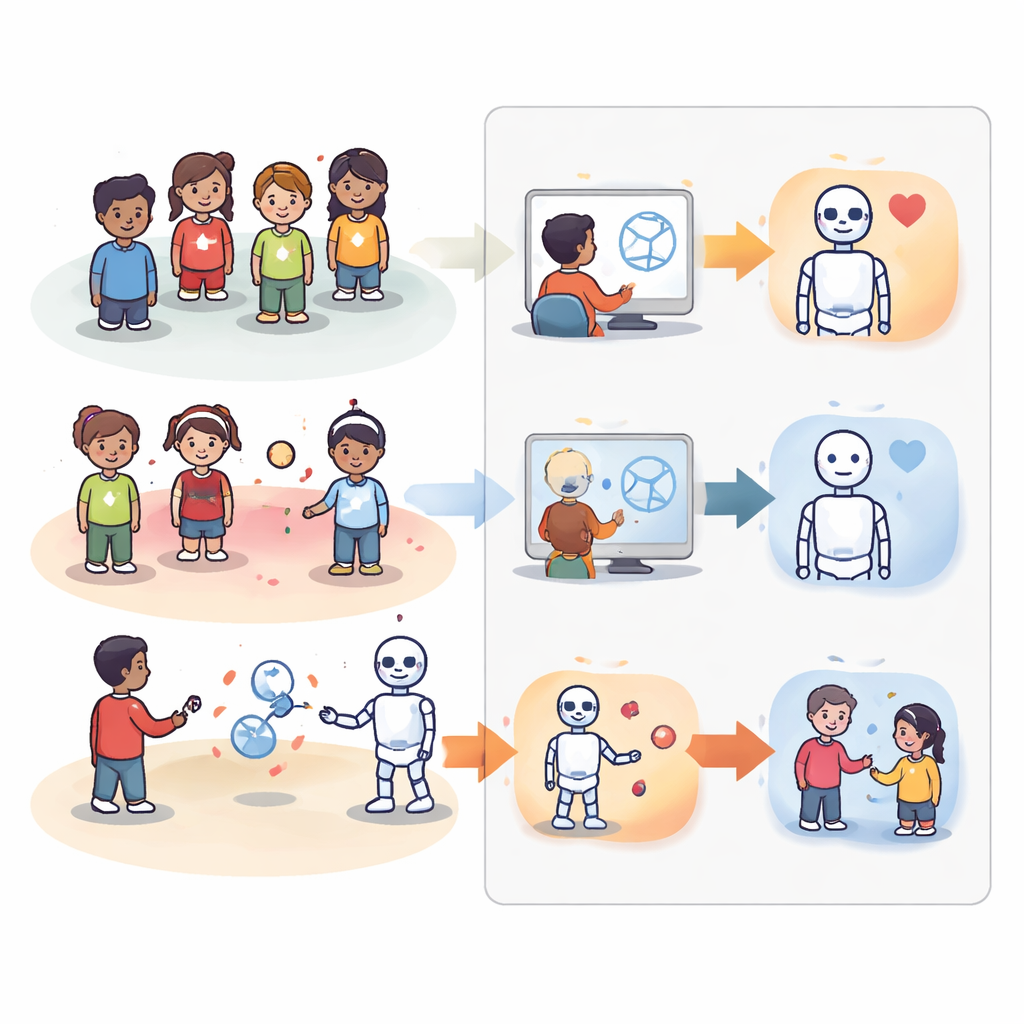
The researchers worked with 85 middle school students aged 11 to 14, a stage where children begin to understand that robots are machines yet may still feel they have minds. First, each student completed online questionnaires that mapped out their cultural values. Then the children took part in two very different activities with robots. In one, an Implicit Association Test on a laptop, they had to quickly sort pictures of humans and robots and words related to human-like or mechanical traits. Their reaction times revealed how strongly they automatically linked robots with human qualities. In the second activity, an adapted Cyberball game, a small humanoid robot and a human experimenter played a virtual ball-tossing game with the child. Each time the child got the ball, they could choose whether to throw it to the robot or to the person. How often they chose the robot showed how willing they were to include it as a social partner.
Different Values, Different Ways of Seeing Robots
The results showed that culture matters—but in a nuanced way. Children who valued stability, rules, and keeping things as they are were more likely, at an automatic level, to connect robots with human-like qualities. One interpretation is that turning a puzzling machine into something more person-like might make the world feel more predictable and safe for them. In contrast, children who strongly prized personal power and achievement tended to see robots more as tools: their quick responses linked robots with non-human, mechanical traits rather than with people. When it came to the ball game, a different pattern appeared. Children who leaned toward collectivistic values—putting group harmony and togetherness above individual gain—were slightly more likely to toss the ball to the robot. Those scoring higher on a value set often linked to assertiveness and task focus also tended to include the robot more. Here, culture seemed to tune how willing they were to treat the robot as part of the group, even if they did not necessarily think of it as human inside.
Two Measures, Two Faces of Human-Likeness
By comparing the laptop test and the ball game, the study highlighted that “seeing a robot as human-like” is not a single thing. The Implicit Association Test captured what children think and feel automatically about robots—whether “robot” sits nearer to “person-like” or to “machine-like” in their minds. The ball game captured how they actually behave in a shared activity—whether they follow social rules of inclusion with a robot teammate. These two sides did not always move together. A child might not strongly think of the robot as human-like yet still avoid leaving it out. This split suggests that future research and robot design must distinguish between inner beliefs about robots and outward social behavior toward them.
What This Means for Kids Growing Up with Robots
For parents, educators, and designers, the study’s message is that culture is not just about where a child is from; it is about what they care about. Even within one country, differences in values can quietly push children toward seeing robots as companions, tools, or something in between. The authors conclude that to understand and guide children’s relationships with robots, we must measure culture at the individual level and use multiple kinds of tests. Doing so will help ensure that future robots support children’s learning and social life while keeping clear the crucial boundary between living beings and smart machines.
Citation: Roselli, C., Lapomarda, L., Larghi, S. et al. Culture and anthropomorphism towards robots in middle school students: evidence from human–robot interaction. Sci Rep 16, 13978 (2026). https://doi.org/10.1038/s41598-026-44312-y
Keywords: children and robots, cultural values, anthropomorphism, human–robot interaction, middle school students