Clear Sky Science · en
High-ambition climate action in all sectors can achieve a 59% greenhouse gas emissions reduction in Korea by 2035
Why this matters for everyday life
How fast can a major industrial economy cut its climate pollution without crippling growth or relying on buying offsets from other countries? This paper tackles that question for the Republic of Korea, one of the world’s largest emitters, by asking what it would really take to slash national greenhouse gas emissions by 2035. The answers offer a concrete picture of how power plants, factories, cars, homes, and farms would need to change—and show that deep cuts are technically and institutionally possible if policies across all sectors are pushed further than today.
Two different roads to the future
The researchers use a detailed computer model of Korea’s economy and energy system, tailored specifically to the country, to trace emissions from 1990 through 2035. They compare two futures. The first, called “Current Policies,” reflects laws and plans already in place, such as the national carbon-neutrality framework, the official electricity plan, and existing rules for vehicles and buildings. The second, a “High Ambition” pathway, keeps the same basic policy structure but strengthens many measures in ways that are demanding yet still judged realistic within Korea’s institutions and politics. This includes tougher standards, faster technology rollout, and closing loopholes that now slow change.
How much pollution can actually be cut?
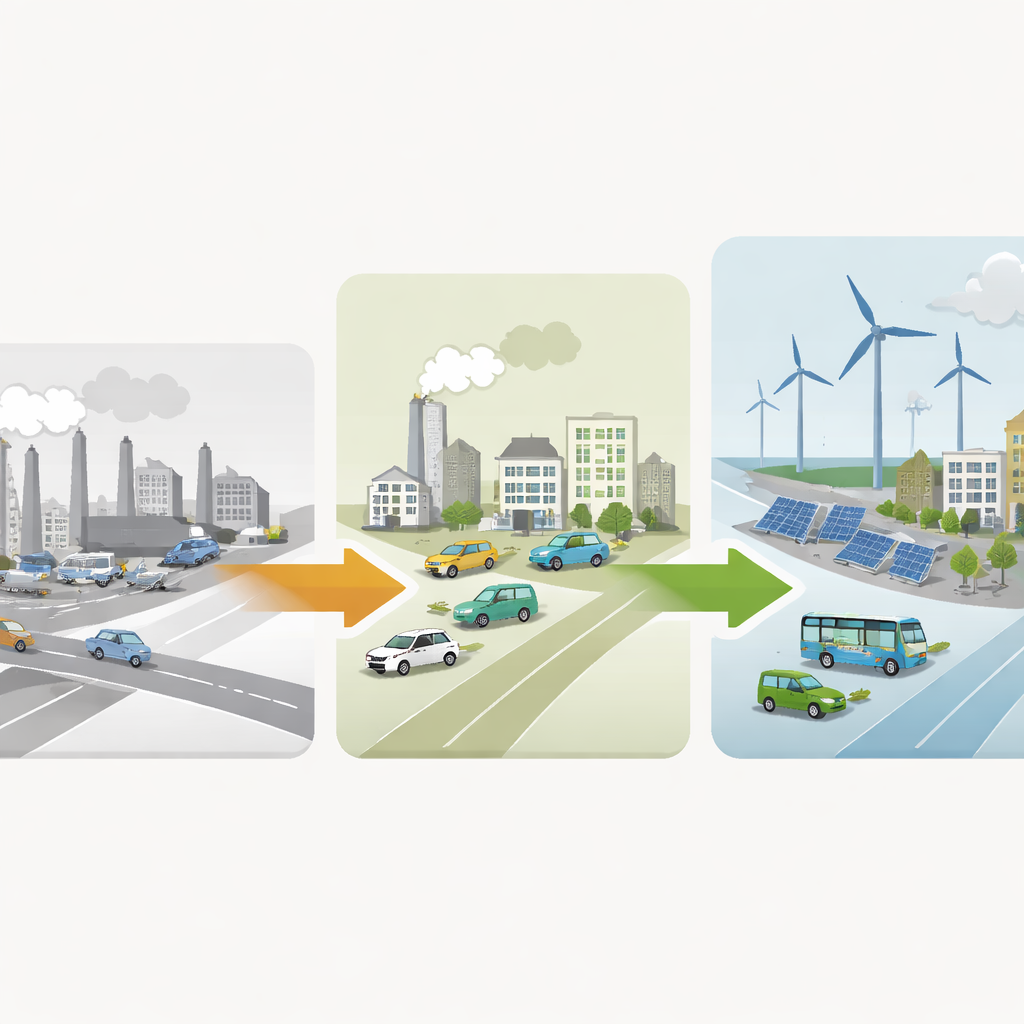
Under today’s policies, Korea’s emissions fall, but not fast enough. By 2035 they drop about 35 percent below 2018 levels—insufficient to meet the country’s own 2030 climate pledge and well short of the proposed 2035 target range. In contrast, the High Ambition pathway cuts emissions by about 59 percent by 2035, putting Korea close to a straight-line path toward net-zero emissions in 2050. Crucially, this deeper cut is achieved without counting on large amounts of international carbon offsets. When uncertainties in growth, fuel prices, and technology costs are explored, the ambitious pathway still delivers 55–65 percent reductions, remaining broadly consistent with the government’s proposed 2035 goal.
What has to change in power and heavy industry
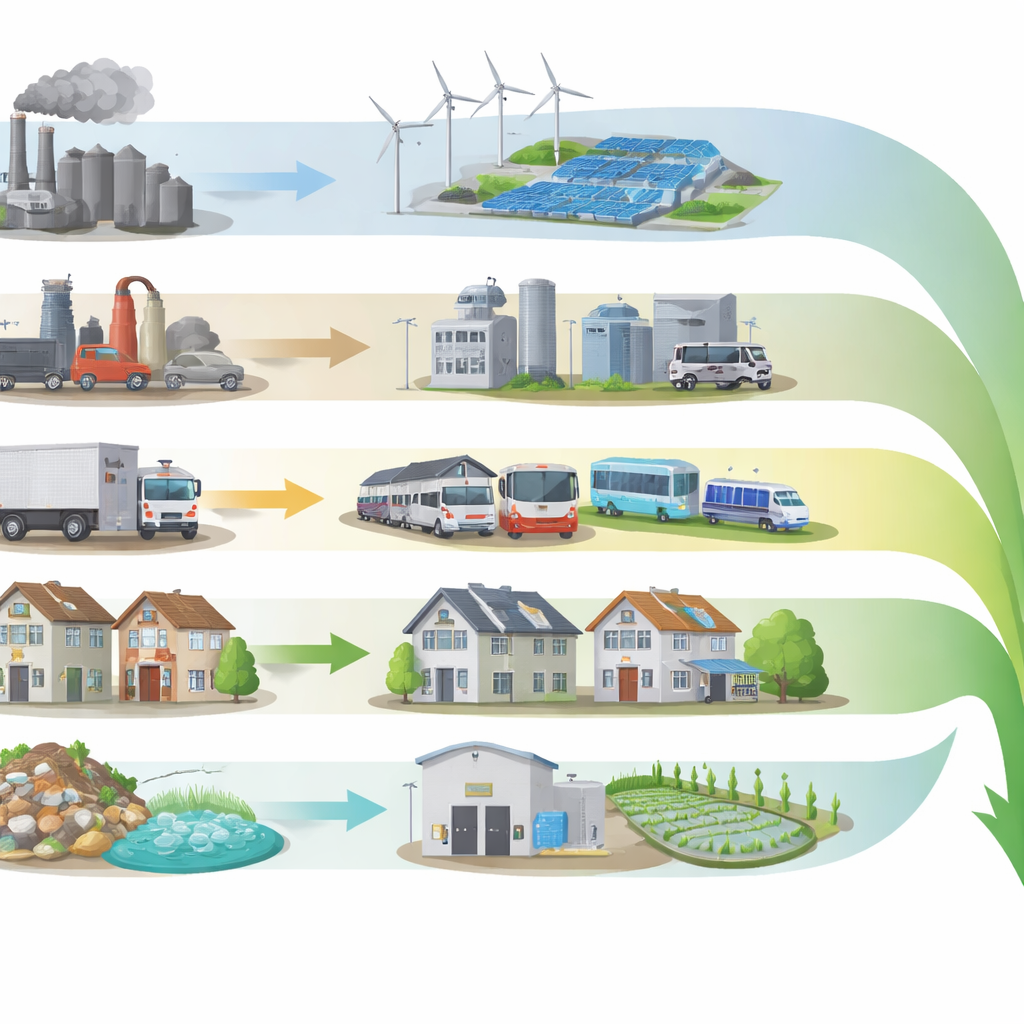
The biggest gains come from rapidly cleaning up electricity. In the strengthened scenario, all coal-fired power is phased out by 2035, replaced mainly by offshore wind and solar, backed by some nuclear and a modest amount of carbon capture on remaining fossil plants. By then, three-quarters of Korea’s electricity is carbon-free, and renewables alone supply nearly half. Because electric cars, heat pumps, and cleaner industrial processes all draw on this power, a fast shift in the grid is a precondition for cutting emissions elsewhere. In heavy industry—especially steel, chemicals, and cement—the study finds that stronger carbon pricing, strict limits on extending old blast furnaces, wider use of scrap metal, new hydrogen-based steelmaking, and alternative cements can reduce emissions by roughly a third by 2035.
Transforming transport, buildings, and land-based sectors
Cars, trucks, and buildings also play a large role. With today’s rules, cleaner vehicles and better fuel economy barely dent transport emissions. Under High Ambition, however, generous support for zero-emission vehicles is extended, fuel-efficiency rules are tightened, and sales of new gasoline and diesel passenger cars are banned from 2040, with earlier restrictions ramping up beforehand. This pushes electric and other zero-emission vehicles to dominate new sales by the mid-2030s. Buildings follow a similar pattern: instead of only large new public structures meeting advanced energy standards, all new buildings must be highly efficient, existing ones undergo “green remodeling,” and fossil-fuel heaters are steadily replaced by electric heat pumps. Additional measures in agriculture, waste, refrigerants, and emerging technologies like direct air capture tackle methane and other gases that are often overlooked.
What this means for Korea’s climate goals
For a general reader, the core message is straightforward: Korea can realistically cut its climate pollution by nearly 60 percent in just over a decade, using technologies and policies that are already on the table, if it chooses to move faster and more coherently. Doing so would reduce dependence on buying offsets from abroad, make later steps toward net-zero less abrupt and costly, and better align the country with global climate goals. The study argues that the real obstacles are not physics or engineering, but policy design, institutions, and social choices—especially around phasing out coal, expanding offshore wind and solar, modernizing factories, and upgrading vehicles and buildings. The sooner these shifts begin in earnest, the easier it will be for Korea to secure a stable, low-carbon future.
Citation: Choi, H., Park, S. & McJeon, H. High-ambition climate action in all sectors can achieve a 59% greenhouse gas emissions reduction in Korea by 2035. Sci Rep 16, 14083 (2026). https://doi.org/10.1038/s41598-026-44130-2
Keywords: Korea climate policy, greenhouse gas reduction, energy transition, zero-emission vehicles, coal phase-out