Clear Sky Science · en
Aggressive behavior towards hospital dental staff: an original flash survey in a dental department in France
Why Aggression in the Dentist’s Chair Matters
Most people think of a trip to the dentist as stressful for patients, not for the people in white coats. Yet this study shows that aggression from patients and visitors is a daily reality for the teams who provide dental care in hospitals. Understanding how often these incidents happen, who is most affected, and what sparks them is crucial for keeping both staff and students safe—and for ensuring that patients continue to receive calm, high-quality care.
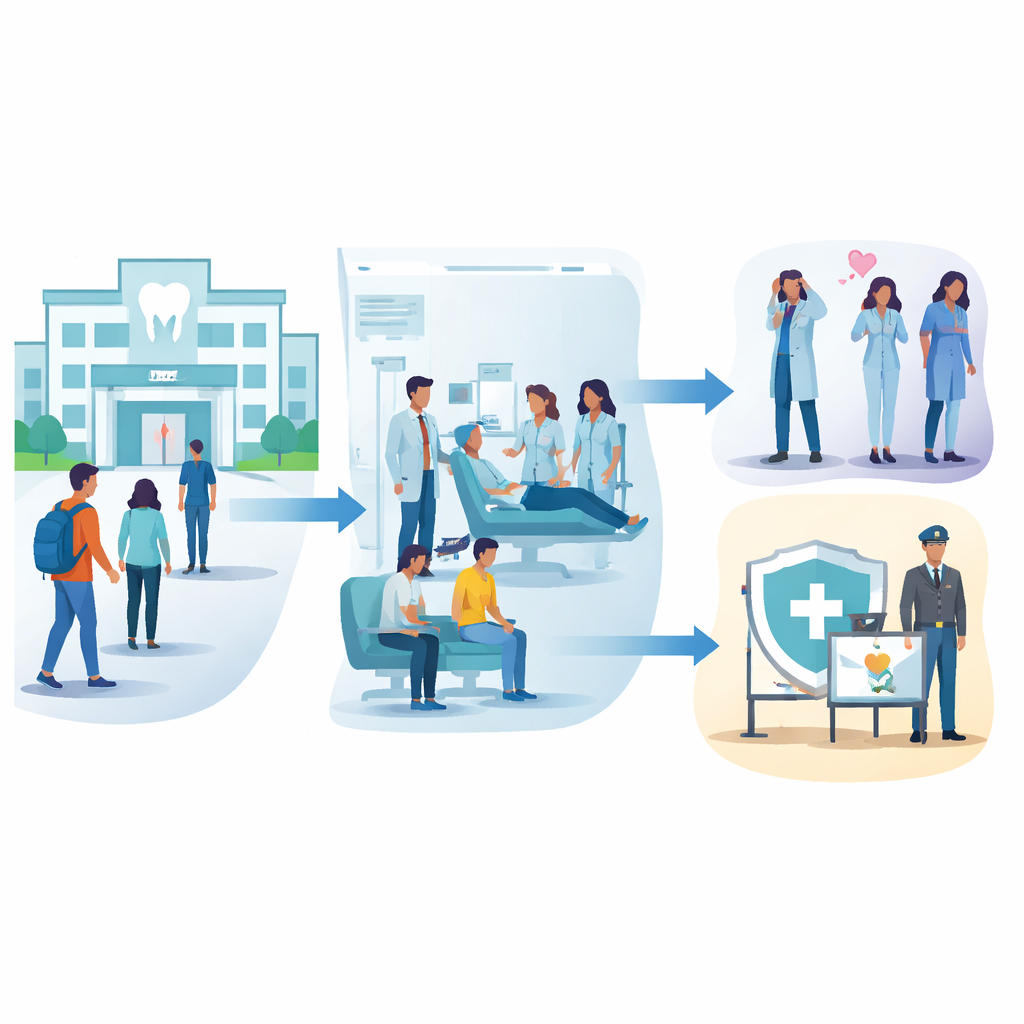
A Snapshot of a Busy Hospital Dental Service
The research took place in the dental department of a large French university hospital—the only public hospital in its region that both treats dental patients and trains future dentists throughout their education. This setting brings together a diverse mix of people: undergraduate and postgraduate dental students, assistants, dentists, teachers, administrative workers, and radiology technicians. Patients arrive for many reasons, from emergencies and referrals to routine check-ups, making the department similar to other large teaching hospitals that handle a wide range of dental needs.
A One-Day Flash Survey of Real-Life Tensions
To capture what actually happens during an ordinary workday, the team used a “flash survey” design. Staff and students were informed in advance, and on two typical days in June 2022, everyone working in the department was invited to fill out a short anonymous questionnaire about any aggression they experienced that day. The survey asked who they were (their role, age, and gender), what type of aggression they had faced, who was responsible, what seemed to trigger it, and how they and any witnesses responded. By focusing on events from that same day, the approach reduced the risk of people forgetting details or underestimating what they had gone through.
How Often Aggression Happens and What It Looks Like
Out of 181 participants, about one in six reported being on the receiving end of aggression during the survey period, leading to 31 separate incidents. When these data were scaled to a full working year, the researchers estimated an average of 55 aggressive incidents per staff member annually. Verbal aggression was by far the most common, including raised voices, insults, harsh or defamatory remarks, threats of legal action, harassment, or threats of physical harm. Physical acts were much rarer but still present, such as inappropriate touching, grabbing, or throwing an object at a staff member. Most aggressors were patients themselves, but companions and even other staff members or students were sometimes involved.
Who Is Most at Risk and What Sets Incidents Off
Although women made up a majority of the victims, the study did not find gender alone to be a clear risk factor once job roles were considered. The most exposed group by far were dental assistants: three out of four assistants working those days reported experiencing aggression, compared with roughly one in four dental instructors and about one in seven dental students. This likely reflects the assistants’ frontline position at the reception desk and chairside, where they constantly manage schedules, waiting rooms, and patient expectations. The main sparks for conflict were long waiting times, pain, and the length of treatment, along with added pressures such as anxiety, disagreement about treatment plans, money worries, substance use, and burnout. These patterns mirror what has been reported in emergency rooms and other high-pressure hospital services.
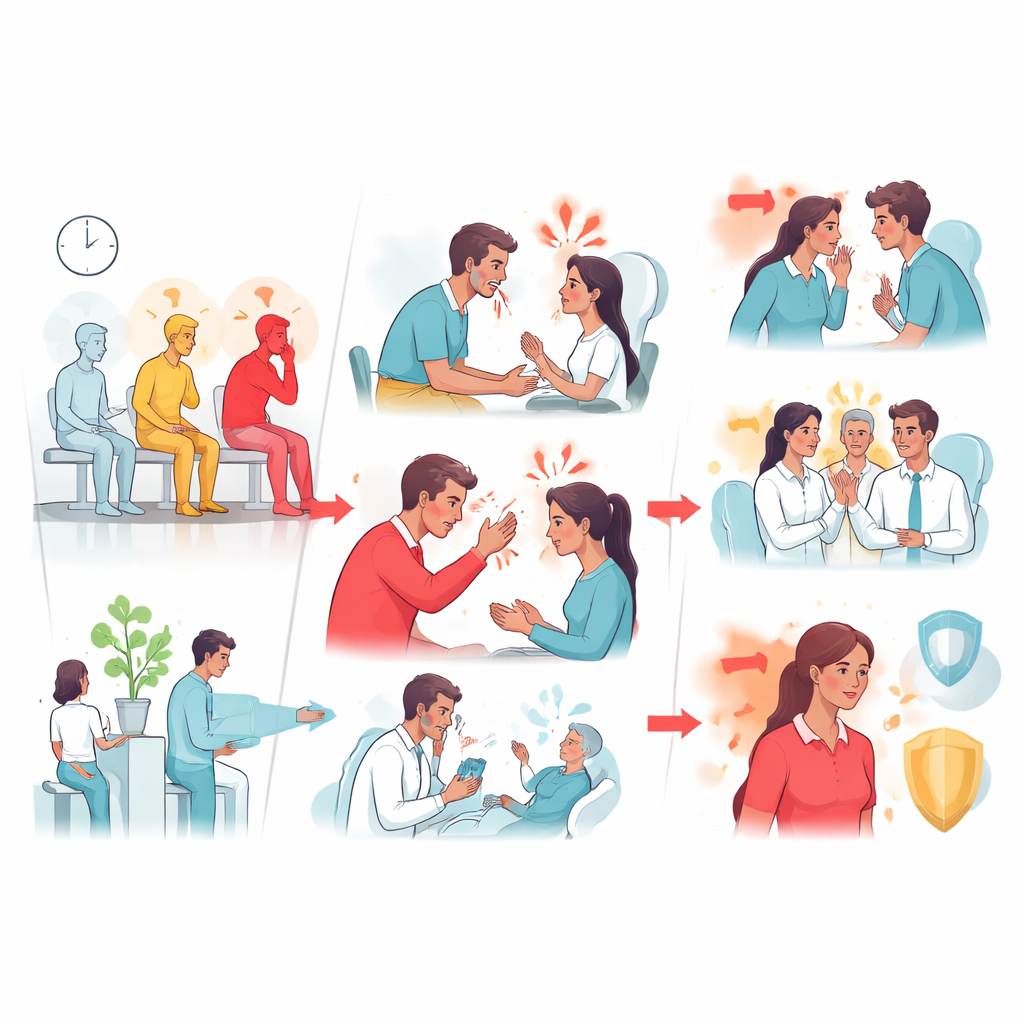
How People React and How Little Training They Receive
When aggression occurred, most victims tried to stay calm yet firm, sometimes stepping back physically to create distance. About half reported the incident to a supervisor; the other half said nothing, suggesting that many episodes remain invisible in official records. Witnesses often did not intervene; when they did, they tried to defuse the situation or involved security or managers. Strikingly, fewer than one in ten participants had ever received any formal training in how to handle aggression at work. Many respondents were unsure how or where to report incidents, whether within the hospital or to outside bodies such as the police or professional councils.
What This Means for Safer Dental Care
The authors conclude that aggression toward staff and students in hospital dental departments is both real and frequent, with the highest burden falling on dental assistants and a substantial impact on students. Because such hostility can erode mental health, reduce job satisfaction, and ultimately affect patient care, the study calls for hospitals to take proactive steps. These include training staff and students in de-escalation skills, making reporting procedures clear and easy to use, and putting organizational measures and security support in place. By treating aggression as a preventable hazard rather than an unavoidable part of the job, dental hospitals can better protect their teams and, in turn, provide a calmer, safer experience for patients.
Citation: Offner, D., Templin, N. & Strub, M. Aggressive behavior towards hospital dental staff: an original flash survey in a dental department in France. Sci Rep 16, 13055 (2026). https://doi.org/10.1038/s41598-026-43590-w
Keywords: workplace violence, hospital dentistry, dental students, occupational stress, patient aggression