Clear Sky Science · en
Passenger perception of vehicle occupancy in public transport and factors that shape crowding estimations
Why how crowded the bus feels matters
Anyone who has stood shoulder to shoulder on a packed bus knows that how full a vehicle feels can be just as important as how full it actually is. This study looks at that feeling of crowding in city buses, asking more than a thousand passengers in Novi Sad, Serbia, how full they thought their bus was and what made them feel comfy or cramped. Understanding these feelings can help cities design public transport that not only runs on time, but is pleasant enough that people choose it over cars.
What the researchers wanted to find out
Instead of counting bodies and declaring a bus crowded at a certain number, the authors focused on what they call subjective estimation of vehicle occupancy—how full passengers think the bus is, on a scale from empty to jam-packed. They wanted to know which factors shape these personal estimates: who the passengers are, where they are inside the bus, when they travel, and what makes them feel comfortable or uncomfortable. The work fills a gap for Southeastern Europe, where little research has explored how local culture and everyday habits influence crowding perception.
How the team listened to riders
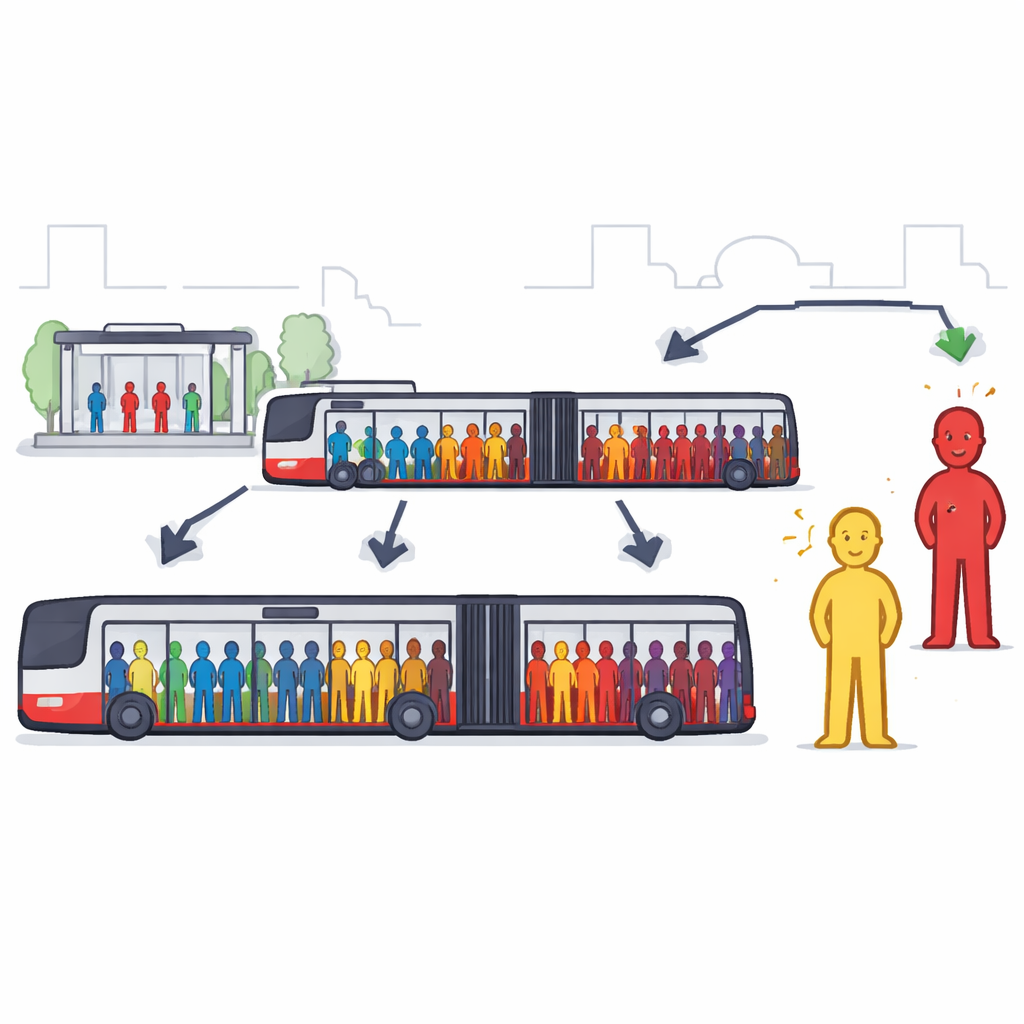
The researchers surveyed 1,318 riders on two busy urban bus lines over a full working day that covered both rush hours and quieter times. Interviewers moved through articulated buses, noting whether each participant was sitting or standing and, for standers, whether they were in the front, middle, or back section. Passengers then answered questions about age, job status, how often and why they used the bus, how long they were riding, how comfortable they felt at that moment, what was bothering them, and how full they thought the bus was in percentage terms. This approach combined simple questions with where people stood on board, giving a detailed picture of crowding from the rider’s point of view.
Who feels the squeeze and where
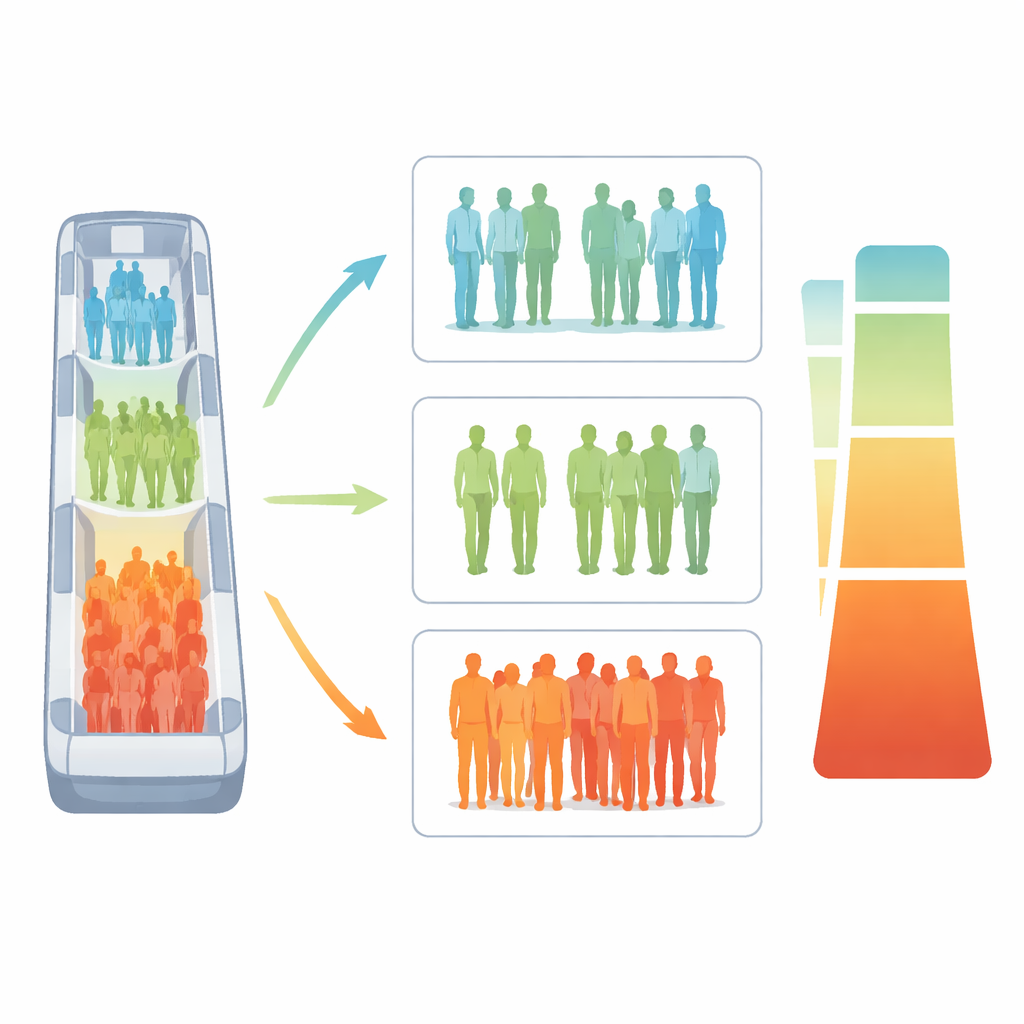
On average, passengers judged the buses to be moderately full, but their estimates varied a lot with circumstances. People riding during peak hours reported higher fullness than those traveling off-peak. Standing passengers consistently felt the bus was more crowded than those who had seats, and those standing in the back section perceived higher occupancy than those at the front. Limited space, especially when passengers felt there was not enough room to move, sharply raised perceived crowding. Age also played a role: older riders, particularly those over 70, tended to give lower crowding estimates than young adults, hinting at different expectations or coping strategies across generations.
What makes comfort drop
Comfort turned out to be tightly linked to the sense of how full the bus was. The more crowded passengers thought the bus was, the less comfortable they felt. Overcrowding, being forced to stand, and noise were among the most frequently cited reasons for discomfort, as were worries about time wasted in congestion and the risk of injury when the vehicle was packed. In contrast, factors like ride duration, trip purpose, and how often passengers used public transport did not significantly change how full they thought the bus was. Smell, longer travel time, and general security concerns affected overall comfort for some riders but did not systematically shift their occupancy estimates.
What this means for better buses
The study shows that crowding is not just a matter of how many people fit inside a bus; it also depends on where those people stand and how they feel in the moment. A bus with the same number of riders can feel much more crowded if passengers are bunched at the back or if many are forced to stand with little personal space. For planners, this means that focusing only on technical capacity and passenger counts misses a crucial part of the story. By combining riders’ own estimates of fullness with objective data on loads and conditions, cities can design routes, vehicles, and timetables that reduce hot spots of discomfort, make public transport more appealing, and ultimately help keep people out of cars and on the bus.
Citation: Kovačević, T., Pitka, P., Ivetić, J. et al. Passenger perception of vehicle occupancy in public transport and factors that shape crowding estimations. Sci Rep 16, 13437 (2026). https://doi.org/10.1038/s41598-026-43541-5
Keywords: public transport crowding, passenger comfort, bus occupancy, urban mobility, travel behavior