Clear Sky Science · en
Applying a gendered lens to the issue of adolescent social media use and well-being by exploring salient susceptibilities and alternative within-person processes
Why this study matters for teens and parents
Many parents, teachers, and young people worry that social media is harming teenagers’ mental health, and that girls may be especially at risk. This study follows nearly 100 U.S. teens multiple times a day to see, in real time, how social media use relates to their moods and sense of purpose. Instead of assuming that more screen time automatically causes harm, the researchers dig into when, how, and for whom social media might matter—and whether the story really is different for girls and boys.
Looking closely at gender and growing up online
The researchers start from the fact that, on average, girls and women report more anxiety, sadness, and other mental health concerns than boys and men. Because girls also tend to be more active on social media, many people have argued that social media is especially damaging for them. Yet most of that evidence comes from one-time surveys that cannot show how changes in use relate to changes in well-being inside the same person over time. This study instead applies a “gendered lens,” asking whether differences in teens’ everyday lives, social pressures, and physical development help explain why social media might feel worse for some teens than others.
Tracking real-time life with phones and short surveys
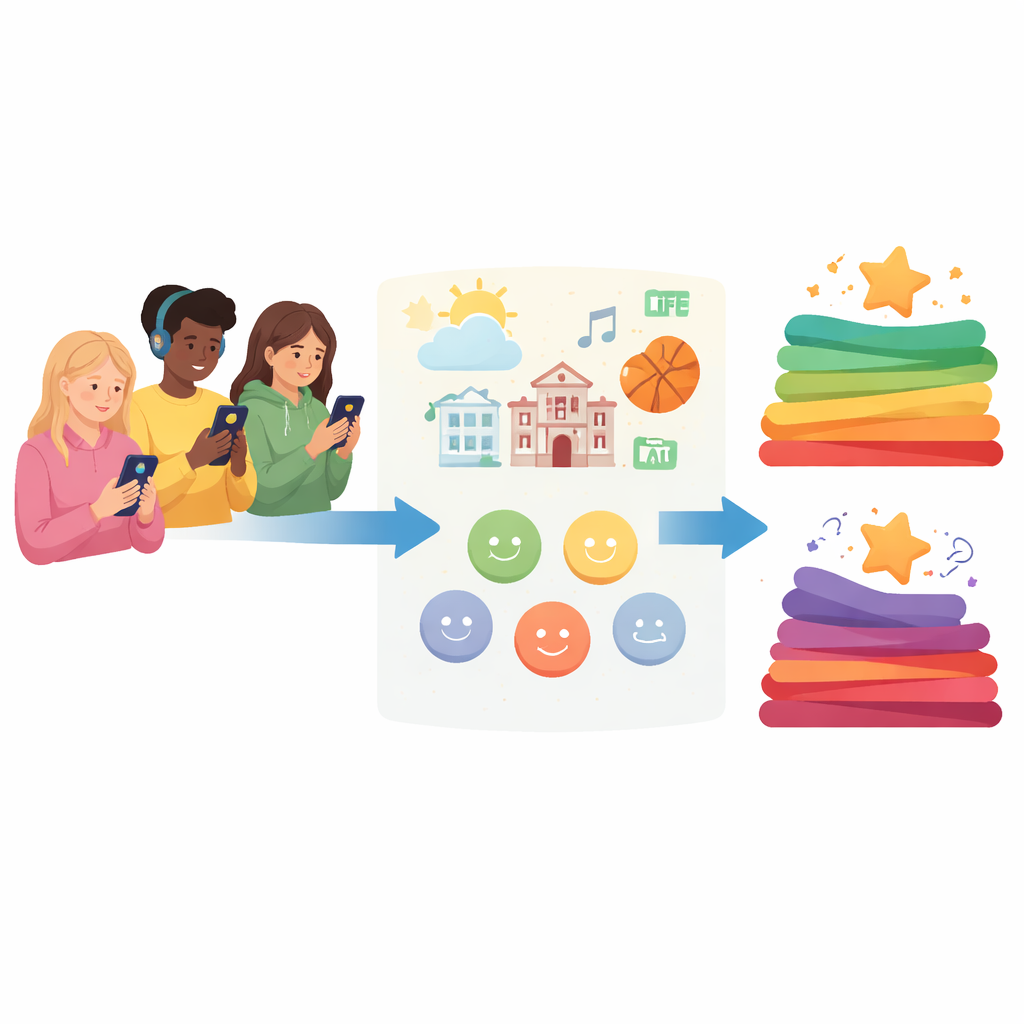
To capture daily ups and downs, the team used Ecological Momentary Assessment: brief phone surveys sent five times a day for several weeks. Ninety-seven adolescents, ages 13 to 17, reported how much they had used major social media apps in the past hour and rated how anxious, sad, happy, purposeful, or rule-breaking they felt. They also answered questions about their sense of control over life, experiences of sexism, beliefs about traditional masculinity, timing of puberty, and how often they ran into unwanted sexually explicit content online. Using a technique called Dynamic Structural Equation Modeling, the researchers could separate how teens differ from one another on average from how each teen’s own well-being changes from moment to moment.
What they found—and what they did not
Against popular belief, the study found little evidence that simply using social media more was linked to feeling worse overall, for either girls or boys. When the researchers looked at within-person changes—times when a teen used social media more or less than usual—they saw no reliable short-term impact on anxiety, depression, happiness, or rule-breaking. The one clear exception was a small link between heavier use and a lower sense of purpose, the feeling that one’s life has direction and meaning. Just as important, girls did not show stronger negative links between social media and well-being than boys, and the various gender-related factors in teens’ offline lives—such as sexism, traditional masculinity, or pubertal timing—did not change these basic patterns.
A new focus on the stability of purpose
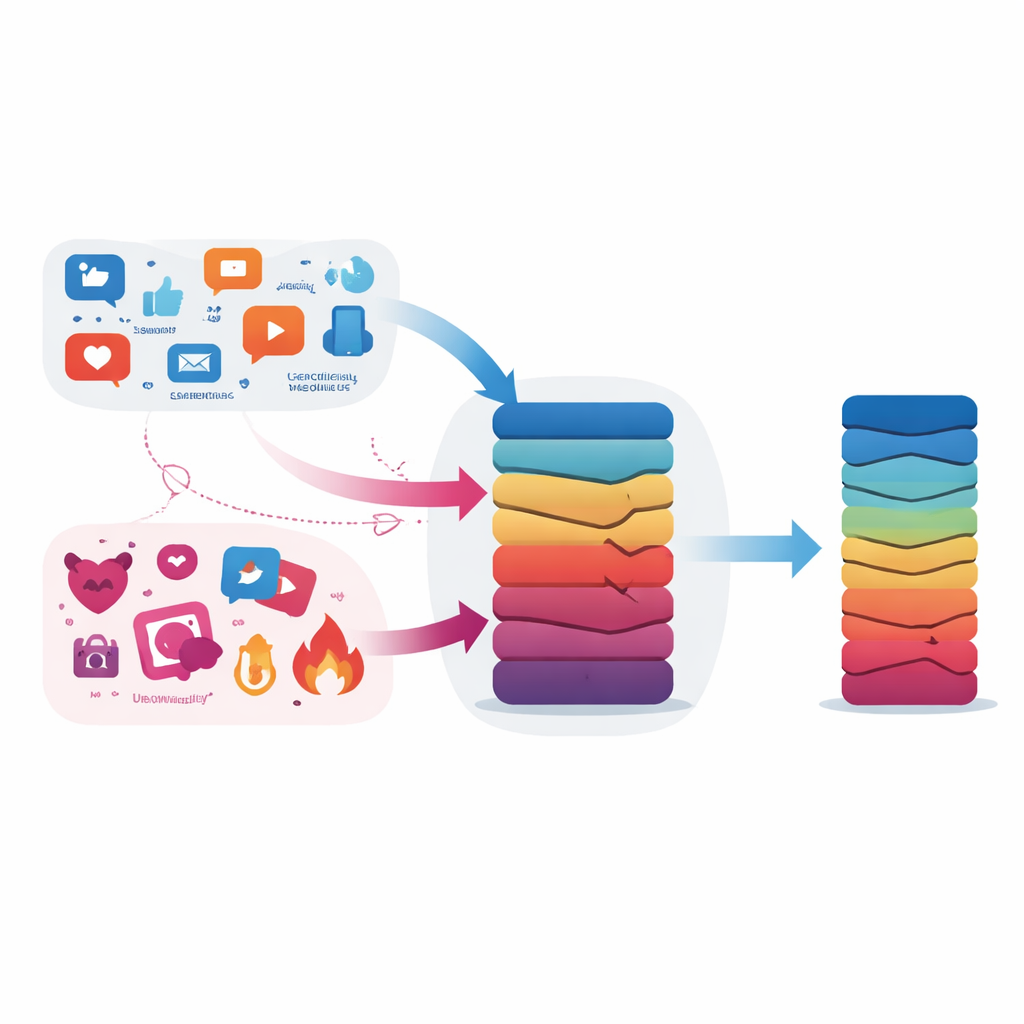
Where social media did seem to matter was in the stability of teens’ sense of purpose over time. The researchers examined how much today’s sense of purpose predicted tomorrow’s—essentially, how steady or shaky that feeling was for each teen. They found that two aspects of online life were tied to a less stable sense of purpose: spending more time on social media overall and being more frequently exposed to unwanted sexually explicit content. Teens who, on average, were heavier users or more often encountered such content showed more day-to-day swings in how purposeful they felt, even if their average mood was not worse. A stable sense of purpose is usually thought to protect against stress, so this choppiness may quietly undermine resilience.
Rethinking the story about social media and girls
These findings suggest that the common narrative—social media is uniquely harmful for girls—is too simple. In this intensive, real-time study, girls were not more harmed by their social media use than boys, and gendered features of their broader lives did not explain differences in moment-to-moment well-being. Instead, certain online experiences, especially heavy use and unwanted explicit content, were linked to how steady teens felt about their life’s direction. For families and policymakers, this points away from blanket limits based only on gender and toward paying attention to what teens encounter online and how those experiences may disrupt deeper feelings of purpose and stability, for all young people.
Citation: Shawcroft, J., Cingel, D.P. Applying a gendered lens to the issue of adolescent social media use and well-being by exploring salient susceptibilities and alternative within-person processes. Sci Rep 16, 13048 (2026). https://doi.org/10.1038/s41598-026-42696-5
Keywords: adolescent social media, gender differences, mental well-being, sense of purpose, online sexual content