Clear Sky Science · en
A cross-sectional serological study of bats in the United States Virgin Islands during 2019 to 2020 reveals no evidence of rabies virus exposure
Why this matters for people and pets
Rabies is one of the deadliest infections on Earth, and in many parts of the world bats can quietly carry the virus. For island communities that rely on tourism and close ties with nature, knowing whether local wildlife harbors rabies is a crucial public health question. This study asked a simple but far-reaching question: are bats in the United States Virgin Islands silently exposed to rabies, or might these islands actually be free of the virus?
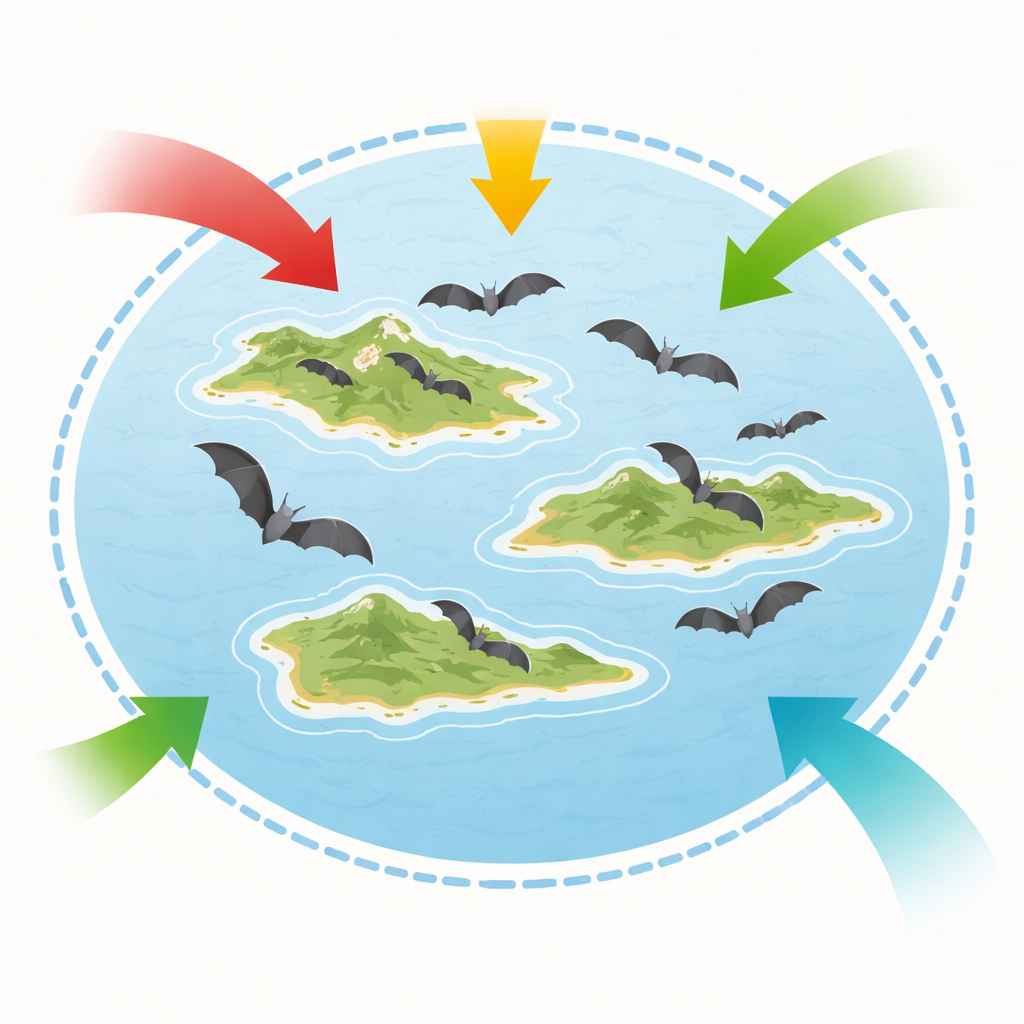
An island chain under the microscope
The United States Virgin Islands (USVI)—St. Croix, St. John, and St. Thomas—sit in a region where rabies is already established in several countries. Dogs, small carnivores called mongooses, and bats elsewhere in the Caribbean have all been shown to carry the virus. Yet, despite years of testing sick animals sent in by veterinarians and the public, no rabies case has ever been confirmed in the USVI. Because neighboring islands such as Puerto Rico do have both rabies in mongooses and evidence of exposure in bats, the authors set out to test whether local bats showed any signs of past infection.
How scientists checked wild bats for clues
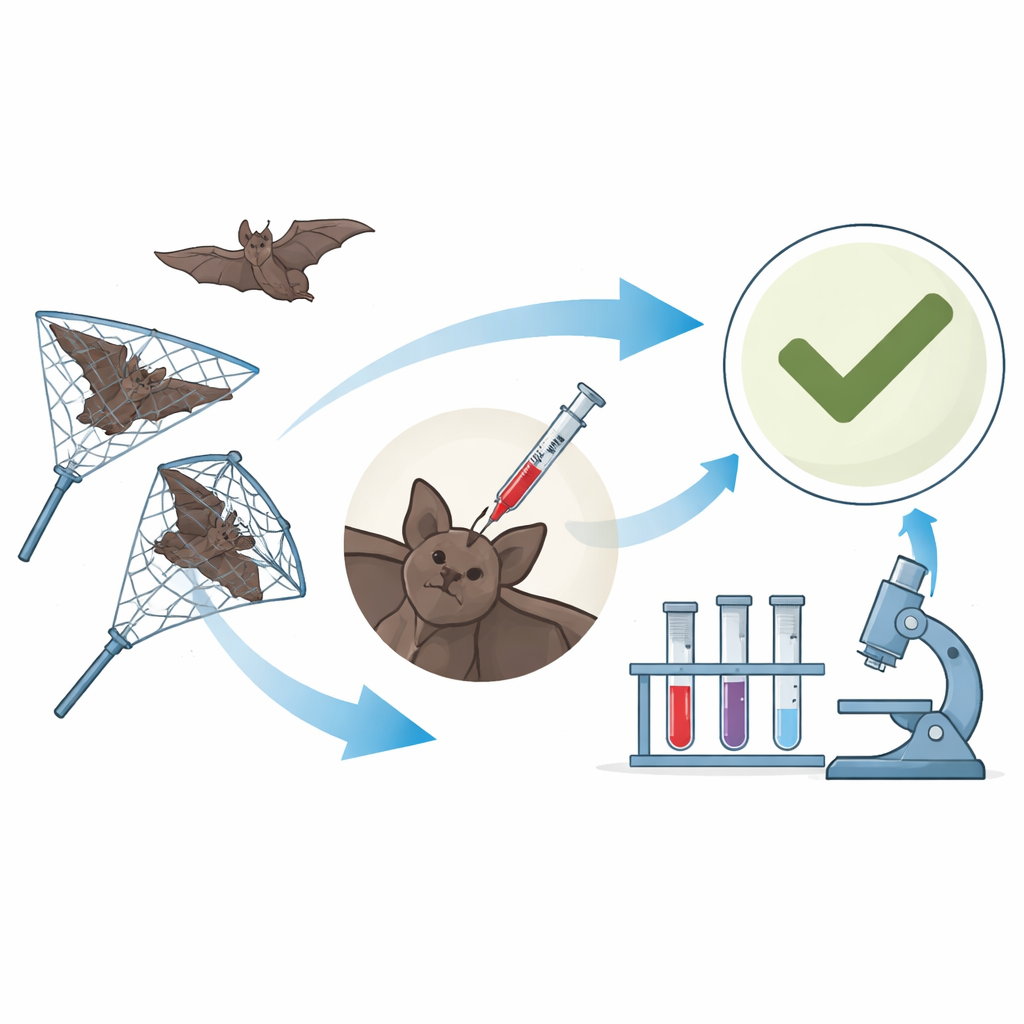
Researchers focused on four common native bat species that feed on insects, fruit, nectar, or fish. Between September 2019 and January 2020, they set up fine mesh “mist nets” and used hand nets at seven sites across the three islands, often near known roosts such as an abandoned rum distillery where bats gather in large numbers. Captured bats were gently handled, a tiny amount of blood was drawn from a vein, and the animals were released back into the night. The blood samples were later spun in a centrifuge to separate the clear serum, which contains antibodies—molecular fingerprints that can reveal if an animal’s immune system has met a virus before.
What the blood tests revealed
In total, 86 bats were caught and 72 yielded enough high-quality serum for testing. The team used a highly specific laboratory method that detects “neutralizing” antibodies—those that can block rabies virus from infecting cells. Every single sample tested negative. To understand what this meant, the scientists used statistical models that combine the number of animals tested, how accurate the test is, and reasonable estimates of how common rabies antibodies are in bats on other islands. Depending on how they grouped the bats—by island, by species, or all together—the chance that their survey would have detected rabies exposure if it were present ranged from about one-half to nearly 100 percent, with the strongest confidence when all bats and islands were analyzed as a single population.
Limits, lessons, and future watchfulness
The work was cut short when the COVID-19 pandemic forced a halt to field research, so the team could not reach their original goal of nearly 1,000 bats sampled across ten regions. They also note that bats are difficult to catch, and some species were underrepresented, which lowers certainty for those particular groups. Still, when these results are combined with a recent study that found no rabies in USVI mongooses, decades of negative tests in pet animals, and the absence of any known human or animal rabies cases, the picture is encouraging. At the same time, the islands remain vulnerable: bats and other animals can move between islands during storms, and people can inadvertently bring infected animals through travel and trade.
What this means for island health
For residents, veterinarians, and visitors, the study offers cautious good news. The lack of rabies antibodies in more than seventy bats, together with earlier findings in mongooses and pets, suggests that the USVI may truly be free of rabies at this time. However, the authors stress that this is not a reason for complacency. They recommend a practical, long-term strategy that mixes routine testing of sick or dead animals, focused checks at large bat roosts, strict vaccination and import rules for pets, and collaboration across health, wildlife, and agriculture agencies. With this kind of ongoing One Health effort, the islands can better guard people, domestic animals, and bats themselves from the future arrival of this deadly virus.
Citation: Browne, A.S., Cranford, H.M., Fibikar, D. et al. A cross-sectional serological study of bats in the United States Virgin Islands during 2019 to 2020 reveals no evidence of rabies virus exposure. Sci Rep 16, 12111 (2026). https://doi.org/10.1038/s41598-026-42571-3
Keywords: rabies, bats, Caribbean, zoonotic disease, wildlife surveillance