Clear Sky Science · en
The effects of music and virtual reality on pain and anxiety during central venous port implantation: a randomised clinical trial
Facing Treatment with Less Fear
Cancer patients often need a small device called a central venous port so they can receive repeated infusions without constant needle sticks. Having this port placed, however, can be stressful and uncomfortable, even when the procedure is done under local numbing medicine. Many hospitals are experimenting with gentle approaches like relaxing music or immersive virtual reality scenes to ease pain and calm nerves. This study asked a simple but important question: during port placement, do music or virtual reality actually make patients hurt less or feel less anxious than usual care?
What Happens During Port Placement
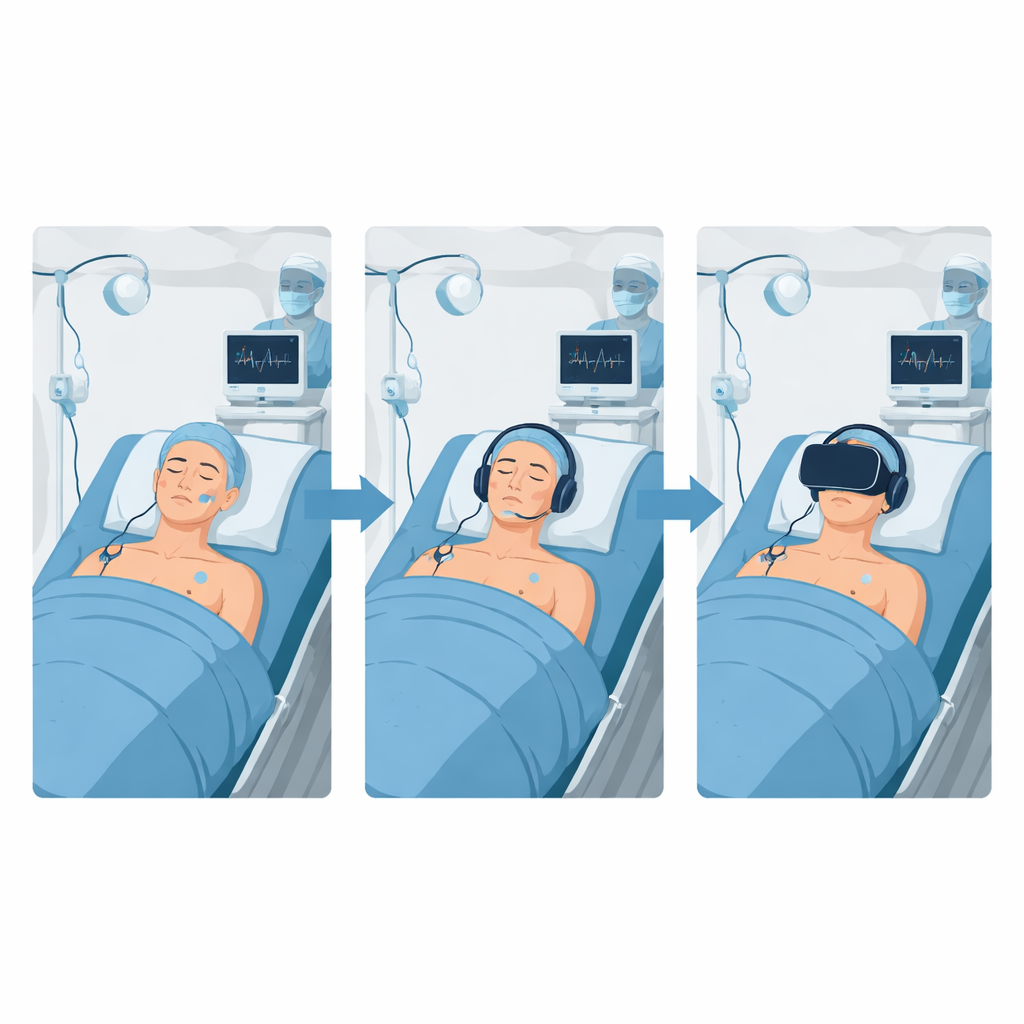
A central venous port implantation is a short surgical procedure in which a small chamber and thin tube are placed under the skin of the chest and threaded into a large vein near the heart. It is commonly done for people receiving chemotherapy. In this trial, the procedure was performed under local anesthesia through a neck vein, guided by ultrasound, a technique already known to shorten the operation and reduce some discomfort. Even with numbing medicine, patients can still feel pressure, pulling, and worry about what is happening, which is why non-drug methods such as music and virtual reality seem so appealing.
How the Study Was Set Up
Researchers in three cancer centers in France enrolled 127 adults who were about to have a port placed. Everyone received the same local anesthetic mixture designed to reduce the sting of the injection. Patients were then randomly assigned to one of three groups. One group experienced the procedure in the usual way, able to talk with the anesthetist. A second group listened to specially designed relaxing orchestral music through headphones, whose tempo slowed and then gently picked up again. A third group wore a virtual reality headset that took them on a slow underwater journey with guided breathing and hypnotic-style relaxation. No sedative drugs were given, to avoid masking the specific effects of music or virtual reality.
Measuring Pain, Worry, and Safety
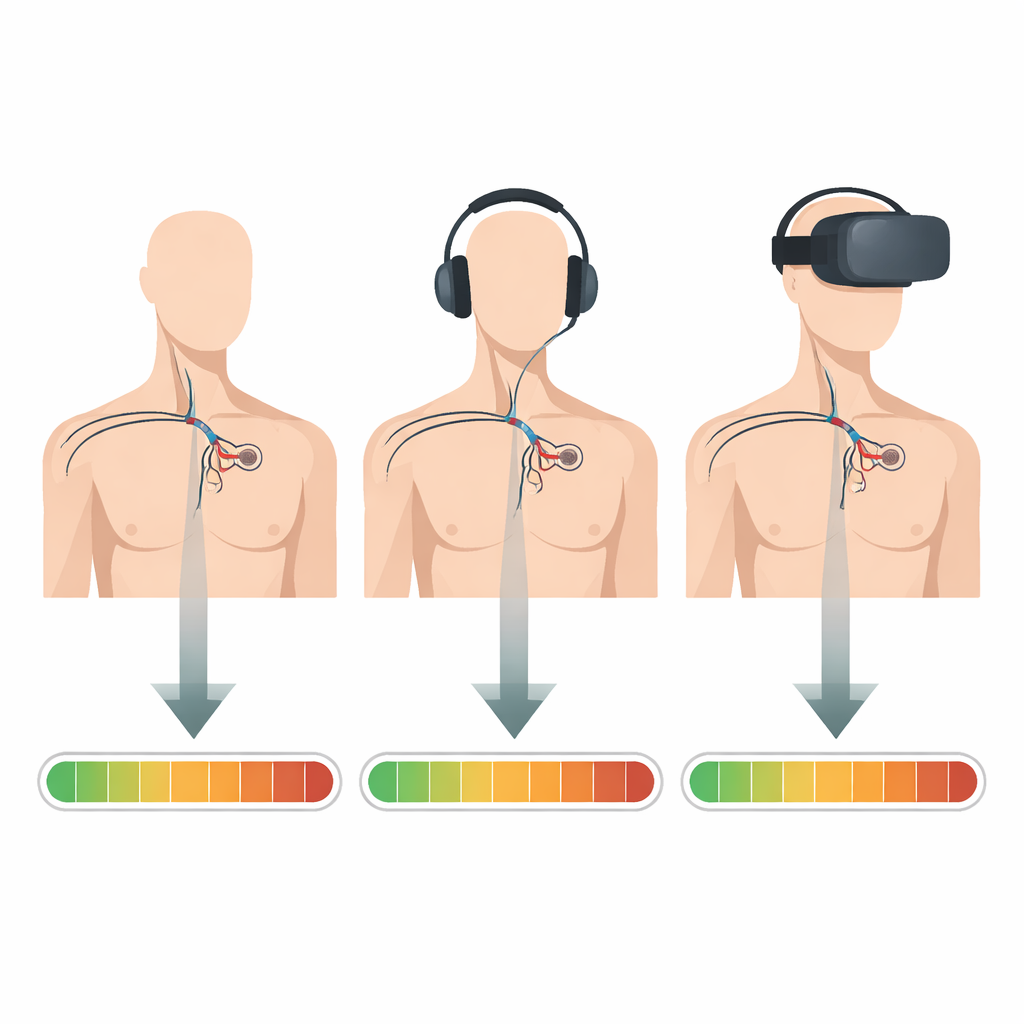
Soon after surgery, patients were asked to rate how much pain and how much anxiety they had felt during the procedure on a simple 0–10 scale. These two experiences were treated as separate questions, because improving either pain or anxiety would be considered helpful. The study also tracked how well patients tolerated the devices, asking about dizziness, nausea, or a sensation of suffocation, and recorded how satisfied they were overall with how the procedure went. In addition, a heart-rate–based monitor known as the Analgesia Nociceptive Index was used throughout surgery to see whether this objective signal could mirror the patients’ own pain reports.
What the Researchers Found
The main finding was striking in its simplicity: pain and anxiety scores were very similar in all three groups. On average, patients reported moderate pain and moderate anxiety whether they had no device, listened to music, or used virtual reality. Statistical testing showed no meaningful differences between music and standard care, or between virtual reality and standard care. The immersive tools were generally well tolerated, with only a few reports of brief dizziness, nausea, or feeling short of breath, and overall satisfaction with the procedure was high in every group. The heart-rate–based pain monitor did not track well with what patients said they felt, suggesting it is not a reliable tool for this kind of awake procedure.
What This Means for Patients and Clinicians
For patients undergoing central venous port placement, this carefully conducted multicenter trial suggests that simply adding music or virtual reality, at least in the forms tested here, does not reliably reduce pain or anxiety beyond what is already achieved with modern numbing techniques and skilled ultrasound-guided practice. At the same time, the study shows that these non-drug options are feasible, safe, and acceptable in a busy cancer setting. The authors emphasize that their negative result applies specifically to this procedure and setup. Music and virtual reality may still be valuable for other painful medical experiences, and future research can explore different styles, personal tailoring, or combinations with other comfort measures to better support patients during difficult moments in care.
Citation: Ghimouz, A., Dureau, S., Carton, M. et al. The effects of music and virtual reality on pain and anxiety during central venous port implantation: a randomised clinical trial. Sci Rep 16, 12514 (2026). https://doi.org/10.1038/s41598-026-42184-w
Keywords: cancer pain, virtual reality, music therapy, central venous port, procedure anxiety