Clear Sky Science · en
Trajectories of psychological distress and spinal pain in manual therapists during the COVID-19 pandemic in Sweden
Why This Matters for Everyday Health Workers
The COVID-19 pandemic has often been described as a perfect storm for mental strain and aching backs, especially for people who work hands-on with patients. This study followed Swedish manual therapists—such as chiropractors and naprapaths—for a full year during the pandemic to see how their emotional well‑being and spinal pain developed over time. The findings offer a surprisingly reassuring picture overall, while also highlighting clear warning signs that can help protect the health of frontline caregivers in future crises.
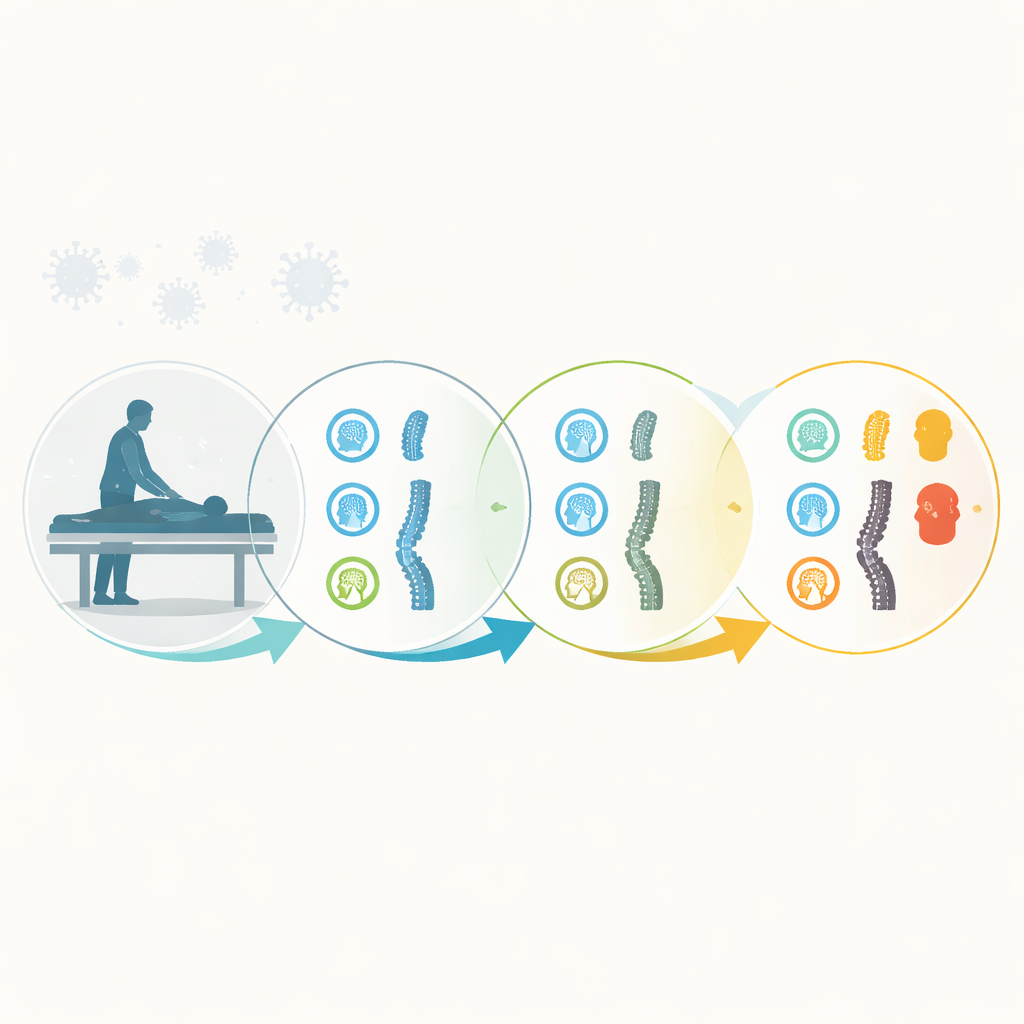
Who Was Studied and What Was Measured
The researchers tracked 816 clinically active manual therapists in Sweden during the second wave of the pandemic and the following year. These professionals regularly work in close physical contact with patients, which raised early fears about infection risk, stress, and musculoskeletal problems. Participants completed online surveys four times over 12 months, reporting their levels of psychological distress—symptoms related to anxiety, low mood, and stress—and rating their neck, upper back, and low back pain. The team also recorded lifestyle and work‑related factors, including sleep quality, physical activity, coping style, and whether participants owned their practice.
Distinct Paths of Mood and Pain Over a Year
Rather than looking only at average scores, the researchers used trajectory modeling to group people with similar patterns of symptoms over time. For psychological distress, five paths emerged. Nearly nine out of ten therapists fell into three clusters with no, minimal, or low and stable distress across the whole year. A very small group showed decreasing distress that started out moderate and gradually eased, while another small group (about 2%) followed a path of slowly rising distress from mild to moderate levels. No sizeable group experienced persistently high distress, suggesting that most manual therapists were emotionally resilient despite the prolonged pandemic conditions.
How Back and Neck Pain Changed
Spinal pain followed a similarly varied pattern. Just over half of the therapists reported no or low and stable pain, and another fifth started with mild pain that slightly improved over time. However, a quarter of the group had less favorable trajectories. One cluster had steady moderate pain throughout the year. Two other clusters showed fluctuating patterns: one began with mild pain that crept up to moderate levels, while the other started higher, spiked sharply, and then improved. These patterns mirror what has been seen in other back pain studies, underscoring that even in a generally healthy group, a substantial minority experiences persistent or changing pain problems.
Sleep, Movement, and Coping as Key Signals
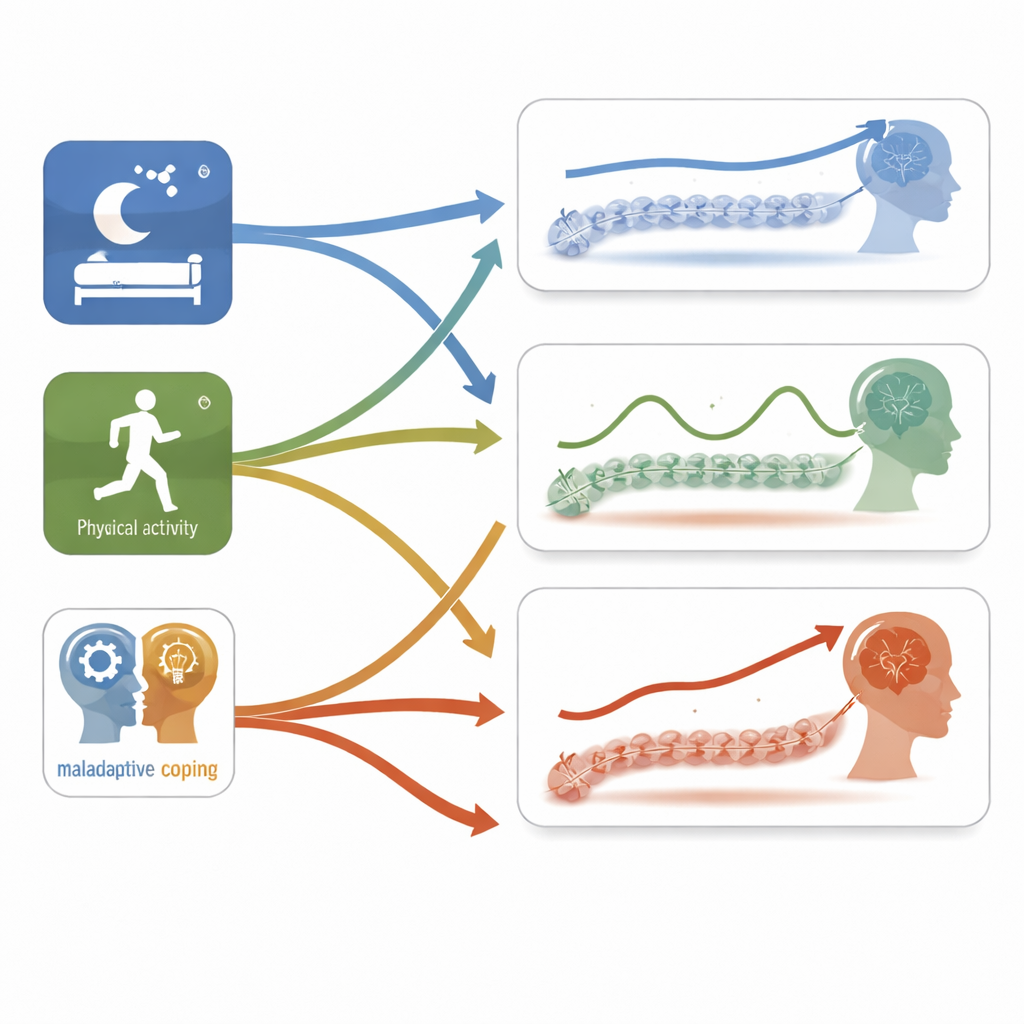
The study then asked which baseline characteristics were linked to ending up in the more troublesome paths. Sleep stood out: therapists who reported difficulties falling or staying asleep, along with daytime tiredness, were much more likely to be in clusters with higher distress and greater spinal pain over the year. Not getting enough weekly physical activity was also related to worse trajectories for both mood and pain. In addition, those who relied more on maladaptive coping strategies—such as denial, self‑blame, or giving up—had a greater chance of landing in the higher‑distress clusters. These associations cannot prove cause and effect, but they strongly suggest that sleep, movement, and coping patterns are important early markers of vulnerability.
What This Means Going Forward
For lay readers and health professionals alike, the main takeaway is both comforting and cautionary. Most Swedish manual therapists weathered a year of the pandemic with stable and generally low levels of psychological distress and manageable spinal pain, hinting at considerable resilience in this workforce. Yet a meaningful minority experienced ongoing or worsening back and neck pain, and a very small group saw their distress climb. Problems with sleep, low physical activity, and unhelpful ways of dealing with stress were all tied to these less favorable paths. This suggests that simple, practical measures—supporting good sleep, encouraging regular movement, and fostering healthier coping skills—could help identify and support those at greatest risk when the next large‑scale stressor hits.
Citation: Weiss, N., Axén, I., Hoekstra, T. et al. Trajectories of psychological distress and spinal pain in manual therapists during the COVID-19 pandemic in Sweden. Sci Rep 16, 13150 (2026). https://doi.org/10.1038/s41598-026-42074-1
Keywords: COVID-19 pandemic, psychological distress, back pain, manual therapists, sleep and physical activity