Clear Sky Science · en
Prevalence of musculoskeletal injuries and associated risk factors in Brazilian esports players: a cross-sectional study
Why Gamers’ Aching Wrists Matter
Competitive video gaming has exploded in popularity, turning bedroom players into professional “e‑athletes” who train for hours each day. Yet unlike traditional sports, the toll this new kind of training takes on the body is only beginning to be understood. This study looks at Brazilian esports players to find out how common muscle and joint problems are, where on the body they strike, and how play habits like years of experience and weekly training time might raise the risk of getting hurt.
Who the Players Were and How They Were Studied
The researchers surveyed 365 Brazilian esports players, most of them young adults in their early twenties and the vast majority male. To be included, participants needed at least a year of experience in competitive gaming, whether amateur or professional. Through an online questionnaire, players reported how many hours they typically played per day, how many days per week they trained, how many years they had been active in esports, and whether they had suffered any muscle or joint problem in the previous 12 months that forced them to miss practice or competition. The team then used standard statistical methods to look for links between these playing habits and different types of injuries.
Where It Hurts the Most
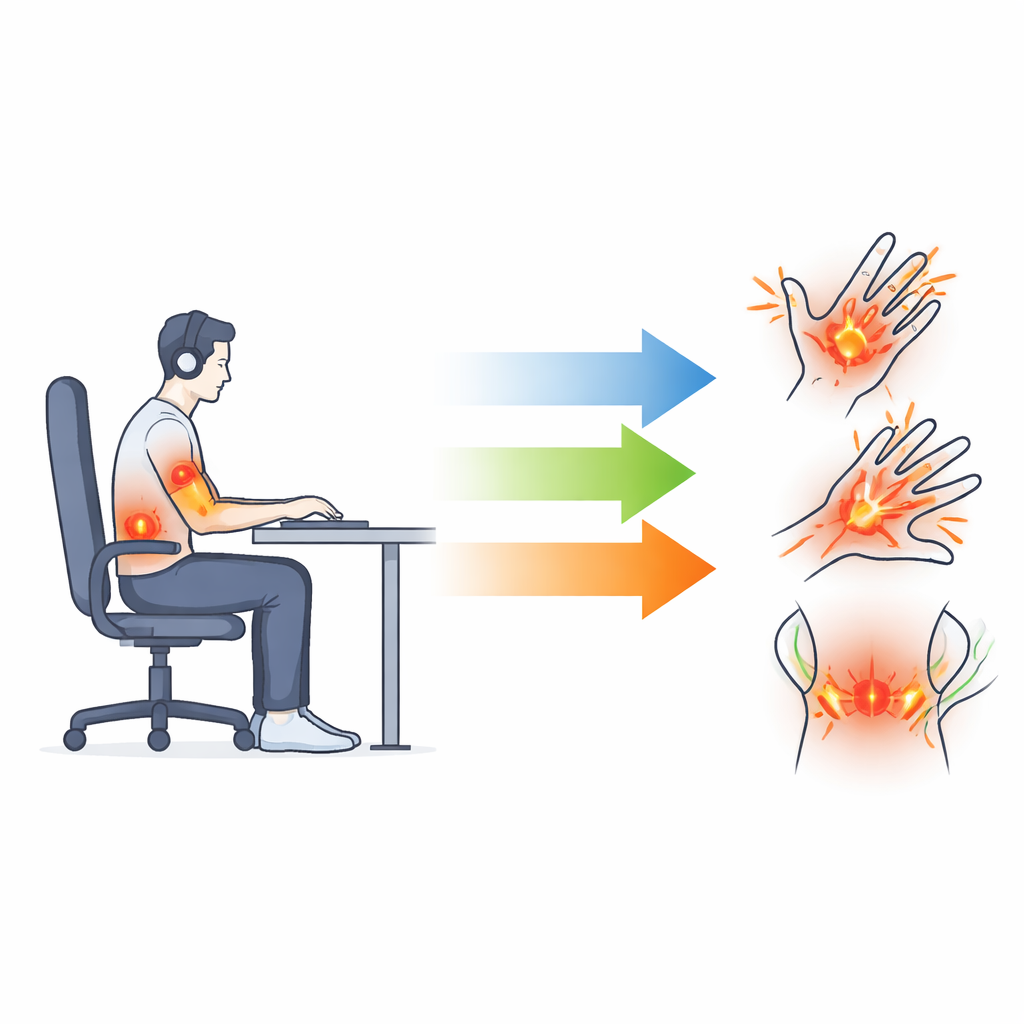
Nearly one in three players reported at least one time‑loss injury over the past year. The upper body was hit hardest. The wrist was the single most common problem area, involved in about 28% of all reported injuries, followed by the lower back, hands, and fingers. Shoulders, elbows, and forearms were also affected, but less often. Men played more hours per day than women, but the overall chance of being injured did not differ meaningfully between the sexes. These patterns suggest that the small joints and muscles most directly engaged in rapid mouse and keyboard work, along with the structures that support a prolonged sitting posture, bear the brunt of esports training.
How Play Habits Tie Into Injury Risk
To see which habits might be driving these problems, the authors examined how age, years of experience, hours per day, and days per week of practice related to injuries in specific body regions. For the wrist, two factors stood out: the total number of years spent in esports and how many days per week a player trained. Each extra year of practice was linked to about an 11% increase in the odds of a wrist injury, and each additional day of weekly play raised the odds by about 18%. Longer daily sessions were weakly tied to neck problems, and more years of play were connected to a greater chance of low‑back issues. However, when the researchers tested how well these variables could predict exactly who would get hurt, the statistical models performed poorly, indicating that many other unmeasured influences are also at work.
Why So Many Repetitive Strains
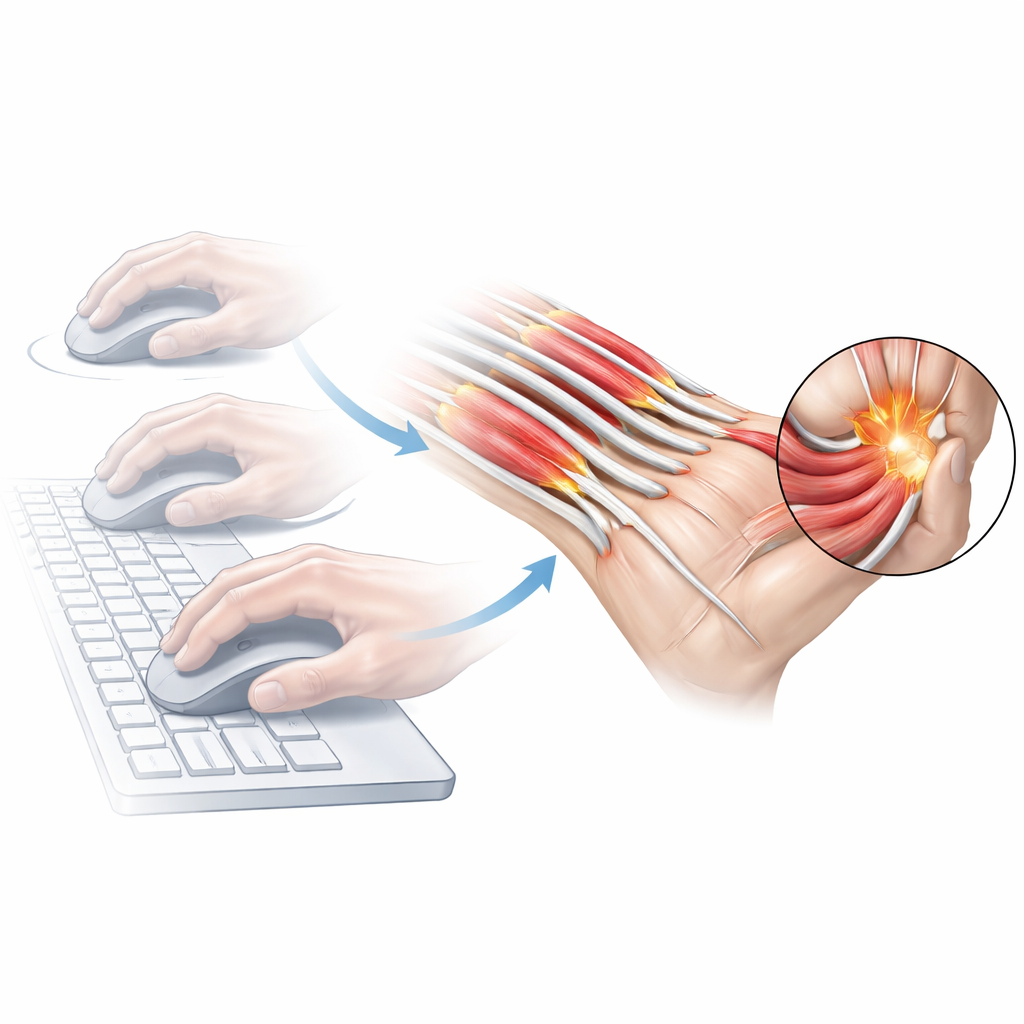
The findings line up with what is known about how esports are played. High‑level gamers may perform hundreds of precise actions per minute with their fingers and wrists while holding largely fixed postures in the shoulders, trunk, and lower back. Over months and years, this heavy repetition without enough rest can produce “overuse” injuries—small amounts of stress that accumulate faster than the body can repair them. The type of game matters too: for example, first‑person shooters often demand large, fast mouse movements, while strategy games may require dense clusters of rapid clicks in a smaller area. Add in imperfect desk setups, long sitting times, and sometimes low levels of general physical activity, and it becomes clear that posture, equipment, training volume, and fitness all combine in complex ways to influence injury risk.
What This Means for Players and Teams
For everyday gamers and professional teams alike, the study’s central message is straightforward: more years in esports and more days of weekly practice are associated with a higher chance of wrist problems, and the upper limbs and lower back are especially vulnerable. At the same time, play volume alone does not fully explain who gets injured, pointing to the need for broader strategies. The authors argue that esports should borrow ideas from traditional sports medicine—structured rest, tailored strength and flexibility training, better workstation ergonomics, and guidance from health professionals—to help players stay healthy while they chase peak performance.
Citation: Anselmo-e-Silva, C.I., Santos-de-Araújo, A.D., Melger, M.J.C. et al. Prevalence of musculoskeletal injuries and associated risk factors in Brazilian esports players: a cross-sectional study. Sci Rep 16, 12482 (2026). https://doi.org/10.1038/s41598-026-41487-2
Keywords: esports injuries, wrist pain, repetitive strain, gaming health, musculoskeletal pain