Clear Sky Science · en
Perioperative treatments and endophthalmitis after cataract surgery in France: the national population-based ICCARE study
Why this eye surgery study matters
Cataract surgery is one of the most common operations in the world and usually gives people back clear vision in a matter of days. Yet a tiny fraction of patients can develop a serious eye infection afterwards that threatens sight. To prevent this, doctors often prescribe several kinds of eye drops before and after surgery, especially antibiotics. This French national study asks a simple but important question: are all these drops really helping, or are we over-treating patients without added benefit?
A closer look at routine cataract care
The researchers used France’s nationwide health insurance database, which tracks hospital stays and prescriptions for nearly the entire population. They focused on adults aged 40 and older who had cataract surgery in 2019 and selected only straightforward cases, excluding complicated operations that already carry higher risks. In total, they analyzed more than half a million people, representing over 800,000 cataract procedures—an unusually large, real-world snapshot of how this surgery is managed day to day across the country.

Many drops, little variation
One of the clearest findings is how nearly universal intensive eye-drop treatment has become. Almost every patient—about 99 out of 100—received at least one type of perioperative treatment (that is, around the time of surgery). Roughly 98% received antibiotic drops, 97% steroid anti-inflammatory drops, and 91% non-steroidal anti-inflammatory drops, with many also getting lubricating or antiseptic drops. Most patients used three or more different products. This pattern shows that, although cataract surgery itself is highly standardized, the “pharmacy side” of care has grown quite heavy and is remarkably similar from one person to the next.
Measuring a rare but serious infection
The team then looked for cases of post-operative endophthalmitis, a severe internal eye infection that can permanently damage vision. Using hospital diagnosis codes, they counted how many patients were admitted for this problem within six weeks of surgery. Among the more than 543,000 operated patients, only 347 developed this infection—about 6 cases for every 10,000 people. Men and patients with more serious overall health problems (as measured by a standard comorbidity score) were more likely to be affected, confirming patterns seen in earlier studies.
Antibiotic drops versus antibiotic in the eye
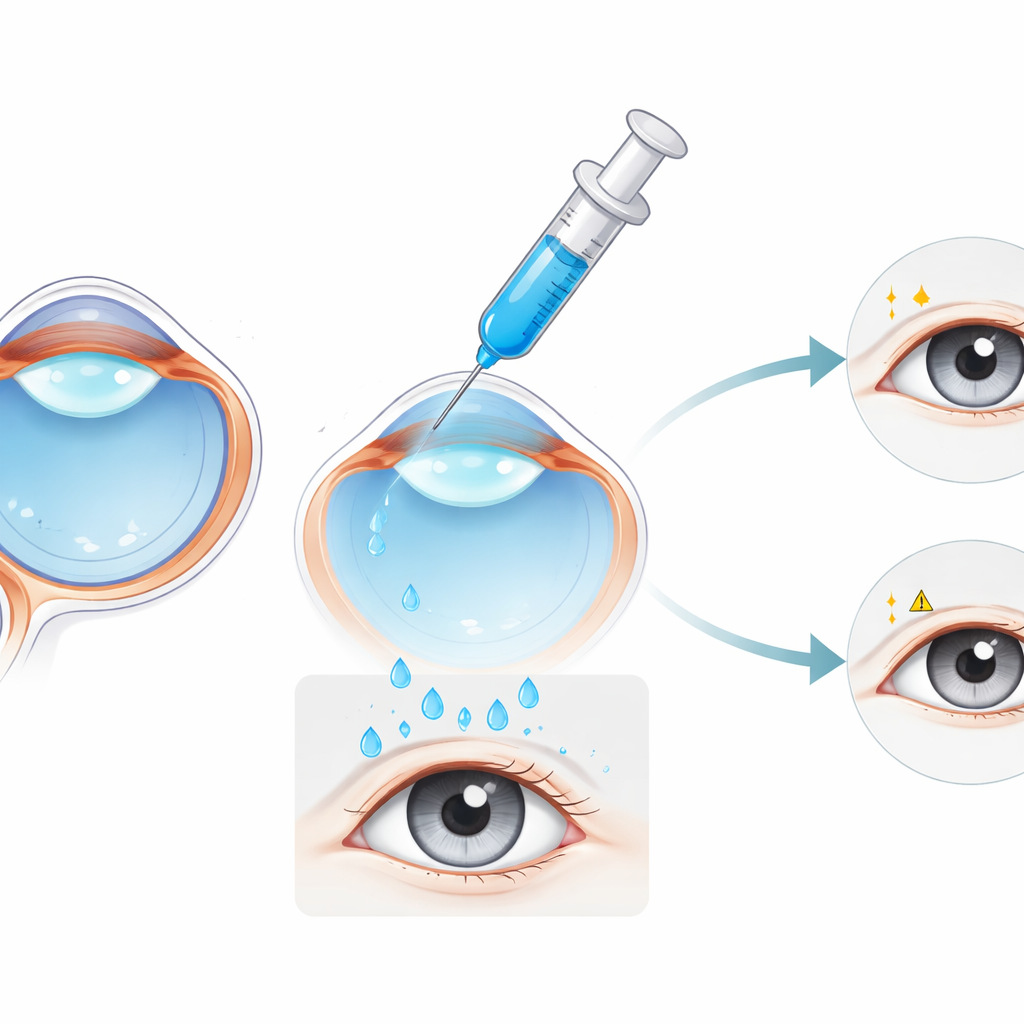
The key question was whether antibiotic eye drops reduced infection risk on top of another common protection: a single dose of antibiotic injected directly into the front chamber of the eye during surgery, known as intracameral prophylaxis. In France, this in-the-eye antibiotic is widely used and has already been linked to large drops in infection rates over the past decade. In this study, infections occurred at almost exactly the same rate in patients who received antibiotic eye drops as in those who did not. In contrast, having surgery in a clinic where intracameral antibiotics were used in at least 90% of procedures was linked to a noticeably lower risk of infection compared with clinics that used this measure less often.
Rethinking how much treatment is enough
The results suggest that, in a setting where an effective antibiotic is already given inside the eye during surgery, adding routine antibiotic eye drops does not bring extra protection against serious infection. Yet these drops are prescribed to nearly everyone, even though they can irritate the eye surface, worsen dry eye, contribute to antibiotic resistance, and add cost for both patients and the health system. The authors argue that cataract care would benefit from updated, evidence-based national guidelines that simplify and standardize treatment, possibly moving toward strategies that rely less on multiple post-operative drops while keeping sight-threatening infections rare.
Citation: Mortemousque, G., Laurent, E., Vigny, P. et al. Perioperative treatments and endophthalmitis after cataract surgery in France: the national population-based ICCARE study. Sci Rep 16, 11959 (2026). https://doi.org/10.1038/s41598-026-41266-z
Keywords: cataract surgery, eye infection, antibiotic drops, intracameral prophylaxis, postoperative care