Clear Sky Science · en
Enforcing a high success percentage interferes with reward-based motor learning
Why getting it right every time can hold you back
Learning a new physical skill—whether it’s drawing, playing the piano, or perfecting a tennis serve—comes with a mix of hits and misses. Many teachers and apps try to keep people motivated by making success easy and frequent. This study asks a simple but surprising question: if we want people to really improve their movements, should we aim for lots of success or allow more failure along the way? The answer matters for how we design games, training tools, and lessons for both children and adults.
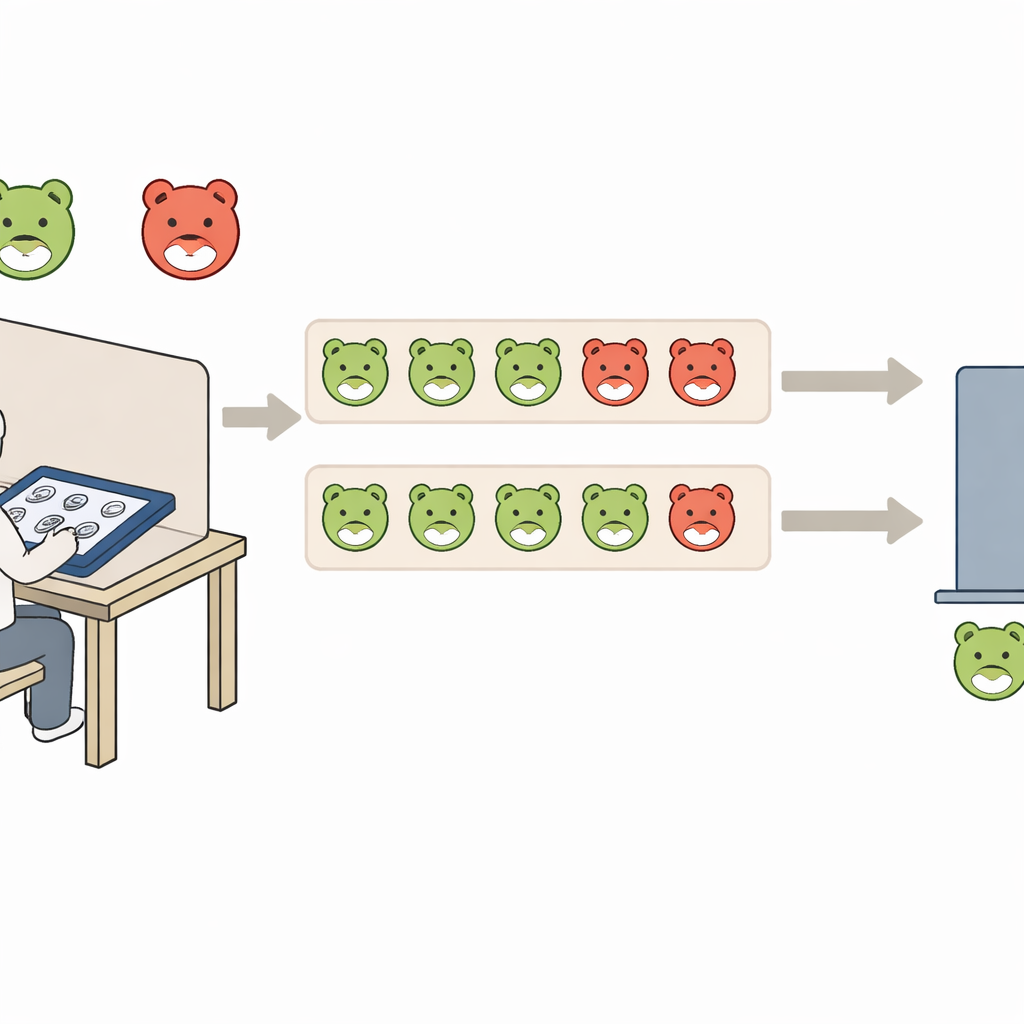
Practicing circles with a cartoon bear
Researchers invited visitors aged 7 to 58 at a science museum to play a short drawing game. Participants used a tablet to give a cartoon bear a “nose” by drawing a circle with a hidden hand, so they could not see what they were drawing. The secret goal was to learn to draw a circle twice as large as the one they naturally produced at the start. After each attempt, the bear gave only simple reward feedback: a happy signal for success or a sad signal for failure. No one was told what the correct size was; they had to figure it out through trial and error guided by this yes-or-no feedback.
Two styles of success: often right versus balanced results
The key twist was how often the game tried to let people succeed. One group played under a “moderate success” rule designed to give them a success about half the time. The other group played under a “high success” rule meant to make about four out of five attempts count as a win. Behind the scenes, the computer continuously adjusted how strict it was about circle size so that each group hit its target success rate. Everyone drew the same number of circles at first, and then they could choose freely whether to keep playing for a bit longer, which gave the researchers an extra glimpse of how motivated they felt.
More misses led to better learning
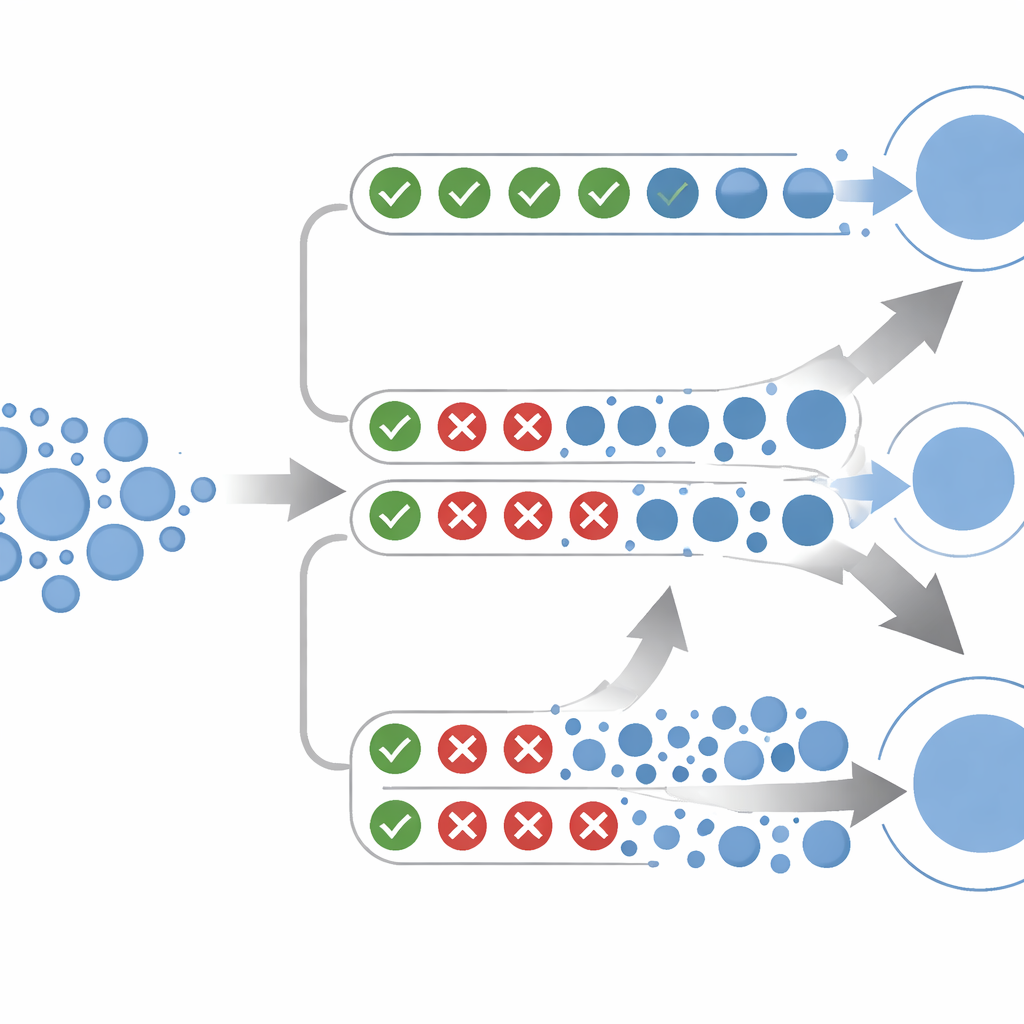
Even though the high-success group was rewarded more often, they actually learned less. Both groups improved their circle size over time, moving closer to the hidden “double size” goal, but the moderate-success group ended up closer. Analyses showed that when people received more failures, they changed their drawing size from trial to trial more strongly. This extra variation—trying slightly different sizes after a miss—is a sign of exploration. In the moderate-success group, these larger adjustments after failure helped participants search more effectively and home in on the right circle size. When success came too easily, people explored less and their improvement was smaller.
Motivation stayed high even with more failure
The researchers expected that frequent success would at least boost motivation, even if it slowed learning. But participants in both groups reported similar levels of enjoyment and desire to play again, and they were about equally likely to choose to continue the game when given the option. People in the high-success group did feel slightly less pressure and a bit more capable, but this did not translate into stronger overall motivation. In this simple, child-friendly task, allowing more failure did not seem to discourage players.
What this means for teaching and training
For everyday learning, these results suggest that protecting learners from failure can backfire. When successes and failures are more balanced, people experiment more and improve their movements more effectively, without losing interest. For a novice painter using a digital training tool, for example, a system that only rewards truly good strokes—even if that means many attempts fail—may build skill faster than one that hands out praise almost every time. In other words, if the goal is genuine improvement rather than constant encouragement, it is better to let people get it wrong a fair share of the time.
Citation: van der Kooij, K., van Mastrigt, N.M., van Leeuwen, M. et al. Enforcing a high success percentage interferes with reward-based motor learning. Sci Rep 16, 10272 (2026). https://doi.org/10.1038/s41598-026-39639-5
Keywords: motor learning, reward feedback, motivation, practice difficulty, skill acquisition