Clear Sky Science · en
Adherence to the EAT-Lancet Diet and Risk of Sepsis: A Prospective Cohort Study from the UK Biobank
Why what we eat matters for severe infections
Sepsis is a life threatening reaction to infection that sends many people to intensive care units each year. This study asks a simple question with big implications for everyday life: can the way we eat lower our chances of developing sepsis? Using data from nearly 200,000 adults in the UK, the researchers examined whether following a mostly plant based eating pattern, known as the EAT Lancet diet, is linked to a lower risk of being hospitalized with sepsis.
A closer look at diet and sepsis risk
The team drew on the UK Biobank, a large long term health study that tracks volunteers over many years. Participants reported what they ate using detailed 24 hour food recalls. The researchers scored each person on how closely their diet matched the EAT Lancet pattern, which emphasizes vegetables, fruits, whole grains, legumes, nuts, and modest amounts of animal foods. They then followed people for more than six years on average, checking hospital records for new cases of sepsis identified by diagnostic codes. 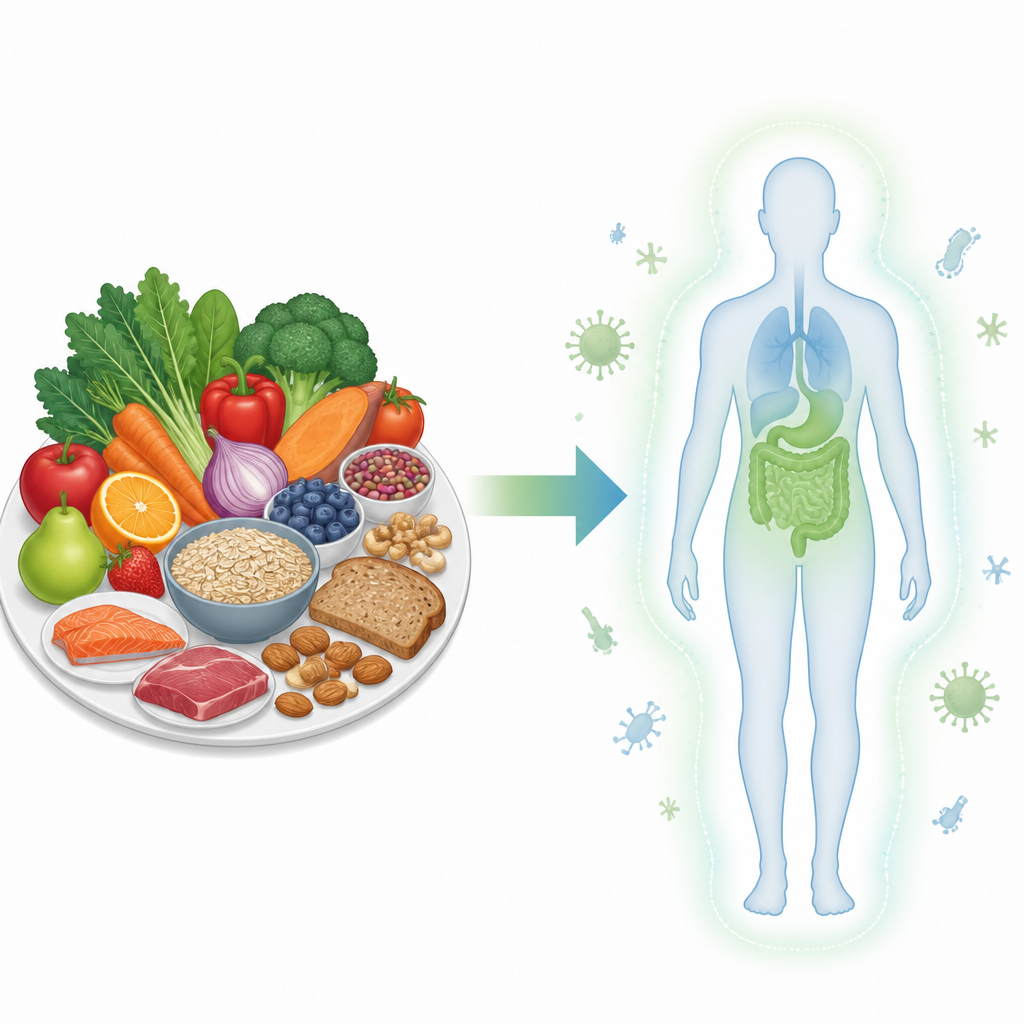
Healthier eating linked to fewer sepsis cases
Over the study period, 5026 participants were hospitalized with sepsis. People whose diets most closely matched the EAT Lancet pattern had a clearly lower risk than those with the lowest scores. After accounting for age, sex, body weight, smoking, alcohol use, exercise, income, education, and existing conditions such as high blood pressure, diabetes, and heart disease, the group with the highest diet score had about a 19 percent lower risk of sepsis than the group with the lowest score. When the score was treated as a continuous measure, each step up in adherence was tied to a modest but consistent drop in risk, forming an almost straight line relationship.
Genes, diet, and who gets sick
Because genes also shape how vulnerable we are to severe infection, the researchers built a polygenic risk score that summed many small genetic influences on sepsis. As expected, people with higher genetic scores had somewhat higher sepsis risk, although the effect was modest. Crucially, the benefit of the EAT Lancet diet showed up in every genetic risk group. Even among those with the highest inherited risk, individuals who followed the diet more closely experienced lower sepsis rates than peers with similar genes but poorer diet quality. However, the statistical tests did not show a strong interaction between diet and genes, so the authors caution against claiming that diet cancels out genetic risk.
Signals in the blood that link food to infection
To explore how diet might translate into protection, the study examined blood samples from a subset of more than 17,000 participants, measuring roughly 3000 different proteins. Over one thousand proteins were related to how well people followed the EAT Lancet pattern, and more than 700 were linked to future sepsis. Forty three proteins sat at the overlap, acting as potential go betweens between diet and disease. These proteins were heavily involved in immune and inflammatory processes, including how white blood cells move toward sites of infection and how cells respond to chemical signals. Many belonged to pathways that sense germs, relay danger signals, and help control inflammation and tissue damage. 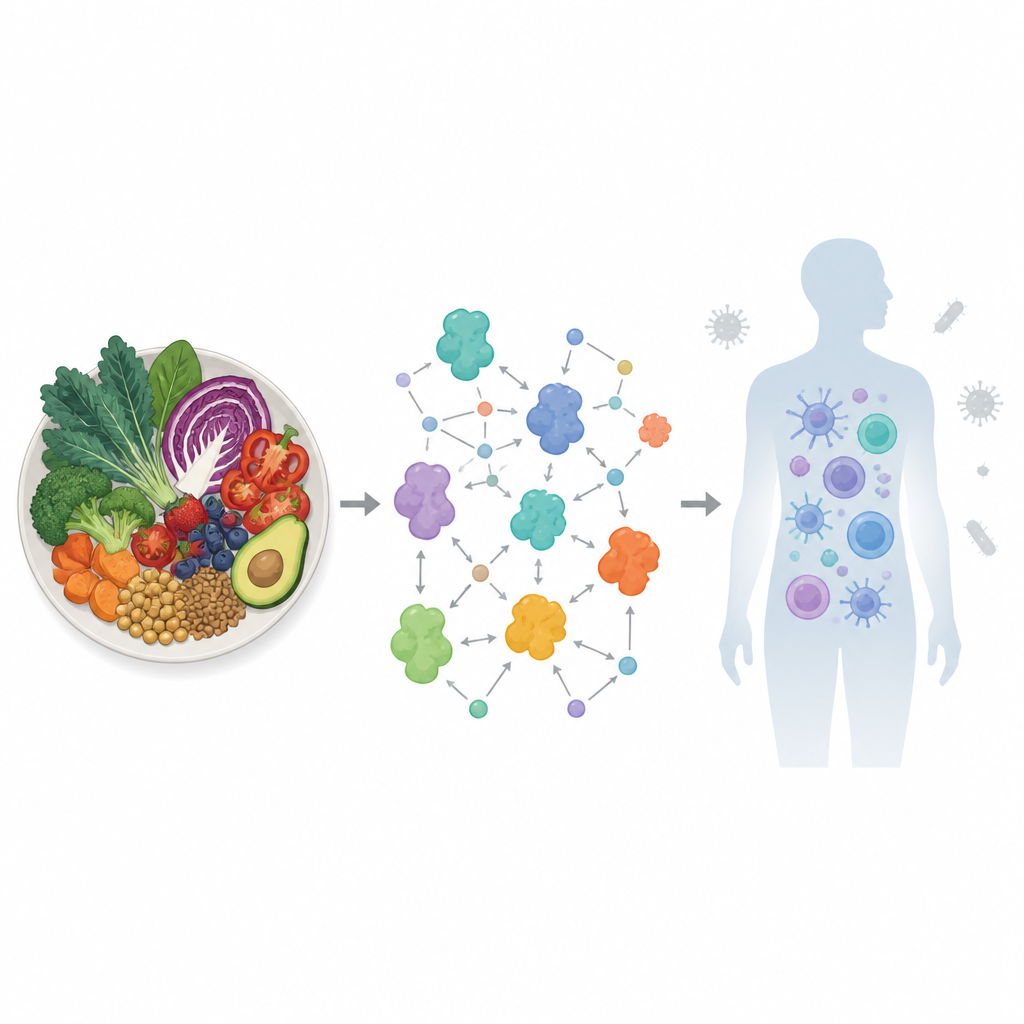
What this means for everyday choices
Putting all the pieces together, the study suggests that a diet rich in plant foods and moderate in animal products is associated with a meaningfully lower chance of being hospitalized with sepsis. This pattern held across different lifestyle and health backgrounds and did not depend strongly on a person’s genetic makeup. Changes in immune related blood proteins appear to be one way that diet may influence the body’s response to severe infection. Because the research is observational, it cannot prove cause and effect, and the findings come mainly from people of European ancestry. Still, the work adds to growing evidence that everyday food choices that are good for long term health and the planet may also help the body cope better when serious infections strike.
Citation: Nan, W., Huang, Q., He, B. et al. Adherence to the EAT-Lancet Diet and Risk of Sepsis: A Prospective Cohort Study from the UK Biobank. npj Sci Food 10, 153 (2026). https://doi.org/10.1038/s41538-026-00795-7
Keywords: sepsis, EAT Lancet diet, plant based eating, genetic risk, proteomics