Clear Sky Science · en
Changes of psychological and biological stress parameters in individuals with schizophrenia spectrum disorders participating in a mindfulness-based group therapy
Why this matters for everyday life
Living with schizophrenia spectrum disorders often means wrestling not only with unusual thoughts and perceptions, but also with constant stress. This ongoing strain can sap energy, dull emotions, and make social contact harder. The study summarized here asks a simple but important question: can a brief, structured form of group mindfulness training help people with these conditions feel less stressed — and can those changes be seen not just in how they feel, but in their stress-related biology as well?

A closer look at stress and serious mental illness
Schizophrenia spectrum disorders affect tens of millions of people worldwide and are among the most disabling mental health conditions. Many patients continue to experience long‑lasting "negative" symptoms such as lack of motivation, emotional flatness, and social withdrawal, even with standard treatment. These difficulties are closely tied to stress: people with these disorders are often more sensitive to everyday pressures, and stress can worsen symptoms. Scientists also know that certain stress hormones, like cortisol, and social bonding chemicals, like oxytocin, are involved in how stress affects the brain. Yet until now, almost no work had examined how a mindfulness group program might change these biological signals in this population from session to session.
What the researchers actually did
The team recruited 45 adults with schizophrenia spectrum disorders who were receiving regular outpatient care. Participants were randomly assigned either to continue their usual treatment alone or to add four weekly, one‑hour sessions of mindfulness‑based group therapy. These groups focused on simple practices such as paying attention to the breath, noticing sensations in nature, stepping back from troubling thoughts, and becoming more aware of the body. In the mindfulness group, researchers measured stress just before and after each session. They used quick self‑ratings of general stress and distress linked to symptoms, saliva samples to track the stress hormone cortisol, and, in the first and last sessions, blood and saliva samples to measure oxytocin. In both groups, negative symptoms were rated by clinicians and by patients themselves before the program began and after four weeks.
What changed during mindfulness sessions
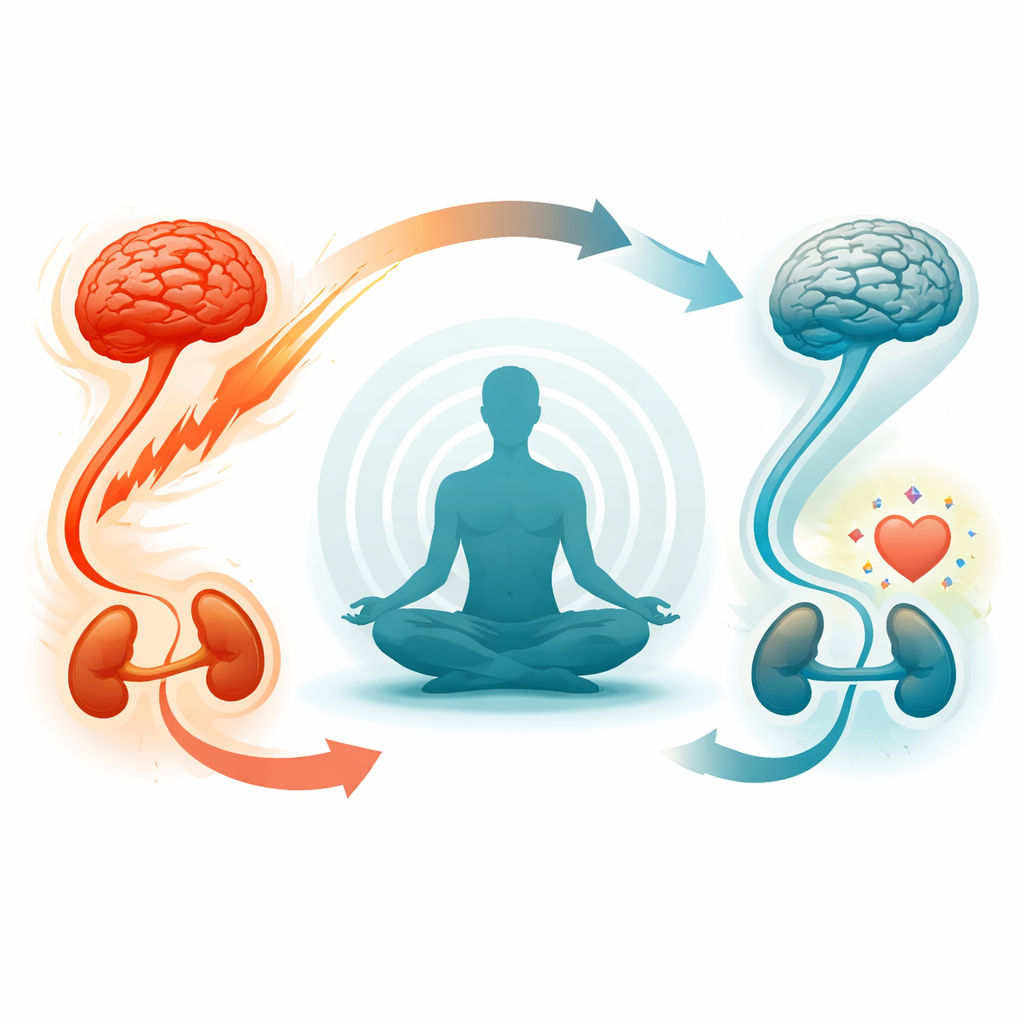
Within the mindfulness group, self‑reported stress dropped reliably from before to after each of the four sessions. People said they felt less generally stressed, and on some sessions less distressed by their symptoms. Cortisol levels also tended to fall over the course of a session, especially in the middle weeks, suggesting that the body’s stress response was calming down along with people’s subjective experience. Oxytocin behaved differently: during the very first session, levels in blood and saliva rose, perhaps reflecting the challenge of entering a new social setting and the body’s attempt to cope by boosting a bonding hormone. By the final session, oxytocin levels fell within the session and ended up lower in the mindfulness group than in the comparison group, hinting that as the group became familiar and less stressful, the need for this kind of acute oxytocin surge may have diminished.
Links between stress relief and symptoms
When the researchers looked across all four weeks, they found that biological and psychological measures of stress moved together: higher cortisol was linked with feeling more stressed and more burdened by symptoms. This suggests that simple self‑ratings can meaningfully reflect what is happening in the body. They also saw early signs that people whose general stress decreased more over time tended to report improvements in their own negative symptoms, such as motivation and emotional engagement. This pattern was clearer in patients’ self‑reports than in clinicians’ ratings, raising the possibility that stress relief may first show up in how life feels from the inside before it is obvious to outside observers.
What this means and what comes next
For people with schizophrenia spectrum disorders, a brief course of mindfulness‑based group therapy may offer more than just a pleasant hour of relaxation. In this small study, it was linked with immediate drops in felt stress and in a key stress hormone, and with hints of improvement in the emotional and motivational difficulties that often linger despite medication. At the same time, the study had important limits: it was short, involved relatively few participants, and did not include a detailed, session‑by‑session comparison group, so it cannot prove that mindfulness itself caused the changes. Larger, longer studies that compare mindfulness with other types of group support will be needed. Still, these results suggest that training the mind to relate differently to thoughts, feelings, and social situations could become an important piece of more comprehensive care for people living with serious mental illness.
Citation: Zierhut, M., Koop, S., Bergmann, N. et al. Changes of psychological and biological stress parameters in individuals with schizophrenia spectrum disorders participating in a mindfulness-based group therapy. Schizophr 12, 42 (2026). https://doi.org/10.1038/s41537-026-00759-6
Keywords: schizophrenia, mindfulness, stress hormones, cortisol, oxytocin