Clear Sky Science · en
Social implications of the 30×30 global conservation target
Why this global conservation goal matters for people
By 2030, the world has pledged to conserve at least 30 percent of land and inland waters. At first glance, this sounds like a promise for wildlife and forests. But this study shows that it is also very much about people. Where and how new conservation areas are created could shape the lives of billions, from city dwellers who live near protected zones to rural communities whose food and income come directly from the land.
Three different paths to the same conservation goal
The authors examined three different ways the 30 percent conservation goal could be met on land. One path focuses on protecting the greatest variety of species and habitats. A second path focuses on areas where nature directly supports people, such as forests that store carbon, wetlands that filter water, or landscapes that protect coasts from storms. A third path centers on Indigenous and traditional territories, where local communities already care for land that is rich in biodiversity. All three paths build on today’s protected and conserved areas to reach 30 percent coverage.
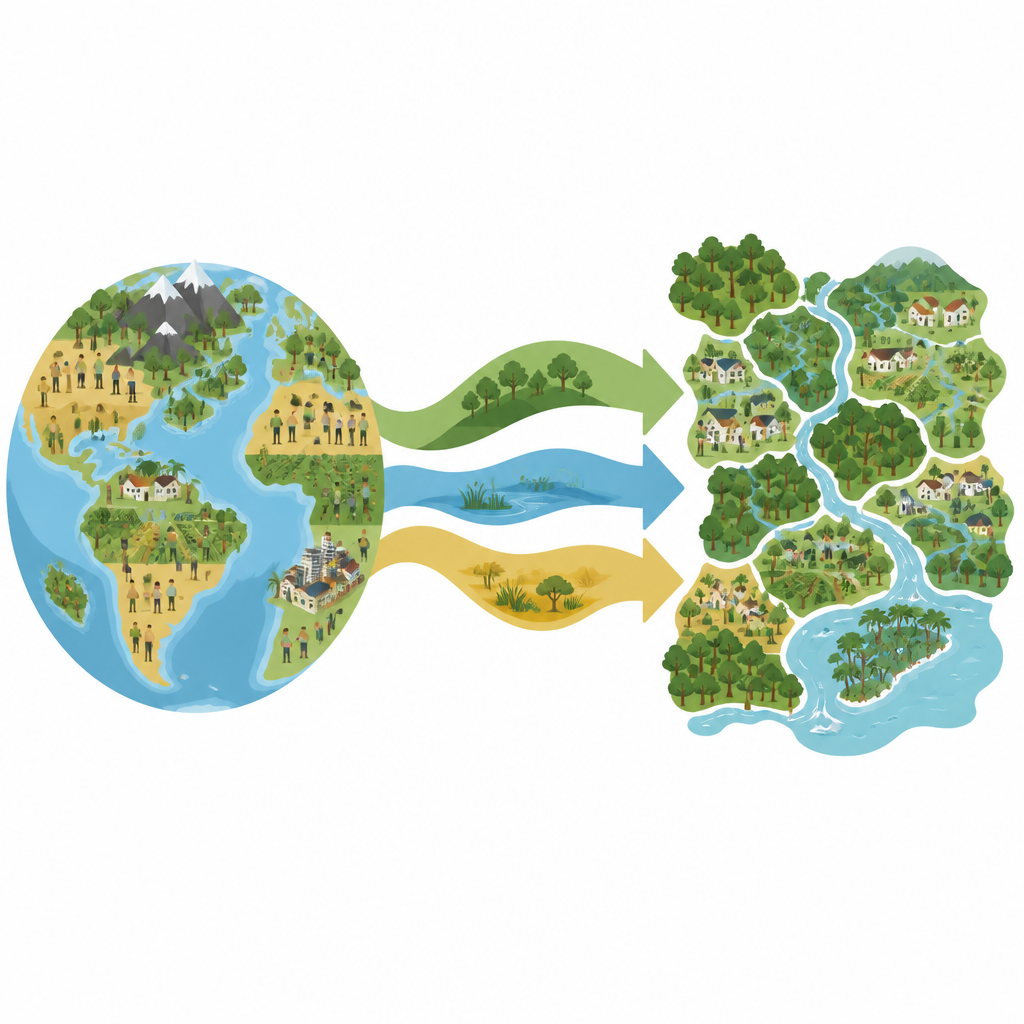
How many people live in or near future conservation areas
The study finds that, depending on the path chosen, hundreds of millions to billions of people could end up living in or near newly conserved areas. Under a biodiversity-focused approach, about 2.2 billion people would live inside protected or conserved zones, and 2.7 billion within 10 kilometers of them. The people-focused nature contributions path would include around one billion residents inside such areas, and 2.3 billion nearby. The Indigenous territories path overlaps with fewer people overall, about 517 million residents and 1.3 billion nearby, but those people often face very different living conditions and have strong ties to local ecosystems.
Different communities, different levels of development
The social and economic situations of people in these possible conservation areas vary sharply between the three options. In the biodiversity-focused path, many affected people live in countries with medium levels of human development, and the absolute number of people in low development settings is still very high because so many people are included overall. The nature contributions path looks more similar to today’s protected areas, with a mix of development levels. The Indigenous territories path stands out: most residents in these areas are in countries with low or medium development scores, and many depend directly on nature through activities such as wild harvesting, small-scale farming, and livestock keeping.
Livelihoods on the land and potential trade offs
Conserving more land will not happen on empty ground. The study shows that many of the areas that might be added under these targets are farmed, grazed, or used for gathering wild products. In the biodiversity-focused path, a large share of the land is farmland, and many people are farmers, raising questions about food production and access to land. The nature contributions path includes big stretches of relatively intact tropical forests, with fewer local people but high importance for global climate and water cycles. The Indigenous territories path includes many smallholder farmers and people who rely heavily on wild plants and animals, meaning any new rules could strongly affect daily survival and cultural traditions.
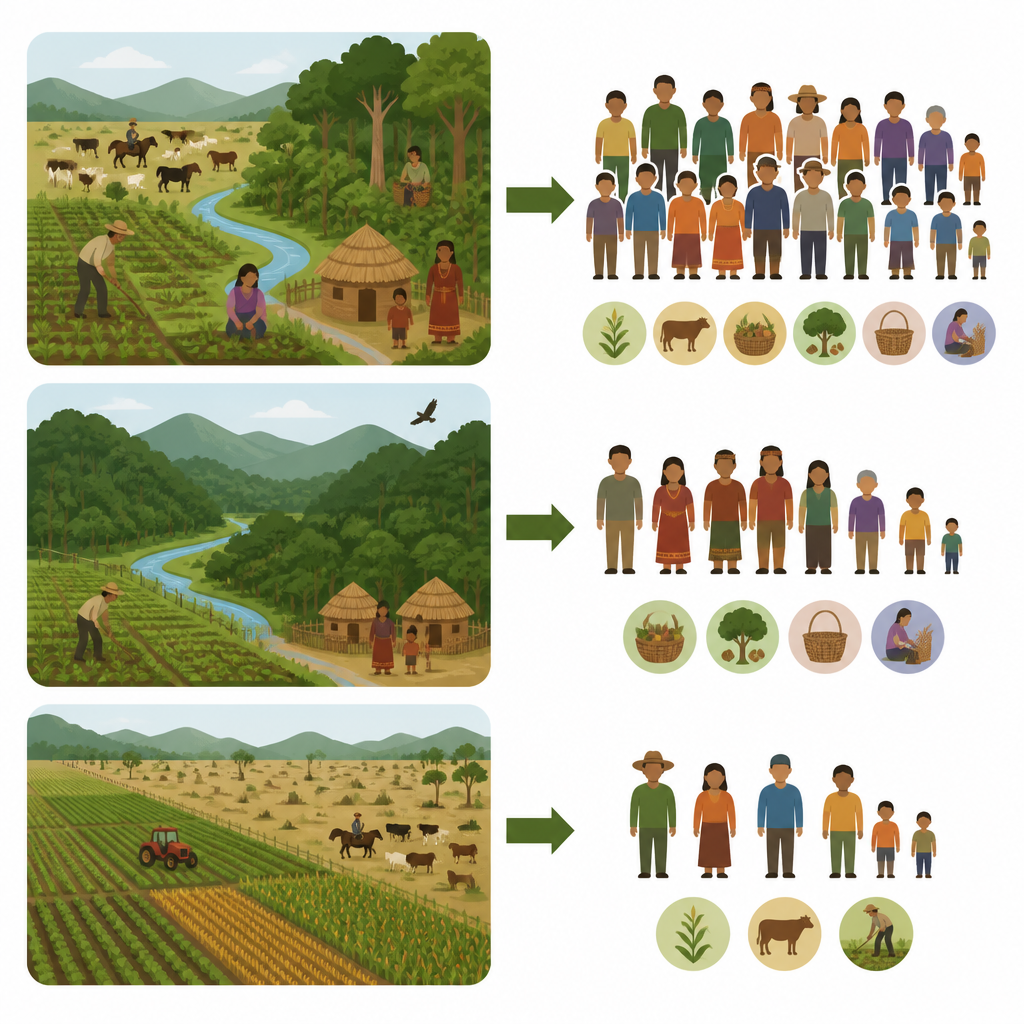
Why social choices will shape conservation success
The authors stress that none of the three paths is clearly best from a social point of view. Each brings its own mix of benefits and risks. What actually happens to people will depend on how new areas are governed, whether local voices shape decisions, and whether rights to land and resources are respected. The study argues that reaching the 30 percent target is not only an ecological challenge but also a major social project. It will require significant funding, fair decision making, and careful monitoring of social impacts so that conserving nature goes hand in hand with supporting the well being and livelihoods of the people who live with it.
Citation: Fajardo, J., Bingham, H.C., Brockington, D. et al. Social implications of the 30×30 global conservation target. Nat Commun 17, 4067 (2026). https://doi.org/10.1038/s41467-026-71860-8
Keywords: 30x30 conservation, protected areas, Indigenous territories, human livelihoods, biodiversity policy