Clear Sky Science · en
Horticultural intensification and plant-based diets of 18th century CE Waikato Māori in Aotearoa New Zealand
Ancient Gardens, Modern Questions
Imagine a community thriving far from the sea, in a landscape carefully reshaped into vast gardens. This study explores how 18th century Māori in the Waikato region of Aotearoa New Zealand may have lived largely on plant foods—particularly kūmara (sweet potato)—long before “plant-based diets” became a modern trend. By combining archaeology with cutting-edge chemical tests on teeth and bones, the researchers reconstruct everyday eating habits, childhood origins, and care practices for a small group of ancestors accidentally uncovered during roadworks.
Life Around the Garden
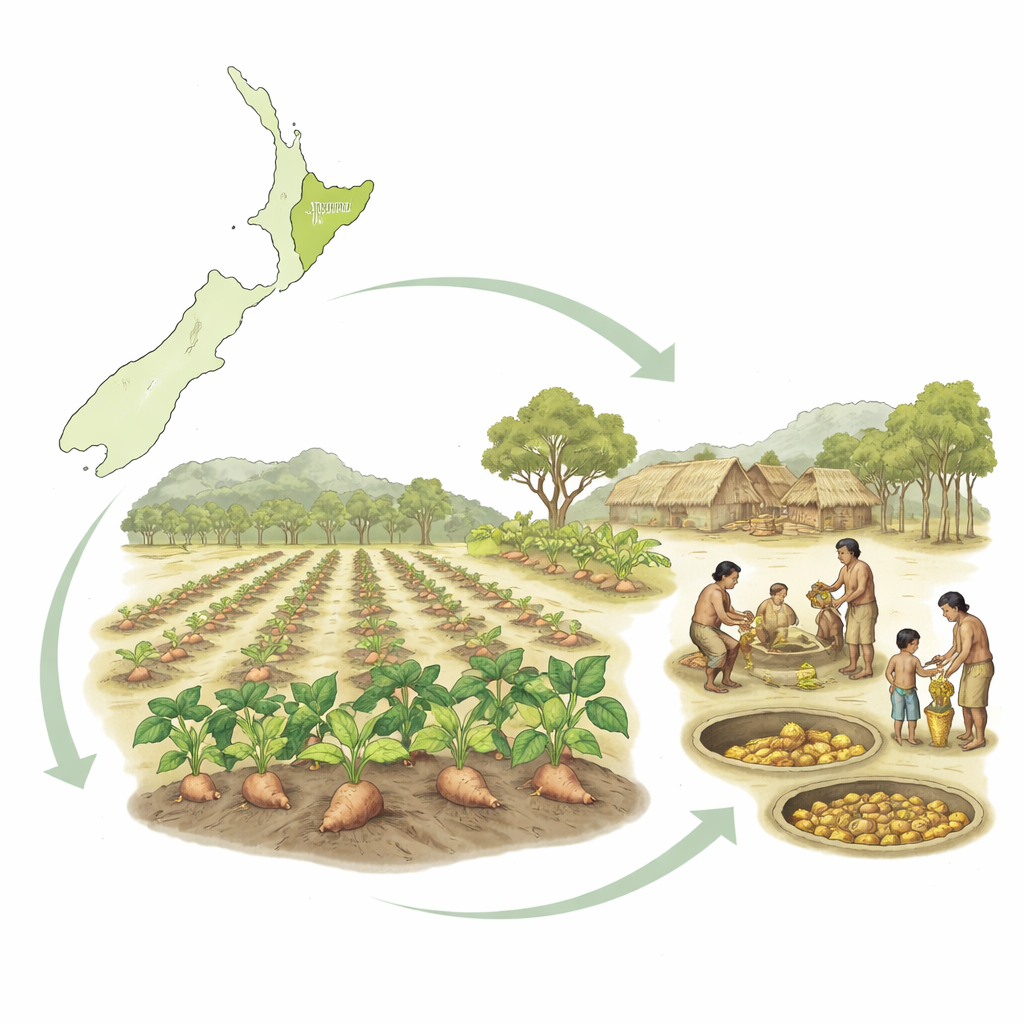
The Waikato Basin, near today’s Kirikiriroa (Hamilton), is famous in oral histories and archaeology for intensive gardening. Its volcanic, well-drained soils were ideal for growing root crops such as kūmara, taro, and yam. Over centuries, Māori gardeners transformed forests into mosaics of fields, storage pits, and borrow pits—deep earthworks used to quarry gravel and sand that warmed and drained garden soils. The ancestors in this study were found in one such borrow pit, reused as a special resting place during the Traditional Period (roughly 1650–1769 CE), just before large-scale European colonization.
Reading Diets from Bones and Teeth
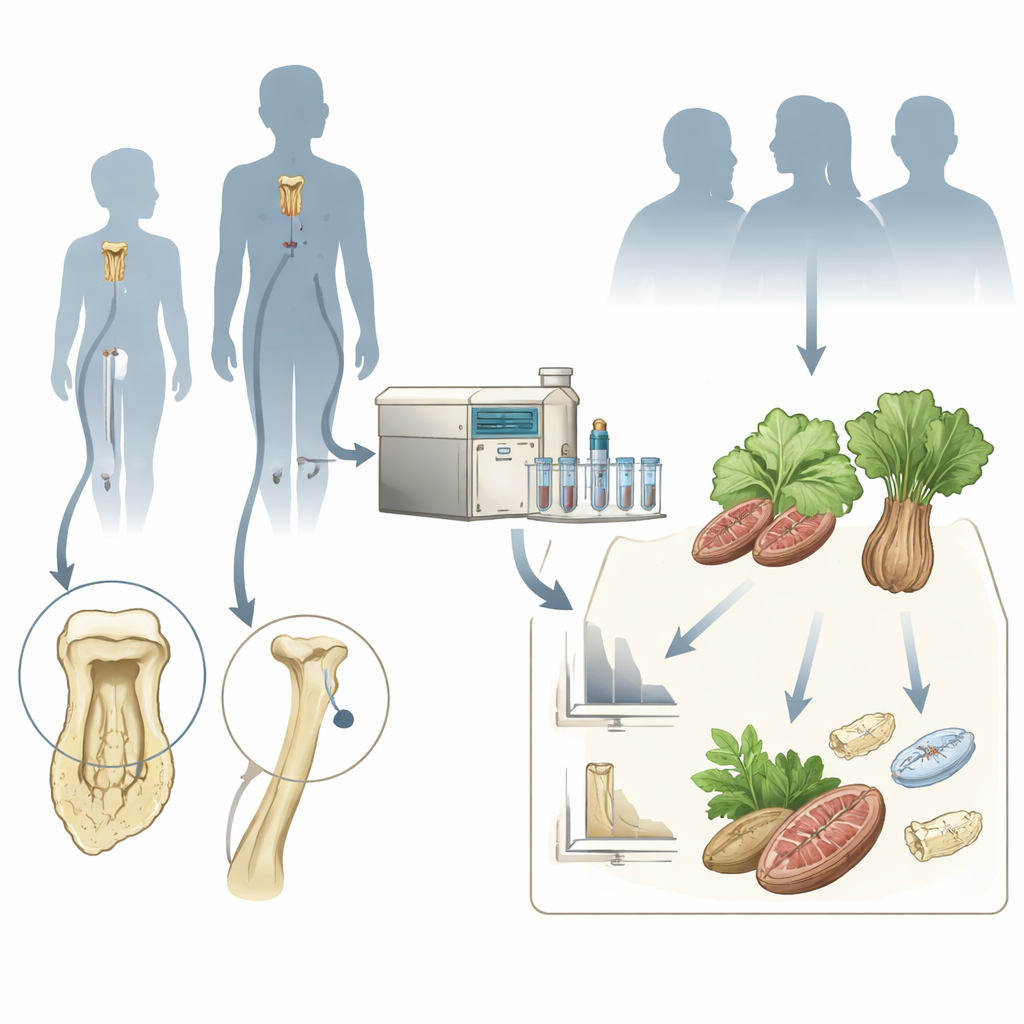
To move beyond guesswork about what these people ate, the team turned to chemical clues locked inside bone collagen and tooth tissues. By measuring different forms of carbon and nitrogen—stable isotopes that vary between marine and land foods, and between plants and animals—they could estimate the balance of plant versus animal protein in the diet. They also analyzed mineral in tooth enamel and tiny protein fragments that reveal chromosomal sex. Two children had teeth suitable for these tests, allowing the scientists to trace what they were fed as they grew and where they likely spent early childhood.
Mostly Plants on the Menu
The chemical signatures from the seven individuals are striking. Compared with people from early Māori settlements who ate wide-ranging diets rich in birds, fish, and marine mammals, the Waikato ancestors show values consistent with low‑trophic, land-based foods—essentially C3 plants, the group that includes kūmara and many other vegetables. The signals for protein from meat or fish are very weak, suggesting that animal foods, whether freshwater fish, eels, birds, dogs, or rats, were eaten only occasionally. Tooth enamel and strontium isotope mapping indicate that the two children were almost certainly local to the Waikato area, and their early-life tooth layers show that they, too, were weaned onto plant foods within about two to three years of age.
Family, Care, and Special Burials
The way these ancestors were buried also reveals important aspects of community life. Their remains—men, women, a boy, and a girl—were carefully gathered and placed together as a secondary burial, likely after an earlier resting stage elsewhere. Subtle cut marks and weathering suggest the bones were handled with care as part of a mortuary ritual rather than violence. A layer of marine shell, possibly used in mourning practices, was placed with one individual, even though marine foods do not show up as regular parts of their diet. This points to deep symbolic links between people, places, and the wider environment, not just to what was eaten day to day.
Changing Foodways Over 500 Years
When these results are compared with other sites across Aotearoa and Rēkohu (Chatham Islands), a dramatic picture emerges. In just five centuries, Indigenous communities moved from highly mobile foraging—hunting moa and sea mammals, gathering diverse seafoods—to regionally distinct food systems. In the Waikato, intensive gardening produced enough tubers to support diets that were, for at least some groups, almost entirely plant-based. This research not only confirms the central role of horticulture in Māori society during the Traditional Period, it also highlights the sophistication of Indigenous agricultural knowledge and the diversity of traditional diets, offering insights that resonate with current efforts to revive ancestral foodways and rethink sustainable eating today.
Citation: Kinaston, R.L., Keith, S., Hudson, B. et al. Horticultural intensification and plant-based diets of 18th century CE Waikato Māori in Aotearoa New Zealand. Nat Commun 17, 3040 (2026). https://doi.org/10.1038/s41467-026-70128-5
Keywords: Māori horticulture, plant-based diet, Waikato archaeology, stable isotope analysis, kūmara cultivation