Clear Sky Science · en
The distribution of school-aged adolescents’ free sugar intake across the day: A cross-sectional study
Why the Sugar in Kids’ Days Matters
For many families, sugary cereals, sweetened drinks and snacks are a normal part of school days. But how much of the sugar teenagers eat actually comes from these everyday moments, and when during the day does it sneak in? This study followed thousands of English secondary school pupils to map out their sugar intake across breakfast, lunch, dinner and snacks, and to see whether more of that sugar is eaten in school or at home and elsewhere. Understanding these patterns helps parents, schools and policymakers know where changes could make the biggest difference to young people’s long-term health.
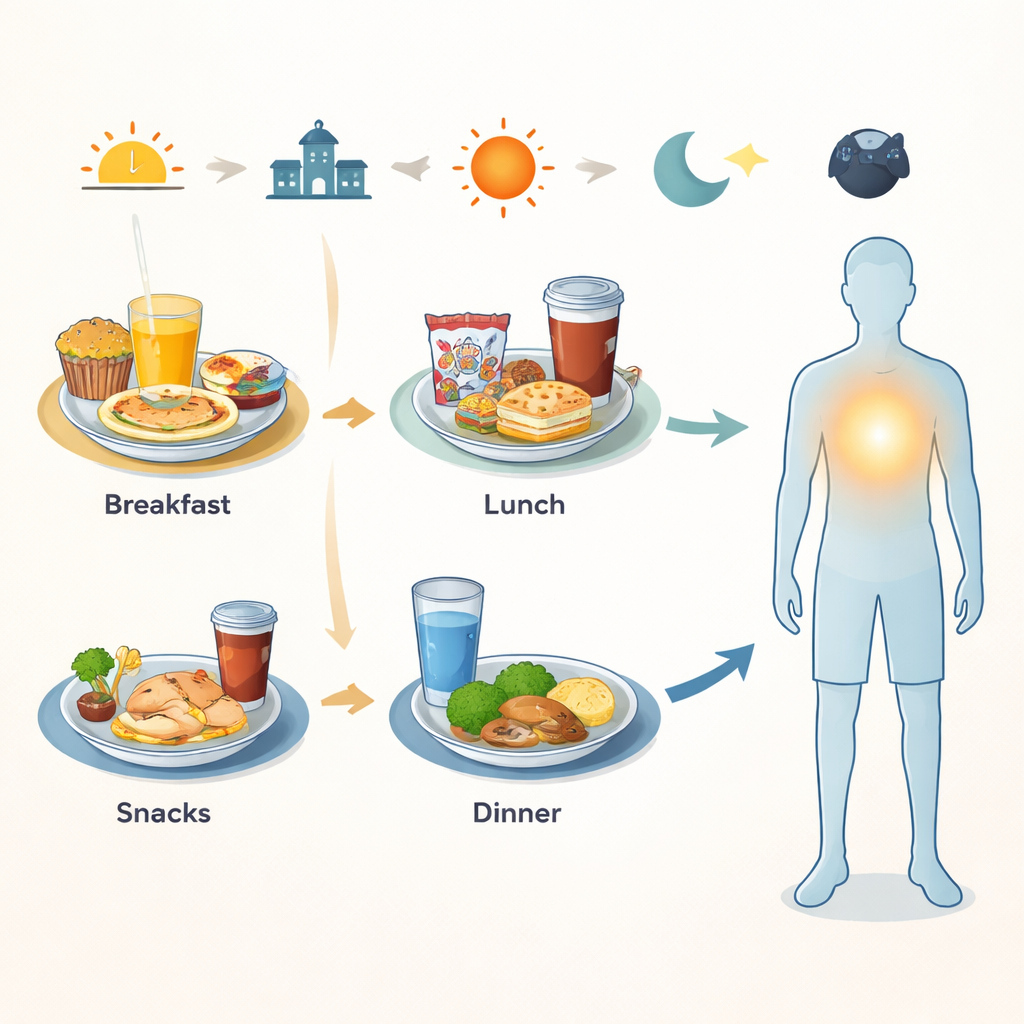
Looking at a Day in the Life
The researchers worked with 36 secondary schools across the Midlands region of England, involving 2273 pupils aged 11 to 15. On one or two separate school days, pupils completed an online food diary, recording everything they ate and drank over 24 hours, including when they ate it, where they were, and whether the food or drink came from school or from outside. The team then matched these records to a national nutrition database to calculate how much “free sugar” was consumed at each eating occasion. Free sugar includes sugar added to foods, sugars in soft drinks and fruit juices, and similar sources that are more harmful to health than sugars naturally locked inside whole fruits or milk.
Snacks Steal the Show
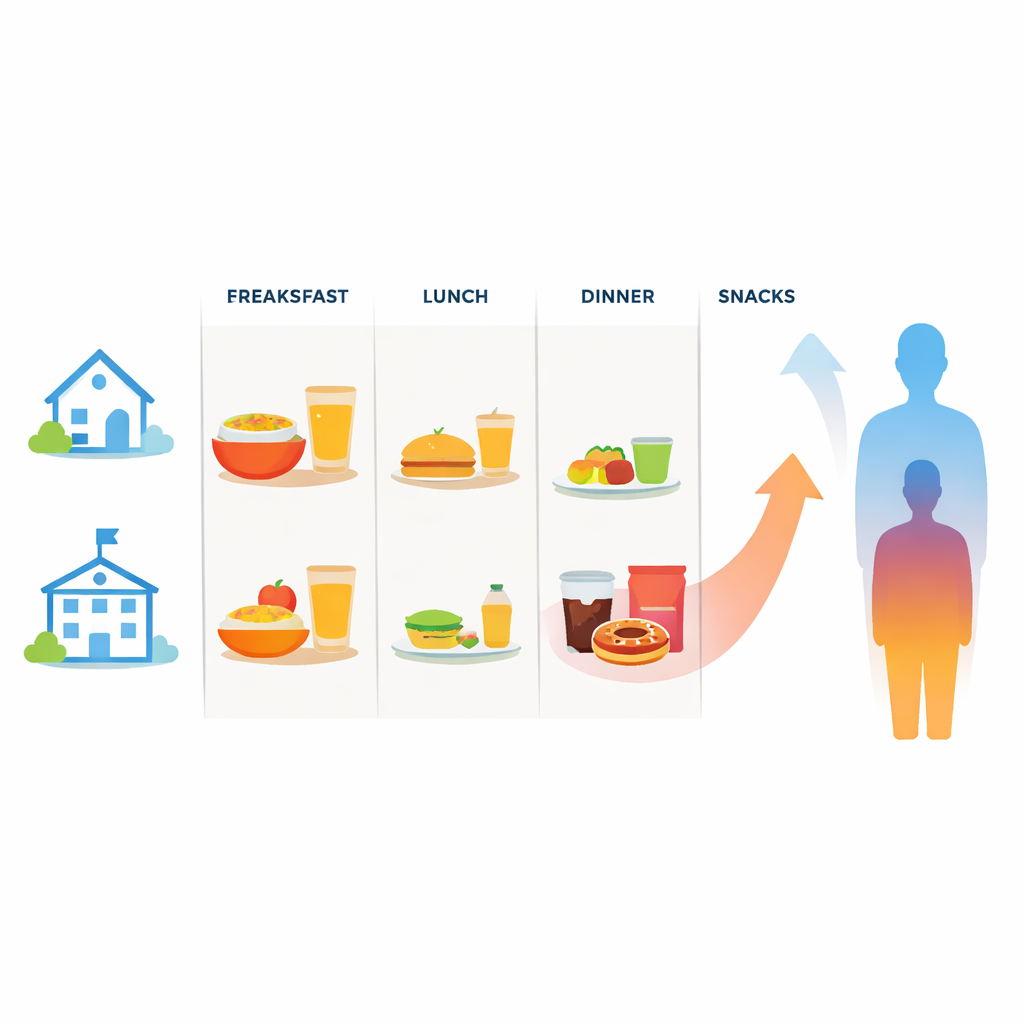
When the researchers added up the numbers, they found that the average teenager in the study consumed about 73 grams of free sugar per day—more than double the UK guideline of a maximum of 30 grams for this age group. Snacks were the main culprits. Across the whole day, snacks supplied almost half of all the free sugar pupils ate, even though they provided only a bit more than a quarter of total energy. When the team took into account how many calories were eaten at each time of day, foods and drinks consumed between meals were still much more sugar-dense than main meals. In practical terms, the biscuits, sweets, sugary drinks and other snack items that fill the gaps between meals are where sugar really piles up.
Breakfast Packs More Sugar Than Other Meals
Among the three main meals, breakfast stood out as the sweetest. After adjusting for how much total energy pupils ate at each meal, breakfast contained more free sugar than lunch or dinner. This pattern fits with other UK research showing that sugary breakfast cereals and sweet spreads are major sources of sugar in young people’s diets. While most pupils did eat lunch and an evening meal, only about three quarters reported having breakfast at all, suggesting that many adolescents either skip breakfast or rely on quick, highly sweetened options when they do eat it.
More Sugar Outside School Walls
The study also compared what pupils ate in school with what they ate elsewhere. On average, teenagers consumed significantly more free sugar outside of school than during school hours. Sweetened drinks were more common outside school, while confectionery (like chocolate and sweets) appeared in similar amounts inside and outside. Existing school food standards in England limit the sale of sugary drinks and confectionery on school premises, which may help hold down in-school sugar intake. However, these rules do not cover what pupils bring from home or what they buy before and after school, and most current sugar-reduction efforts still focus mainly on the school setting.
What This Means for Families and Policy
To a layperson, the study’s message is straightforward: teenagers are consuming far too much free sugar, and most of it is coming from snacks and sugary breakfasts, especially outside of school. Policies and everyday choices that swap out high-sugar snack foods and drinks for lower-sugar options, encourage healthier breakfast habits, and extend support beyond school gates are likely to have the biggest impact. This might include reformulating popular products like breakfast cereals to contain less sugar, expanding healthy breakfast clubs into secondary schools, and creating environments at home and in communities that make healthier, lower-sugar choices the easy default for young people.
Citation: Murphy, M., Hewitt, T., Stewart, A. et al. The distribution of school-aged adolescents’ free sugar intake across the day: A cross-sectional study. Eur J Clin Nutr 80, 427–433 (2026). https://doi.org/10.1038/s41430-026-01714-5
Keywords: adolescent nutrition, free sugar intake, school meals, snacking habits, public health policy