Clear Sky Science · en
Reasons for tooth extraction in a Swedish county dental service: a 5-year longitudinal cohort study with focus on endodontic pathology
Why Losing Teeth Still Matters
Many people assume that modern dentistry has largely solved the problem of losing teeth, especially in countries with good access to care like Sweden. Yet tooth extraction is still one of the most common dental procedures, and each missing tooth raises questions: Why was it lost, could it have been saved, and will it be replaced? This study followed adults treated in Sweden’s public dental clinics to find out which teeth are most likely to be removed, how often previously root canal–treated teeth are lost, and whether people go on to replace those missing teeth.
What the Dentists Wanted to Learn
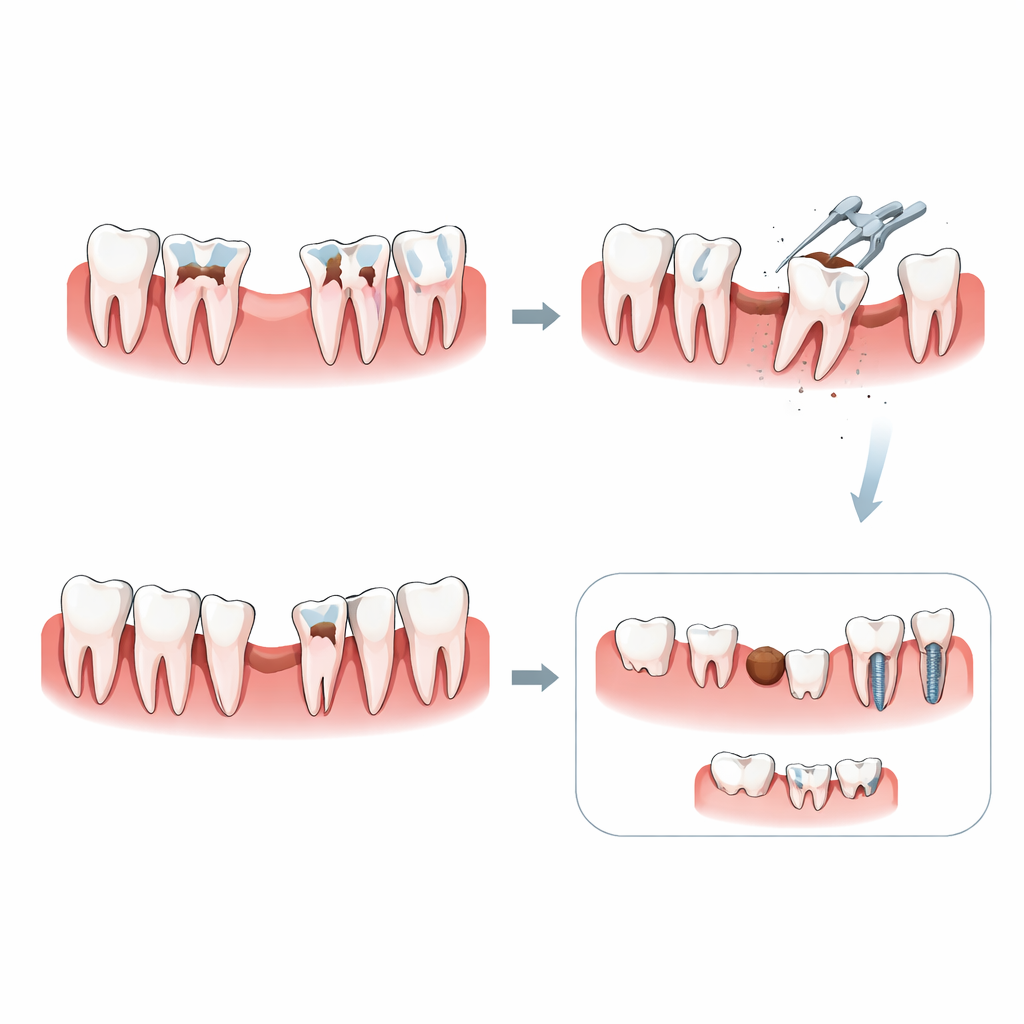
The researchers focused on everyday dentistry rather than rare or extreme cases. Over an eight-week period, general dentists in 20 public clinics across the Västra Götaland region registered every adult who had a tooth (other than a wisdom tooth) removed. For each case, they noted which tooth was extracted, why they chose extraction, whether the tooth had ever undergone root canal treatment, how much pain the patient reported, and whether the visit was an emergency or a planned appointment. Using digital X‑rays and electronic records, they then followed these patients for five years to see if the lost teeth were later replaced with bridges, dentures, implants, or orthodontic space closure.
Which Teeth Were Lost and Why
Out of 305 people who had teeth removed during the study period, 133 patients with 133 non‑wisdom teeth were included in the final analysis. The average age was 54 years, and most of the extracted teeth were molars at the back of the mouth. Two main reasons dominated: endodontic problems—such as inflammation or infection inside the tooth or at its root tip—accounted for about 37% of extractions, while cracks and breaks in the crown or root made up about 25%. Many of these teeth had already received substantial dental work. Roughly one third of the extracted teeth were fully root‑filled (had completed root canal treatment), and another 12% had root canal therapy that had been started but not finished. Teeth that had undergone or started root canal treatment were noticeably overrepresented among those removed compared to their share in the average person’s mouth.
How Treated Teeth End Up Being Removed
The study revealed different patterns depending on the tooth’s treatment history. For teeth where root canal therapy had only been started, patients more often reported pain, and these teeth were frequently removed in the setting of ongoing symptoms, suggesting that early emergency treatment did not always resolve the problem. In contrast, many fully root‑filled teeth were not painful at the time of extraction. They were often removed because their structure was too weak—having large fillings and little remaining natural tooth—or because of root fractures or lingering signs of infection seen on X‑rays. Many of these teeth lacked robust protective crowns, which are known to help prevent breakage in root‑treated teeth.
What Happens After a Tooth Is Gone
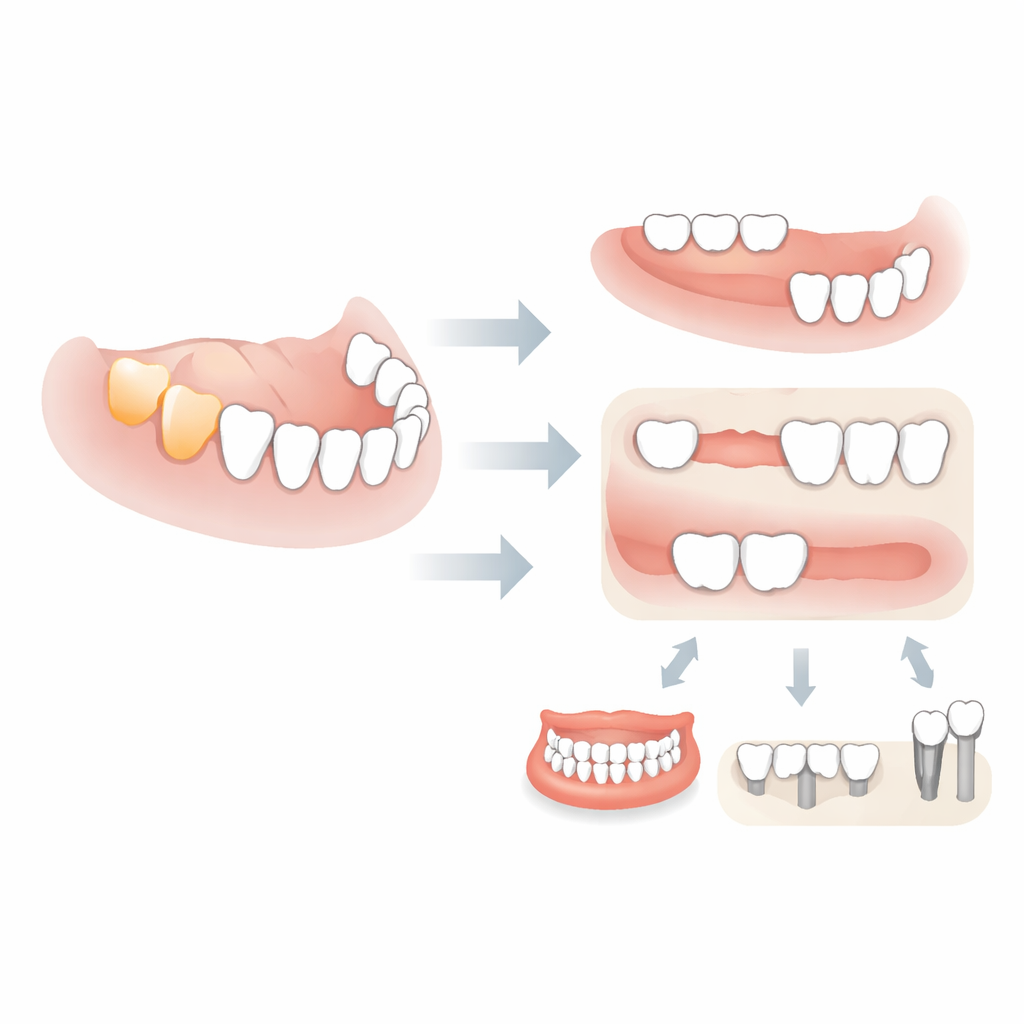
One of the most striking findings came from the five‑year follow‑up. Only about one in four of the extracted teeth were replaced at all. When replacement did occur, it most often took the form of removable dentures, followed by tooth‑supported bridges and, less commonly, dental implants. Front teeth were far more likely to be replaced than back teeth: nearly 9 out of 10 missing incisors or canines received a new prosthetic tooth, compared with only about 1 in 10 missing molars. Younger adults were less likely than older ones to choose any form of replacement, possibly because they retained enough remaining teeth for acceptable chewing function, or because of cost and personal preference.
What This Means for Everyday Dental Decisions
To a layperson, it might seem that a root canal is either a success or a failure, but this study paints a more nuanced picture. Teeth that have received or started root canal treatment are more likely than untouched teeth to end up being extracted, yet they may have served patients well for many years before finally failing. Once these teeth are lost, most are never replaced—especially molars—suggesting that many people and their dentists are willing to accept some gaps in the back of the mouth as long as overall chewing and appearance remain satisfactory. The findings highlight the importance of careful planning after root canal treatment, including strong restorations to protect weakened teeth, and open discussions about whether a tooth should be saved, removed, or eventually replaced. Ultimately, the study suggests that preserving teeth for as long as they remain useful, even if they are eventually lost without replacement, is a common and often reasonable path in real‑world dental care.
Citation: Persson, S., Mota De Almeida, F., Lundqvist, P. et al. Reasons for tooth extraction in a Swedish county dental service: a 5-year longitudinal cohort study with focus on endodontic pathology. BDJ Open 12, 41 (2026). https://doi.org/10.1038/s41405-026-00430-3
Keywords: tooth extraction, root canal treatment, dental prosthesis, endodontic pathology, tooth loss