Clear Sky Science · en
The argument from facticity: reassessing realism in Sartre’s early philosophy
Why This Question About Reality Still Matters
When we wonder whether the world would still be there if no one were around to see it, we touch a classic philosophical puzzle: is reality independent of us, or somehow made by us? This article revisits that question through the early work of Jean-Paul Sartre, best known for his existentialism. It argues that behind Sartre’s dramatic talk of freedom and nothingness lies a subtle and surprisingly modern kind of realism—a view that takes the world to be independent of us, yet insists that our perspective and activity are essential to how that world shows up. This matters today because similar issues now animate cutting‑edge debates in both continental and analytic philosophy.
A Fresh Look at Sartre’s View of the Real World
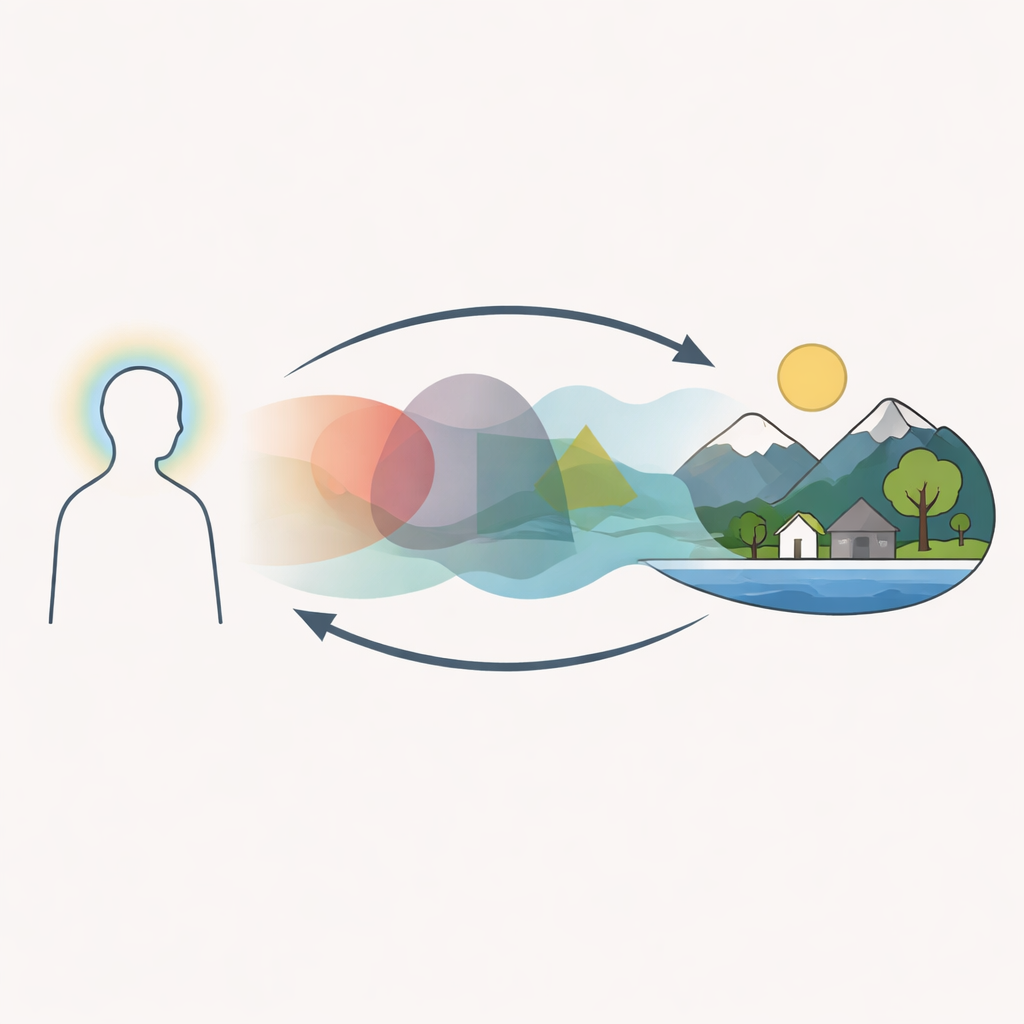
The author begins by challenging the usual picture of Sartre as mainly a philosopher of human freedom and subjectivity. Drawing on Sartre’s early writings and his major book Being and Nothingness, the paper shows that Sartre was deeply preoccupied with how to defend realism without falling back into old‑fashioned materialism or idealism. Sartre rejects the idea that we see the world only through inner images, and he also rejects the idea that consciousness somehow creates being. For him, consciousness is always already out in the world, directed toward things that resist and constrain us. At the same time, he denies that there is a fully formed reality whose structure is fixed once and for all, independent of how it can ever be experienced or known.
The Core Idea: Facts That Outrun Our Perspective
At the heart of the article is what the author calls Sartre’s “argument from facticity.” It starts from a simple thought: even if we tried to say that only appearances or experiences exist, the very fact that such appearances occur would itself be something more than just another appearance. If it were only another appearance, its claim to describe how things really are would undercut itself. So, even the most radical view that reduces everything to how things show up must secretly rely on certain basic facts that do not depend on any one person’s viewpoint. Sartre uses the structure of consciousness—its openness to something other than itself—to argue that there must be a layer of reality that is not exhausted by how we describe or interpret it, even though we never encounter that reality except through our experience.
How Sartre Differs from New Realists
The article then places Sartre alongside influential contemporary realists such as Quentin Meillassoux, Markus Gabriel, and Paul Boghossian. These thinkers also argue that we must acknowledge some basic, description‑independent facts. But they often tie those facts to special domains: to the laws of mathematics, to a fixed “natural world,” or to a total inventory of what exists. Sartre, by contrast, stays neutral. He does not treat mathematical, physical, or everyday facts as more fundamental than others, and he resists turning “facts” into yet another class of things. For him, facts always relate to a living subject practically engaged in a situation, yet what they state can hold whether or not anyone is there to notice. In this way, he keeps both sides in play: the independence of reality and the indispensable role of finite subjects in its disclosure.
An Open, Incomplete Picture of Reality
Sartre’s neutrality also affects how he thinks about the whole of reality. He doubts that there can be a single, complete and consistent picture that gathers everything—objects, people, thoughts—into one seamless totality. When we try to think of “everything that exists,” we must also include the very act of thinking and referring, which changes what is being counted. For Sartre, the tension between the solid, inert side of being and the self‑questioning, world‑disclosing activity of consciousness prevents reality from forming a closed, self‑contained whole. Instead of a finished system, reality is better understood as open, internally fractured, yet still intelligible. This allows him to explain how we can be in touch with a world that outruns us without pretending we can ever step outside all perspectives on it.

Why Our Existence Still Tells Us Something About the World
In closing, the paper argues that Sartre offers a distinctive form of realism: the world does not depend on us to exist, but it does depend on beings like us to become manifest as a structured, knowable world. The facts that hold whether or not anyone is around are nevertheless such that they can, in principle, be revealed to finite, situated subjects. Our capacity to think, choose, and act does not add new ingredients to being, but it does show that reality is not just blind stuff; it is the kind of reality that can be encountered, questioned, and partially understood from within. On this view, human beings are not the makers of reality, nor mere spectators of an already completed order, but participants in the ongoing manifestation of a world that is both independent of and inherently open to us.
Citation: Kalpakidis, C. The argument from facticity: reassessing realism in Sartre’s early philosophy. Humanit Soc Sci Commun 13, 498 (2026). https://doi.org/10.1057/s41599-026-07304-x
Keywords: Sartre, realism, facticity, phenomenology, ontology